Calm & Controlled: Managing Dog Hyperactivity
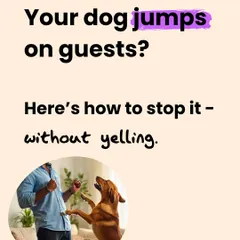
A hyper dog isn't a bad dog, they just need clear guidance. We work on impulse control for issues like jumping on guests and over-excitement, teaching your dog to settle down.
When interacting with a hyper dog, your own energy is key. By staying calm and disengaging from the hyper behavior, you can teach the dog that obedience is what gets rewarded.
This is what we aim for: no jumping, no barking, and no pulling. Through place training and impulse control exercises, we can build a dog that is calm and well-mannered by default.
This dog is holding its position perfectly, even with another dog playing freely nearby. This is advanced obedience, proving that we can train dogs to stay calm even in highly distracting environments.
Even a hyper dog can learn to be obedient and calm. Here, we are practicing maintaining a calm state of mind even when there are other excited dogs present in the same room.
Impulse control is a vital life skill that keeps your dog safe. Here, Boo is learning to control his hyperactivity around his favorite ball, a common trigger for many dogs.
This is an ongoing aggression modification session. The dog, who previously would charge and bark at other dogs, is now learning to stay calm and coexist peacefully in the same space.
We are teaching Theo to remain calm and focused while being handled by different people in his own territory. This is a huge step for a dog who previously wouldn't allow strangers in his house.
Does your dog bark endlessly at guests? This session shows how we work on creating a calm behavior, teaching the dog to focus on the handler instead of reacting to new people.
Training under distraction is key to proofing a dog's behavior. Here, we are working in a new environment with multiple people to ensure the dog's obedience is reliable everywhere.
This is what a focused obedience session looks like. We use place training to teach a dog that was previously hyperactive to settle down and wait for a command.
About Calm & Controlled: Managing Hyperactivity
When your dog is jumping, door-dashing, or barking at the bell, the worst thing you can do is match their high energy. It only fuels the excitement. We focus on disengaging—removing the attention they crave—which forces them to reset. It is counter-intuitive, but it works. Once the energy drops, we reward the calm state. This is how we move from chaos to control.
Why Hyperactivity Happens
Most hyperactive dogs aren't trying to be difficult. They are reacting to their environment without a framework. If they don't know what to do, they default to over-excitement. My training isn't about suppressing your dog's spirit; it is about channeling that energy into something productive.
The 'Place' Command
This is a non-negotiable tool for hyper dogs. We teach your dog that a specific mat or bed is their 'Place'. When guests arrive or you are busy, they go to this spot and stay there. It creates a physical boundary that helps them manage their own impulses. It turns a manic situation into a structured one.
It Is Not Just The Dog
I say this every time: I train the parent. If you don't know how to handle your dog's triggers, the training won't last outside the session. We practice in real-world environments like parks and busy streets in Delhi NCR to 'proof' this behavior. You will learn how to read body language and intervene before the energy spikes. Whether it is leash pulling or reacting to other dogs, we handle the 'kyun' (why) behind the behavior, not just the symptom.
Getting Started
We can start with an in-home assessment to evaluate your dog's drives and temperament. From there, we move to obedience packages or our Board & Train program if the behavior requires intensive, 24/7 structure. Either way, you are part of the process. Theek hai?
Similar work from other experts
Browse through Curated picks from other experts on mytribe
In-Home Dog Training for a Calm & Well-Behaved Dog
 6
6Dog Behavior Correction & Positive Training in Delhi NCR
Impulse Control and Household Rules Training
Expert Training for a Calm & Well-Mannered Dog at Home
Dog Behavior and Training: Understand Your Pup's Habits
Creating a Harmonious Home Through Understanding
More from Obedience & Manners Training by Carter's Dog Training
More services by Carter's Dog Training