Build Smart Tech Inventions from Scratch
Don't just teach your child to play with technology. Teach them to build it. We turn curious questions into working, real-world prototypes.
Advik presents his home security system, complete with a laser tripwire using an LDR sensor and a buzzer alarm. He learned how to integrate different components to create a functional security solution for a model house.
Kriti and Devansh demonstrate their fire alarm project. They used a flame sensor that, upon detecting a flame, triggers a buzzer, showing a fundamental concept in automated safety systems.
Here, Neerav showcases his automatic LED light. The system uses a light-dependent resistor (LDR) to sense ambient light, turning the LED on in the dark and off in the light, demonstrating a basic principle of energy-saving automation.
Aryaveer explains his smart car counting system. Using an IR sensor and a Maker Board, his project can count vehicles as they pass, a foundational concept for smart traffic and parking management.
Aadvik Gupta and Aadvik Jain proudly present their "Magic LED." This project uses an LDR sensor to create a light that automatically glows in the dark, teaching them about sensor inputs and automated responses.
Aiza engineered this "Step Into Light" staircase that automatically illuminates as you walk up. Using IR sensors, each step lights up, demonstrating a practical and creative application for smart home technology.
Aiza built this hands-free smart water dispenser. It uses a Maker Board, IR sensor, and a water pump to pour water automatically, teaching her about hygiene-focused tech and automation.
Aarna, age seven, invented this smart dustbin that opens and closes with touch sensors. This project taught her about servo motors and how to create a more hygienic solution for waste disposal.
Nirvaan's smart LED system reacts to its environment without needing a switch. This project was a great introduction to logic-based programming and how sensors can make simple electronics "smart."
Aaria demonstrates her "Bin with Brains," a dustbin she coded to open and close on a loop. This project focused on motor control and programming logic without relying on sensors.
About Smart Solutions for Everyday Life
These aren't just toys. When a student builds an automatic dustbin using IR sensors, they aren't following a manual—they are learning how to translate a real-world problem into logic. We skip the pre-packaged kits so kids understand the 'how' behind the 'wow', using actual components like Arduino boards, motors, and sensors to turn their raw ideas into working, useful solutions.
At Be a Robonaut, I believe that building a smart project is the best way to learn how the world works. Too many kids grow up consuming technology without understanding what happens under the hood. In this cluster, we strip away the abstraction. Whether it is a home security system triggered by a laser tripwire or a smart water dispenser that eliminates waste, my students work with the same principles used in industrial automation.
The 'Ye Maine Khud Banaya Hai' Philosophy
Every project here starts with a simple goal: make life safer or easier. We do not use ready-made kits where you just snap pieces together. Kids work with raw metal chassis, gears, and actual coding interfaces like Arduino. They wire the sensors, write the logic, and—most importantly—they debug when it fails. If the smart dustbin lid doesn't open on the first try, we don't fix it for them. We teach them to read the code, check the connections, and find the solution.
Skills That Stick
This process builds two things that school rarely touches: grit and logic. When a child sees their gas detector sense a leak or their smart light turn on automatically in the dark, the sense of achievement is real. It is not a grade on a report card. It is a working gadget they built with their own hands.
We focus on:
- Sensor Logic: Understanding how LDR, IR, and gas sensors interact with the environment.
- Programming Fundamentals: Moving from block-based logic to actual command sequences that control hardware.
- Failure Analysis: Teaching kids that a robot failing to move is not the end of the project, but the beginning of the learning process.
Whether your child is interested in home automation or just loves the idea of making things 'come alive,' they will find their tribe here. Join us in Pitampura to see what your child can create when you give them the right tools and get out of their way.
Similar work from other experts
Browse through Curated picks from other experts on mytribe
Student Robotics & Automation Projects
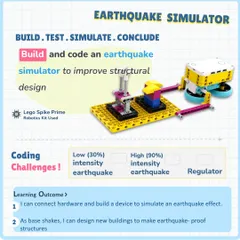

Robotics & Coding Projects Made by Kids
Hands-on Robotics and Coding Classes for Kids
Real Robotics Projects Built by Our Young Innovators
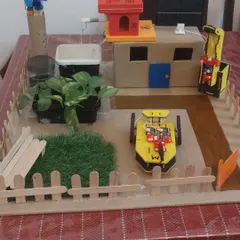
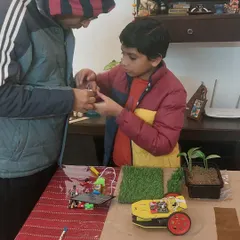
Hands-On STEM Workshops & Science Projects
Build Your Own Robots and Gadgets
More from STEM Camps & Competition Training by Be A Robonaut
More services by Be A Robonaut