Understanding the Vastu Zones: A Practical Guide
Every direction in your space has a purpose. From wealth flow to family peace, here is how you can use the nine cardinal directions to your advantage without any superstitious drama.
I explain the significance of the nine cardinal directions in Vastu. North is for money flow, North-East for wisdom, South for name and fame, and so on. Understanding each zone is key.
This video explains the concept of the Vastu Purush, the energy map of your home. His head is in the North-East and feet in the South-West, which dictates the weight balance principle for furniture.
The North-East direction governs health, peace, and prosperity. I explain why this zone must be kept light, airy, and bright to ensure clarity and harmony.
This video details how to harness the positive energy of your North/North-East zone by using it for a pooja room or meditation space and avoiding kitchens or toilets.
The East direction is your gateway to health, fame, and new beginnings. I explain how to use this zone for entrances, balconies, and guest rooms to boost positive vibes.
The South-East is the zone of fire, passion, and prosperity. This video explains how to balance this zone to avoid health issues, anger, and relationship tension.
The South zone rules your name, fame, and reputation. I explain why this area should be heavy and closed, and why you should avoid basements or keeping it empty.
This carousel explains that the South-West is the zone of stability, strength, and finance.
A weak South-West zone, meaning one that is light or has a dosha, can lead to blocked finances and an unstable life.
The South-West should be heavy and grounded. It is the ideal location for the master bedroom, a large wardrobe, or an overhead tank.
About Understanding the Vastu Zones
Most people get the weight balance wrong in their homes. You do not need to knock down walls to fix your space. Simply moving a heavy wardrobe to the South-West or clearing out clutter in the North-East can stop that stuck feeling and help your energy start moving again.
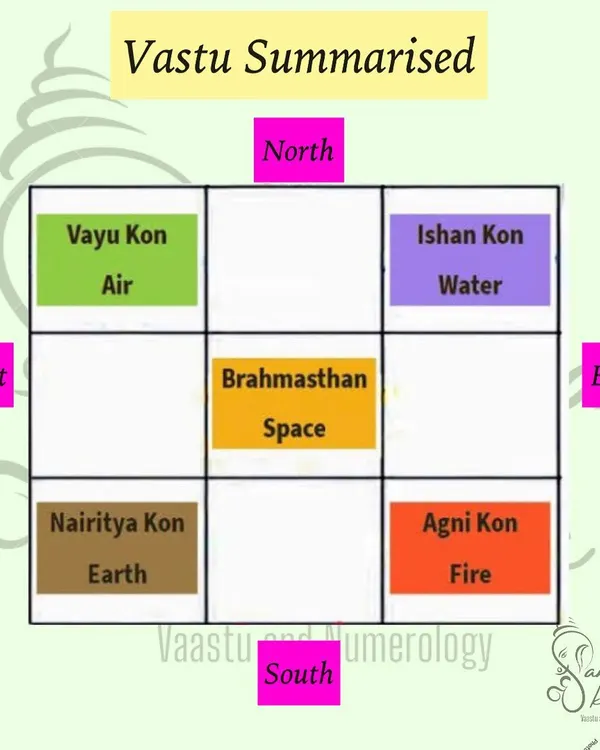
Vastu is not magic, and it is certainly not about placing random items to get rich. It is about the five elements: Earth, Water, Fire, Air, and Space. When these are balanced, your home supports you. When they are blocked, you feel it through stress, confusion, or a lack of progress in your career.
The North-East is your wisdom and health zone. Keep it light, airy, and bright. This is where your pooja room or meditation space should ideally sit. If you put a heavy kitchen or bathroom here, you are literally blocking your clarity.
The South-West is the exact opposite. It is your zone of stability and finance. This is where you put your master bedroom or heavy cupboards. If this area is empty or features a toilet, you will likely struggle with money blocks or chronic instability.
The South governs your name and fame. I have seen businesses struggle because they kept the South empty or positioned the entrance in a negative degree. You need heaviness here to anchor your reputation.
Do not overcomplicate it. You do not need demolition. Most corrections I suggest involve simple changes: swapping furniture, using specific colors, or placing metal strips to correct Geopathic stress. I use tools like Lecher Antennas to measure these energy lines—scientific data, not guesswork. Whether you are dealing with a North-East Vastu dosha or trying to unblock finances in the North, look at your space as a system. Optimize the layout, and let your hard work do the rest.
Similar work from other experts
Browse through Curated picks from other experts on mytribe
 14
14Vastu Made Easy: Learn the Fundamentals of Your Home
Understanding the 16 Directions and 5 Elements in Vastu
Vastu Gyan: Practical Principles for a Balanced Home
Vastu Shastra: Balance Your Home and Life Energy
 5
5


Simple Vaastu Principles to Align Your Home Energy



Practical Vastu Tips for Harmonious Living
More from Vastu Shastra Consultation by Arvind Rathan
More services by Arvind Rathan