Public Interest Litigations (PIL) for Civic Accountability
I use the law to force government action, from fixing fire safety rules in Mumbai high-rises to protecting our city's open green spaces.
This is the front page of Maharashtra Times covering our PIL on fire safety. The Bombay High Court took a strong stance, warning the government it might stop all new construction in Mumbai if fire safety rules were not notified. This is the power of a PIL in forcing a reluctant administration to act.
The Ghatkopar hoarding collapse was a man-made disaster caused by the corruption of the BMC. The hoarding was over 100 feet high, violating the 40-foot limit set by the National Building Code. I demand accountability not just for the company that owned the hoarding, but for the BMC and GRP officials who gave the illegal permissions.
This newspaper clipping shows the direct impact of our PIL. After the Bombay High Court threatened to stop all development permissions, the Maharashtra government finally issued a notification for fire safety regulations for buildings vulnerable to man-made disasters.
This article details the new fire safety regulations that were a direct result of our PIL. It mandates features like fire break water tanks, supervision by licensed electrical engineers, and regular checks. These are concrete steps to prevent the loss of life and property due to fires in Mumbai's high-rises.
Mumbai's open green spaces are its lungs, and they are being devoured by developers exploiting government policies. I wrote this article for Mumbai Mirror to raise awareness and have used legal channels to fight for the preservation of these vital public areas.
Brainstorming with top IAS officers Pravin Pardesi and Sujata Saunik to frame new fire safety guidelines for our PIL. Collaborating with honest and knowledgeable bureaucrats is key to creating effective policies that we can then present to the Bombay High Court for implementation.
With IAS officer Sujata Saunik, who has now become the Chief Secretary of Maharashtra. Her expertise was invaluable in drafting the fire safety guidelines for our PIL. Having allies within the administration who are committed to public safety is crucial for our work.
This is one of my early cases where I fought to save the historic 'Pancham Pyao' water fountain outside Bombay Gymkhana from being demolished by the BMC. Preserving public heritage and amenities is an important part of my civic advocacy.
The official case number for my fire safety PIL against the State of Maharashtra. This document represents a long and ongoing legal battle to make Mumbai's buildings safer for its citizens.
An article from the Times of India covering the Bombay High Court's warning to the state government in our fire safety PIL. The court's intervention was critical in pushing the government to act after years of delay.
About Public Interest Litigations (PILs) for Civic Change
Filing a PIL is not just about submitting paperwork, it is about creating a catalyst for systemic change. When I took up the fire safety issue, my goal was to break the government's inertia. By combining arguments in the Bombay High Court with public awareness, we forced the administration to move from empty promises to concrete action, like mandating fire break water tanks and regular engineer supervision. Change happens when you marry rigorous legal strategy with enough pressure to ensure officials cannot simply ignore the law.
True justice requires more than winning individual cases, it demands fixing the broken systems that allow injustice to thrive. My approach to Public Interest Litigation (PIL) is rooted in my background as a civil servant. I know where the gaps are, and I know how to use the law to force accountability.
My Strategy for Civic Change
- Evidence-Based Advocacy: Before approaching the court, I use RTI applications to gather concrete data. I do not speculate; I present facts that officials cannot easily refute.
- Judicial Pressure: The courts are the final recourse when the bureaucracy fails. My team and I focus on getting interim orders and admission hearings that keep the pressure on the state to act, such as the threat to halt construction approvals in Mumbai when fire safety norms were being ignored.
- Expert Collaboration: I work with retired and current honest bureaucrats to draft guidelines that are technically sound and legally enforceable. This creates a bridge between policy and implementation.
Common Areas of Civic Litigation
- Fire Safety Regulations: Ensuring that high-rises are not death traps, and that the Chief Fire Officer adheres to the National Building Code rather than favoring builders.
- Urban Green Spaces: Fighting against the encroachment on public lungs. We use PILs to challenge policies that treat our city's open areas as real estate commodities.
- Municipal Accountability: Holding the BMC accountable for illegal hoardings, unauthorized constructions, and the corruption that facilitates these man-made disasters.
If you see a systemic failure in your neighborhood, do not just accept it. The law provides tools for citizens to challenge the state, provided you are willing to fight.
Similar work from other experts
Browse through Curated picks from other experts on mytribe
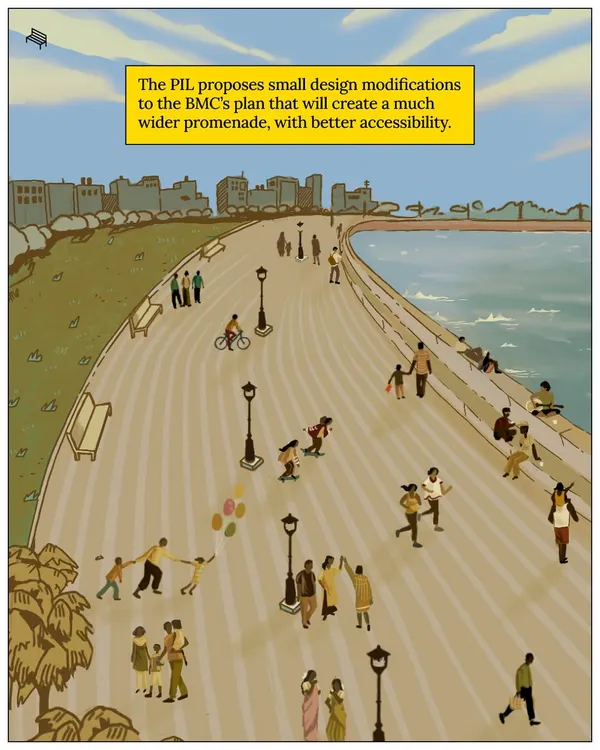 10
10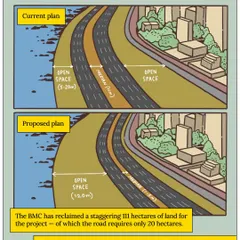
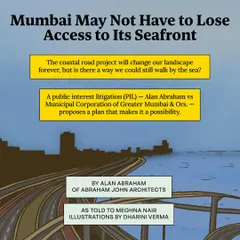
Advocacy for a Greener City in Mumbai
 5
5

Holding Power Accountable: High-Profile Legal Advocacy
 5
5
Legal Practice in Action: Fighting for Rights in Delhi Courts

Championing Public Interest and Environmental Law
 5
5
Exposing Systemic Failures: Legal Advocacy for the Common Man
 36
36
Our Legal Fight for Animals
More from Social Justice Advocacy by Abha Singh
More services by Abha Singh