Demanding Systemic Reform: Legal & Police Accountability
Justice is a daily, hard-fought battle against institutional apathy. From calling out police corruption to fixing flawed legislation, I use the law as a tool to hold the powerful accountable.
The POCSO Act, while crucial, is being misused to criminalize consensual adolescent relationships. I argue on Times Now that the law needs to be revisited to prevent 17-year-old schoolboys from being branded as rapists for teenage romances. The focus should be on forced assault, not consensual acts.
Speaking on NDTV about a landmark Supreme Court ruling concerning the POCSO Act. I explain that when a law is flawed, it fails to deliver justice. Treating consensual teenage relationships as rape stigmatizes young people and clogs the justice system. It is time to rectify the law to reflect today's social realities.
The Pune Porsche case highlights the deep flaws in the Juvenile Justice Act. The law is designed to reform children, but when it is applied to a heinous crime committed by a wealthy, entitled teenager, it results in a mockery of justice. I explain on Zee TV how the initial bail order was a direct, though flawed, application of this lenient law.
The suicide of software engineer Atul Subhash after being implicated in a false dowry case is a tragedy that exposes the misuse of Section 498A. I have fought cases where entire families, including sisters and brothers-in-law, are falsely accused. This is not a failure of the law itself, but of corrupt implementation by the police, which needs to be addressed.
The conviction rate in rape cases in India is a dismal 28%, and it often takes over a decade to get a verdict. This delay and the lack of a witness protection program mean that rapists have very good odds of getting away with their crimes. This is a systemic failure that emboldens criminals and denies justice to victims.
Justice delayed is justice denied. The Nirbhaya rapists were hanged 11 years after the crime, by which time the connection between the crime and punishment was lost. For the law to be a true deterrent, punishment must be swift. The current system, with its endless appeals and paroles, fails to deliver that message.
The case of Puja Khedkar, who allegedly used fake OBC and disability certificates to enter the IAS, is just the tip of the iceberg. I have been fighting this for years. People with influence know how to hijack the system through corruption. I demand a full inquiry into all disability and OBC quota recruitments to expose this scam.
The Anti-Corruption Bureau's probe into the father of IAS officer Puja Khedkar is a necessary step. I have long advocated for the dismissal of officers who use fake caste and disability certificates. The verification process for reservations must be strict to ensure the benefits go to those who genuinely deserve them.
The rot in our system is deep. Political appointees chair our public service commissions, and corruption allows people to buy fake OBC and medical certificates. In the case of Puja Khedkar, it is not enough to just terminate her. We must prosecute the tehsildar who issued the certificate and the doctors who faked the medical reports.
I support the Bombay High Court's ruling that certain restrictive household behaviors do not legally constitute "cruelty" under dowry laws. It is crucial to distinguish between serious abuse and family disagreements to prevent the misuse of Section 84 of the BNS. The focus must remain on genuine cases of violence and harassment.
About Demanding Systemic Reform: Legal & Police Accountability
Real change does not happen in a vacuum. Whether I am challenging the misuse of the POCSO Act in teenage relationships or exposing corruption in civil service recruitment, my strategy is built on evidence, using RTI applications and targeted media advocacy to force transparency. If you are fighting a battle against systemic apathy or institutional bias, you need a strategy that moves the needle on accountability.
True justice requires more than just winning individual cases; it demands structural change. For too long, the system has relied on 'taarikh pe taarikh' (never-ending court dates) to tire out those seeking redress. I refuse to play by those rules. My approach centers on proactive legal intervention: identifying the root cause of the injustice, gathering irrefutable evidence through RTI, and, when necessary, bringing the issue into the public eye through media advocacy to force administrative action.
My Approach to Systemic Change
- Public Interest Litigation (PIL): I use PILs to challenge policies that harm the public, from demanding fire safety in high-rises to fighting for the preservation of green spaces. These are not just legal filings; they are tools to force government departments to do their jobs.
- Police Accountability: Corruption often stems from police apathy or complicity. I work directly with clients to ensure FIRs are filed, evidence is preserved, and officials are held to account for inaction. If the law is being weaponized against the vulnerable, I step in to balance the scales.
- Legislative Reform: Flawed laws like the POCSO Act or the Juvenile Justice Act often fail the people they were meant to protect. I do not just complain about these flaws; I provide evidence-based arguments to courts and the media to push for necessary amendments that reflect modern social realities.
Why This Matters
When we talk about 'nyay' (justice), we are not just talking about winning a case. We are talking about preventing the next person from suffering the same fate. Whether you are battling a corrupt bureaucracy, dealing with institutional harassment, or seeking to hold a powerful entity accountable, you need someone who understands how the machine works and how to dismantle it.
Similar work from other experts
Browse through Curated picks from other experts on mytribe
 5
5
Exposing Systemic Failures: Legal Advocacy for the Common Man

Public Advocacy and Legal Commentary for Social Justice

Legal Advocacy and Social Commentary
Commentary on the Justice System and Courtroom Realities
 14
14


Championing Human Rights and Constitutional Justice
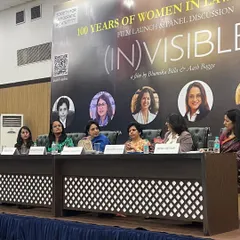


Championing Professional Ethics & Women in Law
More from Social Justice Advocacy by Abha Singh
More services by Abha Singh