Featured Legal Advocacy: My Fight for Justice and Reform
I believe the law is a tool that belongs to the people. Here is a look at the battles I have led—from the Supreme Court floor to the streets of Mumbai—to hold systems accountable and protect the rights of the unheard.
This is the reality of the fight. I am speaking with Bani and Nita, two widows whose husbands died during manual scavenging for a paltry sum. Through my foundation Rann Samar, we fought in the High Court to secure a compensation of ₹10 lakhs for each family, and we continue to fight for the enhanced ₹30 lakhs compensation ordered by the Supreme Court. Their stories are a powerful reminder of why this work is so critical.
At the steps of the Supreme Court of India, where I regularly file Public Interest Litigations (PILs) and argue cases to challenge systemic injustice. Taking the fight to the highest court in the land is essential for driving national-level legal reforms and ensuring accountability.
The brutal rape and murder of the trainee doctor in Kolkata was a failure of the entire system. In this discussion on the Humans of Bombay show, I break down the institutional failures, from the lack of safe resting spaces for doctors to the slow response of law enforcement. We must demand accountability to prevent such tragedies.
During the heavy Mumbai monsoons, I stood with these pavement dwellers who were being forced to vacate their makeshift homes. It is a deplorable situation when children's school bags are confiscated while skyscrapers are built nearby. My work involves being on the ground, listening to their plight, and using legal channels to fight for their right to shelter.
This short film documents our PIL in the Bombay High Court concerning the deaths of sewage workers in Mumbai. It shows the harrowing conditions and the families left behind, like the widow of Govind Charotia and the wife of Vishwajeet Devnath. It is a stark look at why the practice of manual scavenging, which disproportionately affects Dalits, must be eradicated.
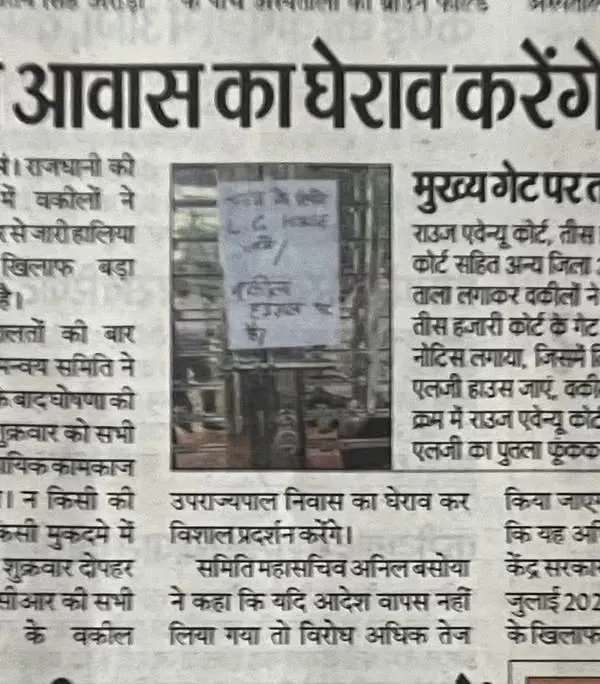
This newspaper clipping highlights a significant step in our fight for workplace safety. Our PIL in the Supreme Court sought to make Internal Complaints Committees (ICCs) under the POSH Act independent and free from corporate pressure. Securing a notice to the Union Government is a crucial move towards ensuring women can report sexual harassment without fear of retaliation.
When the police fail to do their duty, the entire justice system is compromised. In this podcast, I explain your rights when an officer refuses to register an FIR. It is a punishable offense for them to refuse, and citizens must be empowered with this knowledge to hold the police accountable for their inaction and corruption.
I was deeply honored to receive the Lifetime Achievement award for my work in women empowerment and gender justice. Here I am accepting the award from former Chief Minister Harish Rawat in New Delhi. This recognition is not just for me, but for every woman whose fight for justice I have been a part of.
About Featured
I do not just file cases; I build strategies around the reality of your situation. Whether it is securing compensation for manual scavenger families or challenging police inaction in sexual harassment cases, I use the law to force accountability. If you are feeling silenced by a system that keeps pushing your dates back, we need to look at your facts, evidence, and the right legal path forward.
How I Approach Justice
True legal change rarely happens by just following the manual. My work—documented here through PILs, media advocacy, and on-ground intervention—shows that you have to be persistent. When the system fails, as it often does for the marginalized, I step in to bridge that gap.
My practice covers several critical areas:
- Public Interest Litigations (PILs): I challenge systemic failures, such as poor fire safety in high-rises, lack of open green spaces in Mumbai, or the administrative apathy that leaves vulnerable families behind. If a policy or a public body is acting against the law, we use the High Court and Supreme Court to demand correction.
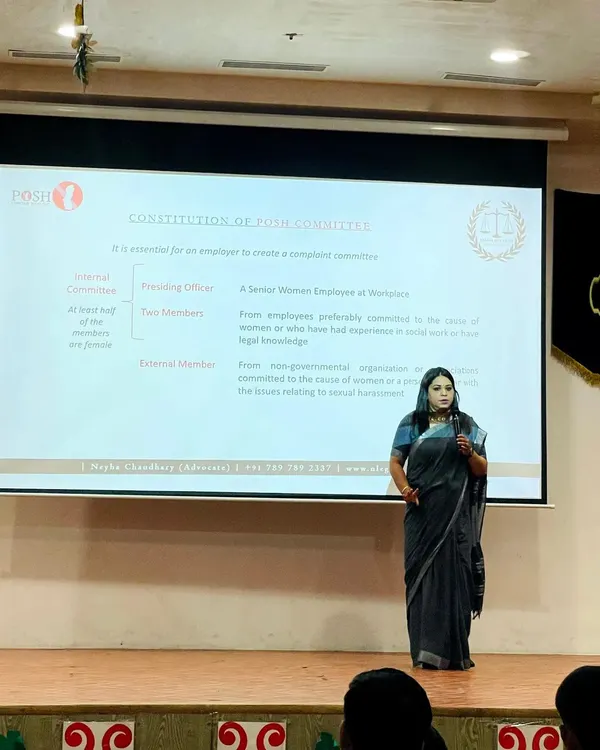
- POSH Compliance & Women's Safety: I do not believe in token compliance. Whether I am serving as an External Member on an Internal Complaints Committee (ICC) or fighting to make these committees independent of corporate pressure, my goal is to ensure workplaces are actually safe, not just 'compliant' on paper.
- Police Accountability: One of the most common issues I see is the refusal to register an FIR. This is a punishable offense. My work involves empowering citizens to know their rights—including how to file a counter-complaint when an officer refuses to do their duty.
Why This Matters
My foundation, Rann Samar, acts as the backbone for pro-bono work. We focus on cases that others often ignore, such as the plight of manual scavengers or victims of domestic violence who have nowhere else to go. Justice is not a word; it is the daily grind of gathering evidence, drafting petitions, and standing in court until the law is upheld.
If you are dealing with a complex legal issue or feel that your rights are being trampled, remember that silence is not the answer. We need to evaluate your situation, review the documentation, and decide if we are going to fight. If you are ready to take that step, let's discuss your matter.
Similar work from other experts
Browse through Curated picks from other experts on mytribe
 8
8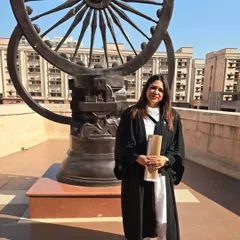

Legal Advocacy and Professional Counsel
 14
14


Championing Human Rights and Constitutional Justice
Advocating for Women: Legal Rights & Equitable Justice

Strategic Legal Representation and Courtroom Advocacy
 7
7

Fighting for Your Rights & Public Interest
 8
8
Featured Legal Expertise & Case Insights
More from Social Justice Advocacy by Abha Singh
More services by Abha Singh