Multi-Pet Socialization: Safe Integration for Dogs and Cats
I turn nervous first meetings into lasting friendships by helping dogs and cats learn to coexist peacefully. See how I create a calm, shared space for every guest in my home.
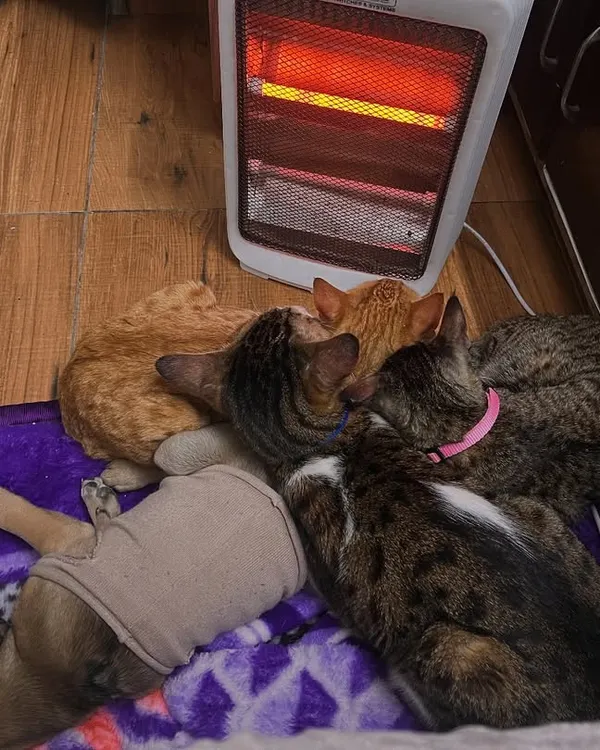
A typical morning at the creche. Merlin the cat has become so comfortable here that he now happily shares the bed with his canine 'furrends', a testament to our slow and steady integration process.
This is what successful cat and dog socialization looks like. Jarvis the cat and Pumpkin the German Shepherd are engaged in gentle play, showing mutual trust and respect.
My resident cat, Pihu, takes her job as a host very seriously. Here she is sharing her bed with two Frenchie guests, Brie and Daffodil, demonstrating a well-balanced, multi-pet household.
Curiosity can lead to friendship. I provide safe, supervised opportunities for cats and dogs to observe each other from a comfortable distance, like on this netted balcony, which is a key first step in socialization.
The kitchen is the heart of the home, even for our four-legged guests. Here, a group of dogs and a cat mingle calmly while I prepare food, showing how they learn to share space in a typical home setting.
It's not just about dogs and cats. I also help visiting cats like Cleo and Bagheera get comfortable with each other, ensuring a peaceful stay for everyone.
First meetings are always handled with care. Here, Mogambo the Poodle is introduced to the creche family, learning to be calm and social with my resident dogs in a controlled, positive way.
It's always wonderful to welcome back repeat guests. Fleur the Frenchie and Daisy the Spitz are picking up their friendship right where they left off, showing the lasting bonds that are formed here.
About A Harmonious Pack: Multi-Pet Socialization
Socializing isn't about forcing pets together. I start by letting them observe each other from a safe distance, often using my netted balcony, or through highly supervised, slow introductions. Whether it is a cat sharing a bed with resident dogs or introducing a new guest to the pack, my focus is always on respecting individual comfort levels rather than rushing the process.
Most pet parents worry about how their dogs and cats will get along, but at Critter Creche, I have found that with the right guidance, they often surprise us. Integration is a slow, methodical process that relies on a home environment rather than a sterile facility.
My Approach to Integration
Every pet has a unique personality. My resident dogs, Daisy and Pumpkin, are calm and serve as the perfect hosts to show newcomers the ropes. For cats, I always ensure they have vertical space and the ability to retreat to a private area whenever they need a break. In my Gurgaon home, dogs and cats share the same floor, observe each other during feeding times, and gradually learn that the other is not a threat.
Why the Environment Matters
In a traditional kennel, stress levels are high and animals are often isolated. By keeping my boarding numbers low, I can monitor every interaction personally. This is the key to maintaining harmony. By limiting the number of guests, I can provide the 'neonate' level of attention that some rescue pets need, or the patience required for an older cat to accept a dog's presence.
What We Work On
- Safety First: Controlled, supervised introductions are the foundation of my method.
- Pack Dynamics: I teach guests how to share space without conflict.
- Positive Reinforcement: We celebrate calm behaviors, whether it is sitting quietly while I prep food or simply ignoring a cat roommate.
- Building Trust: For rescue pets, this is about rewriting their past. Seeing a neglected dog learn to trust a cat is the most rewarding part of what I do.
Similar work from other experts
Browse through Curated picks from other experts on mytribe
 8
8
Cage-Free Dog and Cat Boarding Together
Techniques for Multi-Dog Management and Harmony
Dog Socialization and Cage-Free Boarding in Gurugram
Cage-Free Dog Boarding in Gurgaon
Boarding for Every Kind of Pet: Personalized Care
 5
5
Quiet and Safe Cat Boarding in Noida
More from Pet Training & Behavior Modification by Critter Creche
More services by Critter Creche