FUE Hair Transplant: Our Process and Realistic Expectations
We perform FUE hair transplantation with a focus on safety, natural hairlines, and long-term donor area health. Here is the science behind our surgical approach.
I often have to repair transplants where a male hairline was made to look female. A man's hairline has natural angles, which inexperienced technicians often fill in completely. I focus on creating a natural, gender-appropriate hairline that looks authentic.
Is a "mega hair transplant" of 10,000 grafts possible? For most Indian patients, the safe limit from the scalp, beard, and chest combined is closer to 6,500 grafts. I explain why chasing huge numbers seen on social media can damage your donor area and why you should trust your surgeon's recommendation.
(Kannada) Avoid the mistake of over-harvesting. A hair transplant is a rearrangement of hair, not creation. If too many grafts are taken from the back, the donor area will look empty and it is very difficult to hide. I always operate within a safe limit for each patient.
Wondering how many grafts you need? I explain a simple calculation based on the seven grades of baldness. For example, a Grade 4 hair loss typically requires around 3,000 to 3,500 grafts. This helps set a realistic starting point for your consultation.
When planning a transplant, we must prioritize which areas to cover. The frontal hairline is the most visible and should be the top priority. The vertex or crown is second, and the mid-scalp is last, as it's least visible to others.
Yes, we can perform a hair transplant to improve your beard or mustache. The process is similar to a scalp transplant, but requires careful post-operative care, like avoiding hard-to-chew foods for a few days to allow the new grafts to settle.
(Kannada) Where do we get hair from for a transplant? The first choice is always the back of the head. If more hair is needed, the second choice is the beard, and the third is the chest. I explain the hierarchy and why some donor sources are better than others.
Patients often ask about Sapphire hair transplants. A sapphire blade is just a tool made of glass; it doesn't automatically guarantee a better result. The surgeon's skill is what matters. We custom-make our blades to perfectly fit each graft, ensuring a snug fit and optimal healing.
(Kannada) A common question is whether hair grows back in the donor area after a transplant. The answer is no. We are moving hair, not manufacturing it. This is why it's crucial not to remove too much hair from the back, so it doesn't look empty.
This video shows the donor area after an FUT or 'strip' technique. When performed with skill, the scar can be incredibly fine and almost impossible to locate. This shows that FUT is still a very good technique in certain situations when done by an experienced surgeon.
About The FUE Transplant: Our Process & Philosophy
Instead of chasing high graft numbers seen on social media, we prioritize the long-term health of your donor area. For most patients, exceeding safe extraction limits leads to visible thinning at the back of the head. We plan your procedure based on your specific baldness grade to ensure natural, sustainable density that lasts.
Understanding FUE Hair Transplantation
FUE (Follicular Unit Excision) is essentially a rearrangement surgery. We are not creating new hair; we are moving healthy follicles from the back of your scalp to areas where you need them. Because this is a finite resource, we avoid risky mega sessions of 10,000+ grafts. In Indian patients, the safe limit is often around 3,000 to 4,000 grafts from the scalp in one session. Anything beyond that risks damaging the donor area, leaving it looking permanently empty.
Why Technique Matters More Than Tools
Patients often ask about Sapphire blades or DHI. Scientifically, FUE is the foundation. DHI is primarily a branding term for a specific way of using implanters. Similarly, a glass (Sapphire) blade is just a tool. A successful transplant relies on the surgeon's manual skill, not the marketing terms used to describe it. We custom-cut our blades to match the size of your specific follicles, ensuring a snug fit and optimal healing.
Designing a Natural Hairline
A common repair case we see involves male hairlines that were filled in to look like a female hairline, creating a flat, artificial look. We carefully design natural angles that suit male anatomy, ensuring the results are undetectable.
What to Expect
Results are not immediate. You will see minimal growth in the first 3 months, decent progress by 6 months, and the final result around 9 to 12 months. Our focus is on long-term hair maintenance and preserving your existing hair, rather than just selling a one-time surgery.
Similar work from other experts
Browse through Curated picks from other experts on mytribe

FUE Hair Transplant for Natural Hairline Restoration
 13
13
FUE Hair Transplantation for Natural Results
The FUE Hair Transplant Process: A Step-by-Step Look
 4
4Natural-Looking FUE Hair Transplants in Rajajinagar
 43
43
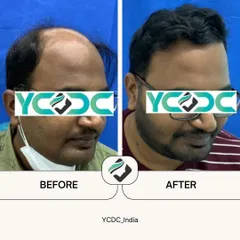
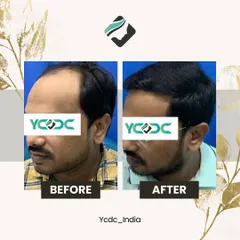
FUE Hair Transplant Before & After Results
 7
7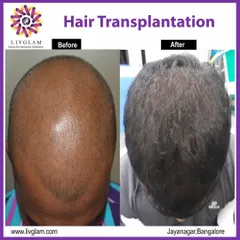
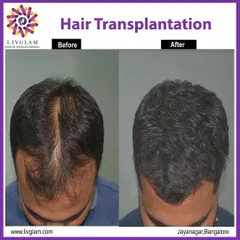
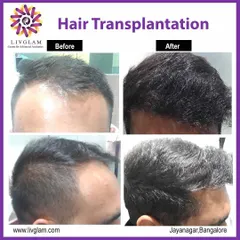
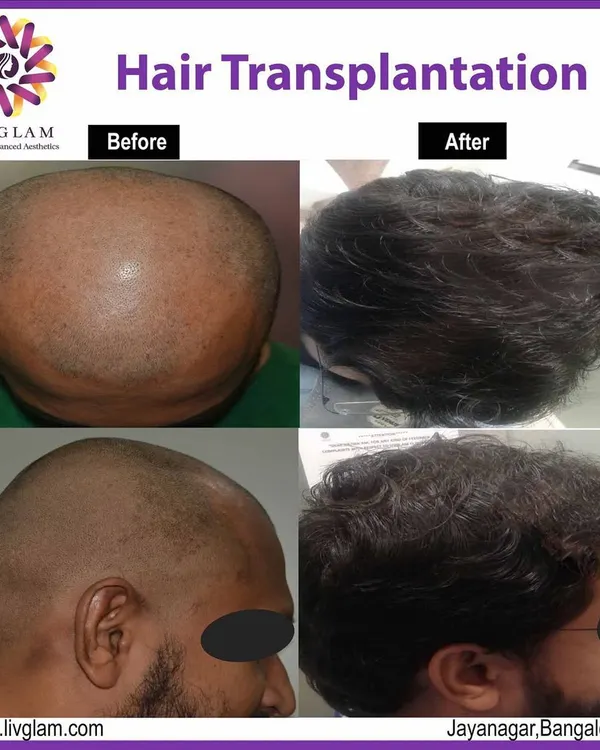
Hair Transplantation in Jayanagar, Bengaluru
More from Hair Restoration by The Venkat Center
More services by The Venkat Center