Documenting Karnataka's Living Folk Traditions
I travel across Karnataka to witness rituals like Bhoota Kola and Nagamandala in their native environments. This fieldwork is where my research begins and where the stories of our land truly come alive.
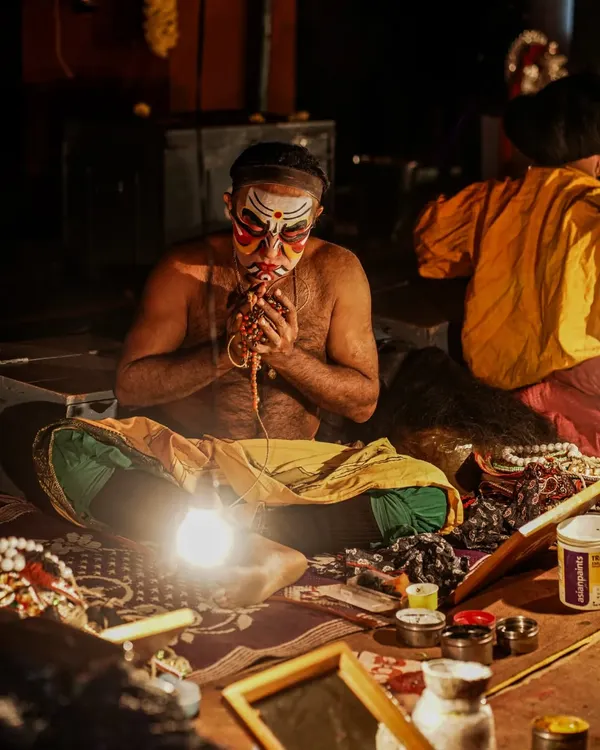
A Bhoota Kola performer in Kundapura, fully adorned and ready for the ritual. Witnessing the transformation of the artist as the 'daiva' or spirit enters them is a profound experience.
Participants at a Kambala event in Mangalore, leading their prized buffaloes. This folk sport is a celebration of the agrarian community's bond with their animals and land.
The 'Hase Karaga' emerges, a moment of intense devotion during the Bengaluru Karaga festival. My fieldwork involves documenting the intricate rituals and stories behind these urban and rural traditions.
A Soliga tribal priest walking on a bed of hot coals during the 'Roti Habba' at Biligiri Rangana Betta. This ritual of faith is a powerful testament to their connection with nature and their deities.
The surviving painted ceiling panel at the Virupaksha temple in Hampi. My research involves studying not just dance, but also the allied arts like painting and sculpture that provide context to our traditions.
A traditional Kavadi, an embellished bamboo structure carried by devotees in Palani. My journey with Kavadi Attam began in school, and visiting its place of origin was a full-circle moment.
A vibrant Nagamandala, a sacred geometric pattern drawn on the ground for the worship of the serpent gods in the Tulu Nadu region. These mandalas are complex spiritual and mathematical representations.
The traditional 'bugdi' earring of a local lady in Kallur village. My travel logs often focus on these small but significant details of adornment, costume, and culture that tell a larger story.
A 'patri' possessed by the Naga daiva during a Nagamandala ritual, his face smeared with the intoxicating 'hombale' flower. This is a raw, powerful form of worship that I document.
The Nagamandala ritual in progress, with the patri and vaidyas dancing in circles to invoke the serpent deity. The movements are codified and symbolic.
About Cultural Fieldwork: Documenting Living Traditions
When I document a ritual like Nagamandala or the Bengaluru Karaga, I am not just observing, I am mapping the connection between the community and their roots. My fieldwork takes me from the intense, coal-walking rituals at Biligiri Rangana Betta to the quiet geometric precision of Tulu Nadu's mandalas. Whether you are looking for academic research, cultural curation, or simply need an authentic perspective for your next project, my approach is always to go straight to the source, ensuring every performance or story I share is grounded in its original truth.
Fieldwork is not a passive task. It is an act of preservation. When I stand in the middle of a temple courtyard in Mangalore or walk the hills of Kallur, I am looking for the details that history books often miss—the way the Hombale flower is amassed to create a sacred wall, or how the patri convulses when the spirit enters, or the specific cadence of the Vaidya's song.
My documentation process is three-fold:
- Immersion: I live the ritual, whether it is an all-night Nagamandala ceremony or a simple village fair. This allows me to understand the rhythm of the community, not just the steps of the dance.
- Analysis: I connect these visual rituals back to their origins. My book, 'Nrutya Beru', is a result of this deep-dive research into why these traditions exist and how they have evolved.
- Translation: My role is to bridge the gap between the rural practitioner and the urban audience. I help you translate these complex rituals into understandable, respectful experiences for your events, exhibitions, or academic papers.
I do not just present a performance; I present a context. If you are curating an event that requires more than just entertainment, or if you need a researcher who understands the pulse of Karnataka's traditions, let us talk about how we can bring this authenticity to your project.
Similar work from other experts
Browse through Curated picks from other experts on mytribe
 8
8
Cultural Photography for Yakshagana, Bhoota Kola & Festivals
Capturing Traditional Cultural Rituals & Festivals
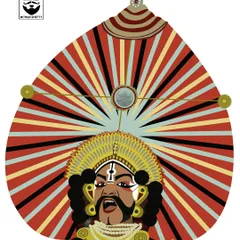
Tulunad Cultural Digital Illustrations
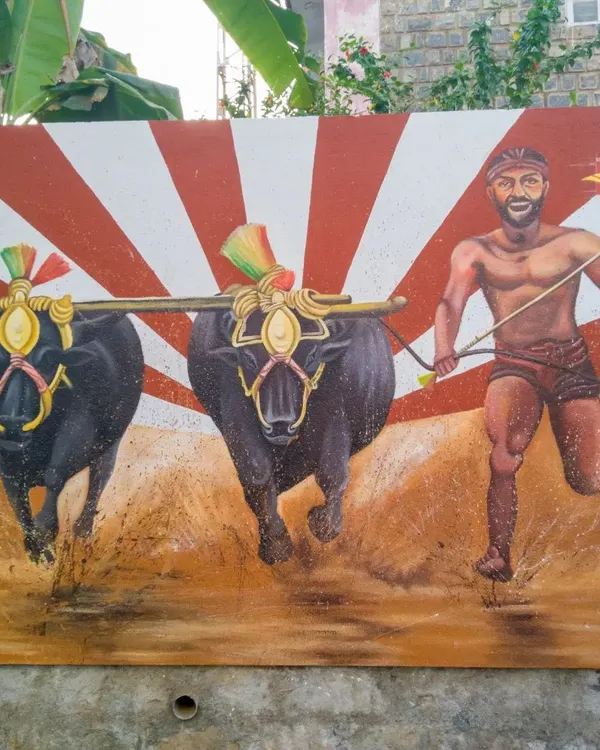 13
13
Tulunad Cultural Murals: Yakshagana & Kambala Wall Art
 26
26
Cultural Narratives and Thematic Art Collections
 8
8
Authentic South Indian Wedding Ceremonies Captured in Film
More from Folk Dance Consultancy & Curation by Sneha Kappanna
More services by Sneha Kappanna