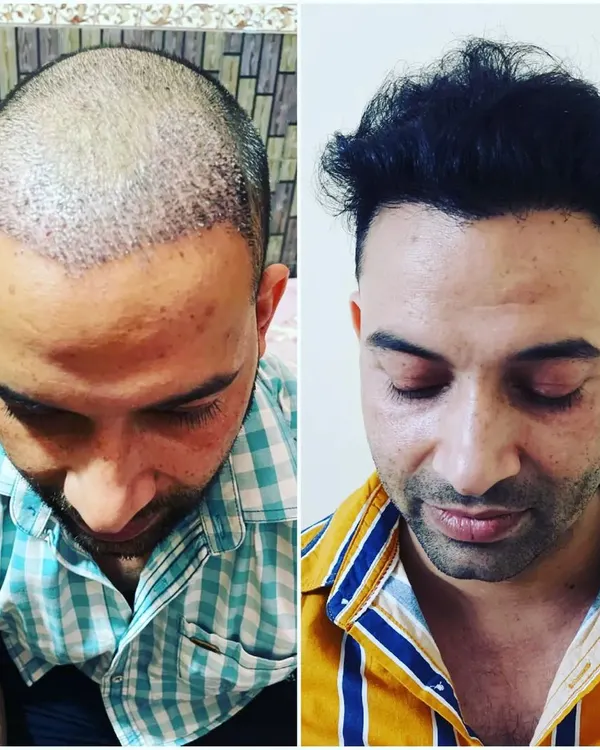
Real PRP & GFC Hair Regrowth Results
See the science of non-surgical restoration in action. These results show how PRP and GFC therapy can strengthen roots and improve density without heavy surgery.
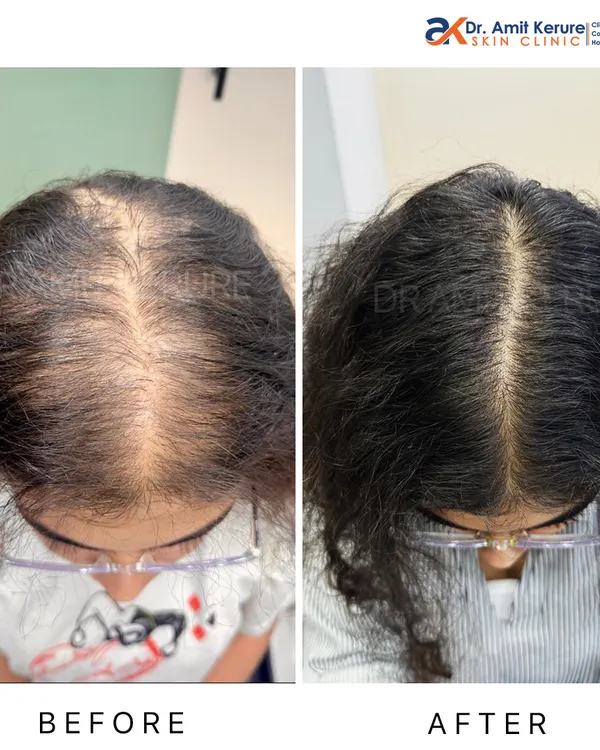
This is the kind of result we can achieve with non-surgical PRP therapy. The image on the left shows significant thinning at the crown. After a planned course of treatment, you can see the visible improvement in hair density and scalp coverage on the right. This is not an overnight fix, but with patience, we can achieve substantial natural hair regrowth.
This young man, a PhD student, was experiencing excessive hair fall and thinning after moving to Delhi. I diagnosed his condition and recommended a course of GFC and PRP therapy. In just three months, without any oral medication like Minoxidil, he saw his hair become denser and thicker. His story shows how effective these treatments can be for early-stage hair loss.
After moving to a new city, this patient noticed his hair fall increased, and even shaving his head didn't help. I personally consulted with him and we started a plan of four GFC sessions. You can hear from him directly how his hair density has improved and hair fall has stopped. It's a clear example of how a proper diagnosis and consistent treatment yield great results.
Many people ask me, what exactly is PRP therapy? It stands for Platelet-Rich Plasma. In simple terms, it's a medical treatment where I use your own blood. We concentrate the platelets, which are rich in growth factors that stimulate tissue repair and hair follicle regeneration, and inject them precisely where your scalp needs them. It's a natural way to combat hair fall.
Why do I often recommend PRP for hair loss? First, it's autologous, meaning it uses your own blood, which minimizes risks. The procedure involves minimal discomfort and is a natural approach to stimulating hair follicles. The primary benefit I see in my patients is a marked improvement in overall hair quality, thickness, and strength.
It's important to separate myth from truth. A common misconception is that a hair transplant is a one-time fix for all future hair loss. The truth is, a transplant doesn't stop your existing, non-transplanted hair from thinning. That is why I often combine surgical procedures with non-surgical treatments like PRP to maintain existing hair and ensure long-lasting, natural results.
I was invited by Akashvani (All India Radio) to discuss the science of hair loss and its treatments. In this interview, I explain the causes of androgenetic alopecia, the difference between male and female pattern baldness, and when non-surgical options like PRP are a better choice than a transplant. It is my belief that an educated patient makes the best decisions for their health.
About Featured
PRP and GFC are not magic fixes; they are clinical procedures that use your body’s own healing power to combat thinning. In these results, you are seeing what happens when we accurately diagnose the cause—whether it is stress-induced or early-stage androgenetic alopecia—and pair it with consistent, controlled sessions. The most important step isn't the treatment itself, but the initial scalp analysis to determine if your follicles are still active enough to respond to growth factors.
Understanding the Science
Many patients come to me assuming that every hair loss case needs a transplant. That is a myth. My approach starts with a deep dive into your scalp health. If you are in the early stages of thinning, we don't need to surgically move hair. Instead, we use your own biology.
PRP vs. GFC: What is the difference?
- PRP (Platelet-Rich Plasma): I draw your blood, separate the platelets, and concentrate them. These platelets are rich in growth factors that stimulate tissue repair. It is a proven, natural way to wake up sleeping follicles.
- GFC (Growth Factor Concentrate): This is the next level. Using specialized kits, I activate your platelets to release growth factors directly. It is more potent, requires a smaller volume of blood, and is often less painful than traditional PRP.
My Diagnostic Process
When you see these before-and-after results, you are seeing a plan tailored to the individual.
- Scalp Analysis: We map your hair density to see where thinning is most aggressive.
- Medical History: I rule out systemic issues like thyroid or vitamin deficiencies that might be causing the fall.
- Treatment Selection: Based on your hair quality and the specific type of thinning, I recommend either PRP, GFC, or a combination protocol.
Can this replace a transplant?
For early-stage thinning, absolutely. These treatments can stop further loss and thicken existing hair. However, if your follicles are already dead, a transplant is the only way forward. My role is to give you an honest assessment during your consultation so you don't spend time and money on treatments that won't yield the results you want.
Similar work from other experts
Browse through Curated picks from other experts on mytribe

Proven Hair Restoration & Natural Transplant Results
 7
7
Real Hair Restoration Results and Science-Backed Care
Non-Surgical Hair Restoration and Growth Solutions
Advanced Hair Regrowth and Scalp Care
Proven Hair Regrowth Treatments Based in Science
 8
8Natural Hair Transplant and Restoration Results
More from Non-Surgical Hair Restoration by Vikas Panthri
More services by Vikas Panthri