Expert Talks & Yoga Philosophy
Yoga is more than movement; it is a science of the mind. Here, I break down ancient sutras and the logic behind our daily practice to help you understand your own balance.
A common question I get is: should we practice pranayama before or after asanas? The classical texts of Ashtanga Yoga provide a clear sequence: asana first to open the body, then pranayama to direct the life force.
How should you breathe during asanas? The principle is simple: exhale when the body contracts (like in a forward bend) and inhale when the body expands (like in a backbend). This synchronicity is key to a safe and effective practice.
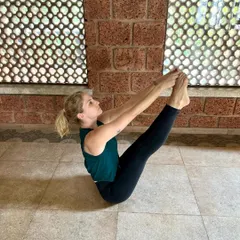
The Nabhi Chakra, or solar plexus, is your body's energy powerhouse. In this talk, I explain how activating this center through specific asanas can boost your confidence, improve digestion, and build inner strength.
Should pranayama be done before or after asanas? Hatha Yoga texts clearly state that after the body is made steady through asanas, one should practice pranayama as per the guru's guidance to strengthen the vital life force.
Patanjali Yoga Sutra 1.33 teaches us how to purify the mind. By cultivating friendliness toward the happy, compassion for the suffering, joy for the virtuous, and equanimity toward the wicked, the mind becomes clear and serene.
Sutra 1.31 explains the symptoms of a distracted mind: suffering, despair, unsteadiness of the body, and irregular breathing. Recognizing these is the first step toward finding a solution.
How do we remove these distractions? Sutra 1.32 gives the answer: through the practice of one-pointed focus (ek-tattva-abhyasa). This is the core principle of meditation and concentration.
Sutra 1.35 offers another method for steadying the mind: by concentrating on a perception that arises from the senses, such as focusing on the tip of the nose or the sound of your own breath.
About Expert Talks & Yoga Philosophy
Most people ask if they should do asanas before pranayama or vice versa. The answer lies in the classical sequence: asana first to open the body, then pranayama to direct the life force. I teach this logical flow because once your body is steady, your breath becomes a tool for clarity rather than just a physical necessity.
Why the logic matters
Yoga is often treated like a gym workout, but it is actually a precise science. When you understand the 'why'—like why forward bends require exhalation—the practice stops being a struggle and starts being a tool for your mental and physical health.
💡 Kya aap jaante hain? (Do you know?)
Most students ask: Should I do Pranayama before Asanas?
In Hatha Yoga, the sequence is clear. Asanas are meant to open and steady the body. Once the body is no longer a distraction, the mind is ready for Pranayama. If you do it the other way around, you are forcing the breath into a body that is still rigid. The system must be cleansed, the body strengthened, and then the breath harnessed.
Understanding the Sutras
My approach bridges ancient text with modern life. Whether we are discussing Patanjali Yoga Sutra 1.33 on cultivating friendliness or the mechanics of the Nabhi Chakra for digestion, I keep the focus on practical application. You do not need to be a Sanskrit scholar to benefit from these teachings. My goal is to make these ancient principles a 'samadhaan' (solution) for your modern stress and lack of focus.
If you are looking for more than just a physical routine, my sessions cover the anatomy of stress, the science of breathwork, and the philosophy of staying calm in a noisy world. Let us move beyond touching our toes and start understanding the path down.
Similar work from other experts
Browse through Curated picks from other experts on mytribe

Understanding Yoga Philosophy and Core Principles
The Philosophy of Yoga: Ancient Wisdom for Modern Life
The Philosophy of Yoga: Beyond the Asanas
Ancient Yoga Philosophy for Modern Life
Authentic Yoga Wisdom, Tutorials & Philosophy
 11
11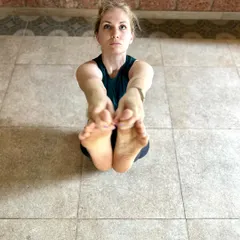
Yoga Philosophy and Reflections on Practice
More from Corporate Wellness Programs by Lakshay Power Yoga
More services by Lakshay Power Yoga