Why Professional Hair Loss Diagnosis Matters First
Don't guess what is causing your hair fall. A scientific diagnosis saves your hair and your money. See how we identify the root cause before suggesting a single treatment.
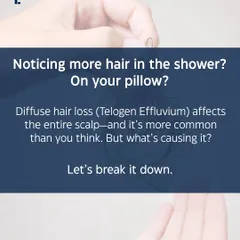
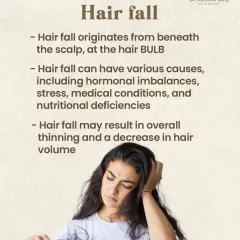
Are you experiencing hair shedding or hair thinning? These are two different problems with different solutions. We break down the key differences to help you understand what's happening with your hair and why the right diagnosis is crucial before starting any treatment.
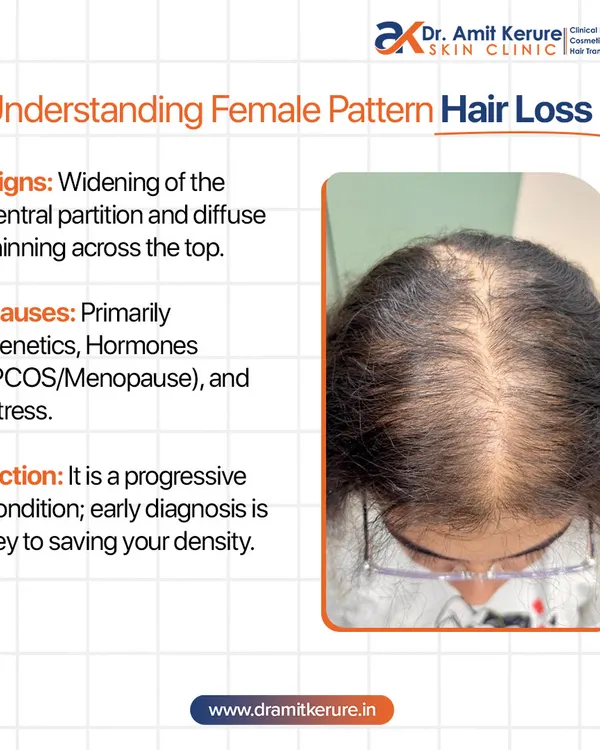
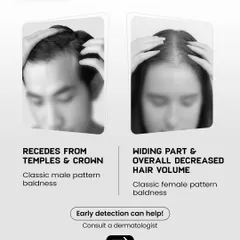
Can you see your scalp more, but there's no distinct bald patch? This could be diffuse thinning, a subtle form of hair loss where overall density reduces. We explain the causes, from genetics to PCOS, and why early dermatological assessment is key to prevention.
This patient was sure he had male pattern baldness, but our diagnosis revealed Lichen Planopilaris, a scarring alopecia. This case highlights why self-diagnosis is risky and how a professional examination is essential to prevent incorrect treatments that could worsen the condition.
Some types of hair loss, like scarring alopecia, permanently destroy hair roots, making regrowth with medicines impossible. We explain conditions like Lichen Planopilaris and why a hair transplant, performed only when the disease is stable, is often the only viable solution.
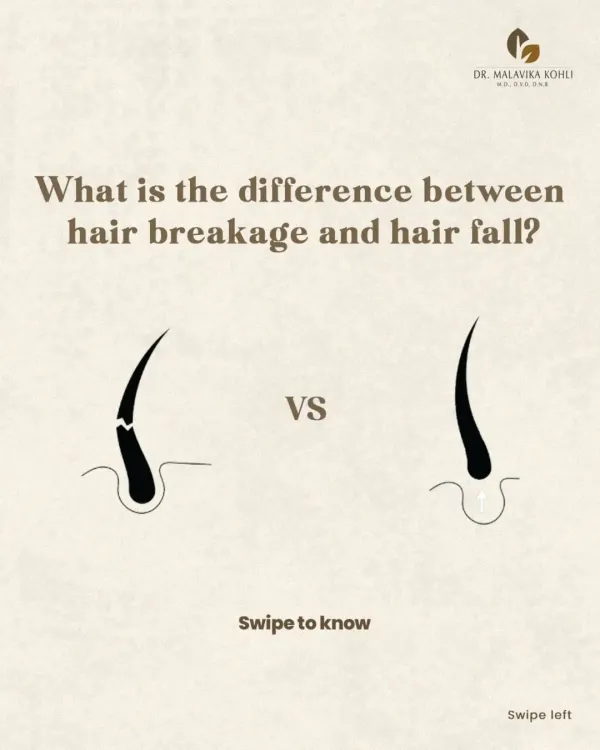
In this discussion from our 'Hair Stories' series, we, Dr. Amit Kerure and Dr. Sonia Nanavati, clarify the common confusion between hair loss (telogen effluvium) and hair thinning. Understanding this difference is the first step toward seeking the right medical help.
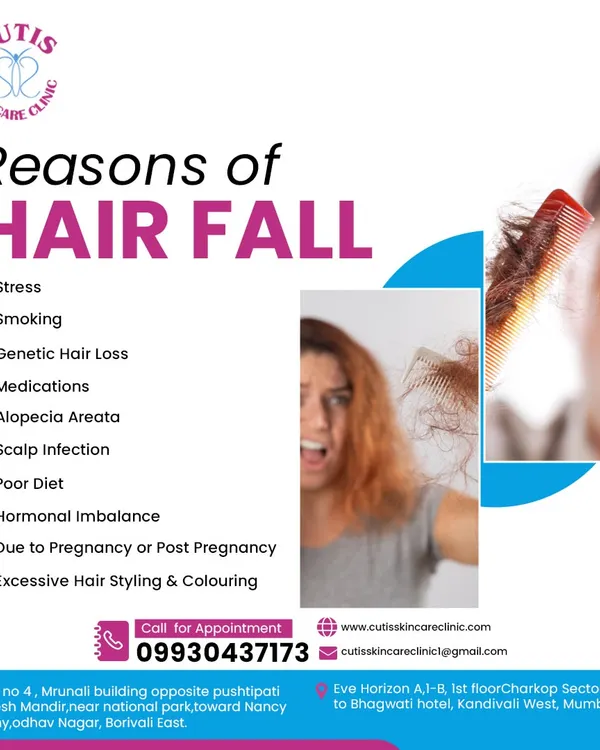
Seeing hair loss in your 20s can be alarming, but you are not alone. We explain the common causes, from genetics to lifestyle factors, and how a timely consultation with a qualified dermatologist can help manage and even reverse early-stage thinning.
A proper diagnosis is the foundation of any successful treatment. Here, you can see a trichoscopic scalp analysis in progress, a non-invasive method we use to get a magnified view of your hair follicles and scalp health to determine the root cause of hair loss.
About Understanding Your Hair Loss: Diagnosis First
Many patients come to us using minoxidil or store-bought oils without knowing why their hair is thinning. If your issue is nutritional deficiency or an autoimmune condition like Lichen Planopilaris, standard shampoos will not stop the damage. Our first step is always a 30-minute trichoscopic scalp analysis to see if your follicles are miniaturizing or if your hair fall is telogen effluvium, so you do not waste months on the wrong treatment.
Stop Guessing. Start Diagnosing.
At HairSense, we operate on a simple principle: baal toh wapas aayenge, lekin pehle samajhna zaroori hai ki problem exactly kya hai (hair will grow back, but first, it is important to understand the real issue).
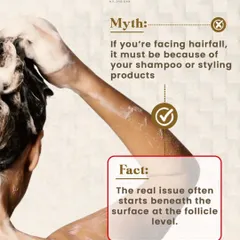
We see too many patients who have lost precious time and hair because they tried to self-treat androgenetic alopecia with products meant for stress-related shedding, or worse, treated scarring alopecia with ineffective serums. When you come to us, we do not start with a procedure; we start with the truth about your scalp health.
Our Diagnostic Process
When you book a consultation at our Navi Mumbai clinic, you are not meeting a technician or a salesperson. You are meeting a senior dermatologist.
- History & Lifestyle Review: We look at your diet, stress levels, family history, and medications. Hair loss in your 20s is rarely just 'shampoo-related'; it is often hormonal or genetic.
- Digital Trichoscopy: This is our most important tool. We use magnified screen analysis to look directly at your scalp. We check for follicle miniaturization, inflammation, and density loss.
- Root Cause Assessment: We distinguish between reversible shedding (telogen effluvium) and permanent genetic thinning. If your case is complex, we may recommend blood tests to check for thyroid, iron, or B12 deficiencies.
Why The First Step Is Critical
Treating the wrong condition can sometimes accelerate hair loss. For example, applying certain topical solutions to an active scalp inflammation can cause more irritation than growth. By confirming your diagnosis through clinical examination and, if necessary, a biopsy, we build a personalized treatment plan—whether that involves medical management, PRP/GFC therapy, or a carefully planned hair transplant—that actually aligns with your biological needs.
We do not offer 'unlimited grafts' or magic cures. We offer medical science, safety, and a clear path to recovery.
Similar work from other experts
Browse through Curated picks from other experts on mytribe
 9
9
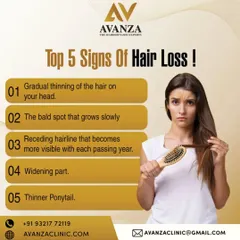
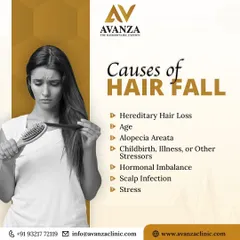
Identifying the Root Cause of Your Hair Loss
Identifying the Root Cause of Hair Loss
 5
5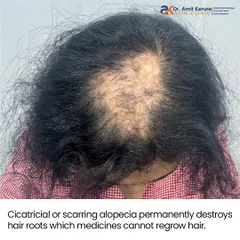
Diagnosing Your Hair Loss: Science-Backed Answers
Understanding Your Hair Loss: Diagnostic Medical Care
 4
4
Understanding Your Hair Loss: Expert Insights and Treatments
 7
7
Effective Hair Loss Diagnosis and Clinical Treatment
More from Medical Hair & Scalp Treatments by HairSense
More services by HairSense