The Art of the Natural Hairline
A hair transplant shouldn't look like a transplant. My approach focuses on zigzag patterns and single follicular units to ensure your hairline looks like it grew that way naturally—undetectable, just the way nature intended.
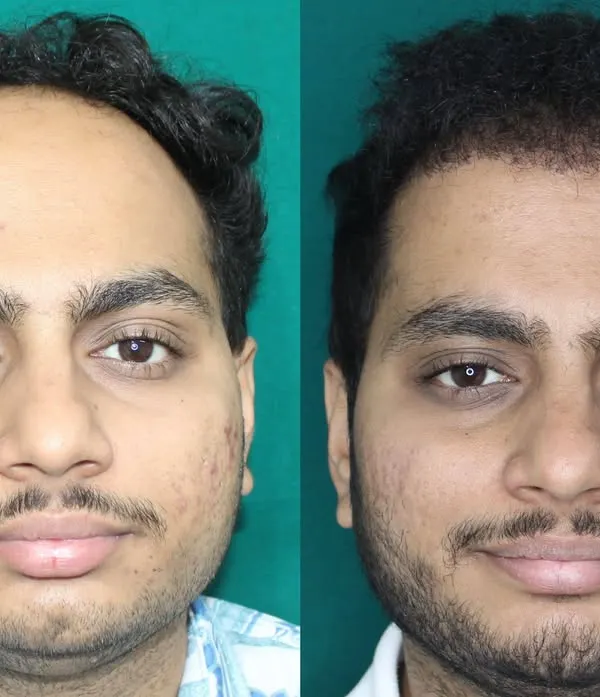
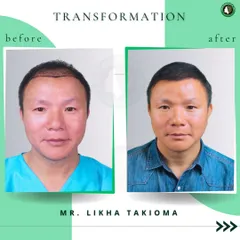
Here you can see a restored hairline that blends flawlessly with the patient's existing hair. The use of single follicular units at the very front and an irregular placement pattern are key to achieving this undetectable result.
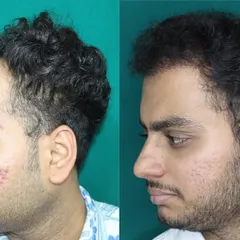
This close up highlights the soft transition from the forehead to the hair. There are no harsh lines or "pluggy" looking grafts. This micro and macro irregularity is the hallmark of a natural, artistic hair transplant.
This patient's new hairline has been designed to suit his facial structure and age. The density is appropriate, and the angle of the transplanted hairs follows the natural direction of his original hair growth.
Even with graying hair, the principle remains the same. The hairline is soft, irregular, and looks completely natural. My goal is for people to notice your great hair, not your hair transplant.
A frontal view of a mature, healed hairline. The density is built up gradually from the front to the back, which avoids an artificial, "wall of hair" appearance and contributes to a truly natural look.
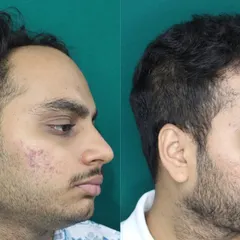
The secret to an undetectable hair transplant lies in the hairline. I never create harsh, straight lines. Instead, I design a soft, irregular hairline using a mix of single hair follicles, which perfectly mimics nature. This close-up shows the result of that artistic approach.
About The Art of the Natural Hairline
I never use straight lines. The secret lies in creating macro and micro irregularities. When I design your hairline, I use single hair follicles in an irregular, zigzag pattern to mimic how hair naturally grows. This breaks the artificial wall of hair look, ensuring that even under close inspection, your new hairline blends perfectly with your original growth.
Many patients come to me worried that a hair transplant will look obvious. That doll-like or wall of hair appearance happens when surgeons place thick, multi-hair grafts in a perfectly straight line across the forehead. Real hair simply does not grow in straight lines.
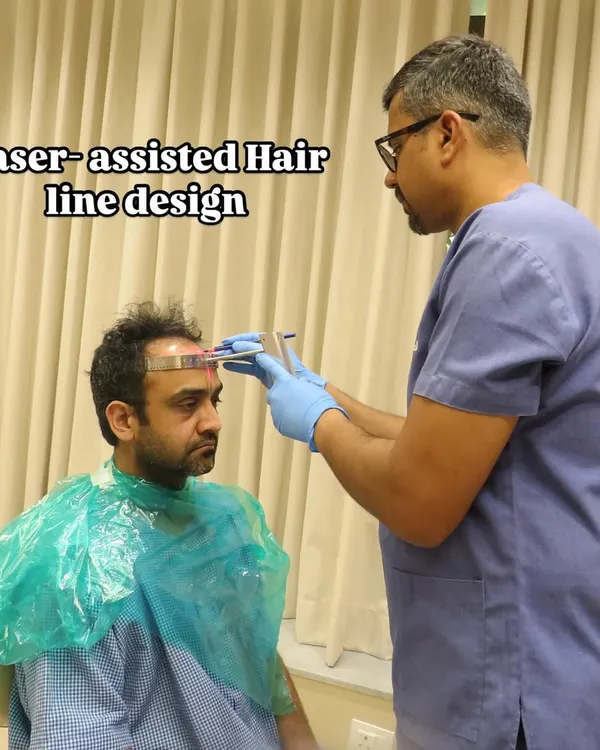
My approach relies on precise hairline planning. I map your forehead in a subtle zigzag pattern, placing only single, fine hair follicles in the transition zone to soften the line. It is a slow, meticulous process, but it is the only way to ensure the result is undetectable.
We use Sapphire FUE for this, which allows for smaller incisions compared to traditional steel blades. This means I can place grafts at the exact angle and direction of your existing hair. Whether you have graying hair or are correcting a previous transplant, the principles remain the same: density must be natural, not maximal.
If you are looking for a hairline that makes people say 'Wow, great hair' rather than 'Did you get a transplant?', we should talk. My goal is harmony, and that begins with the very first line of grafts.
Similar work from other experts
Browse through Curated picks from other experts on mytribe
Natural Hairline Design: Expert Hair Transplant Techniques
 15
15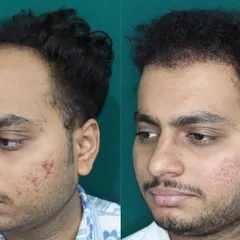
Natural Hairline Restoration for a Seamless Look
 11
11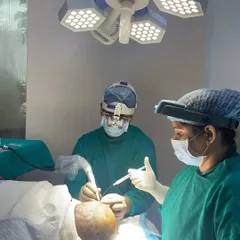
The Science of My FUE Hair Transplant Approach
The Art and Science of Our Hair Transplant Method
Precision FUE Hair Transplant for Natural Hairline Results
 62
62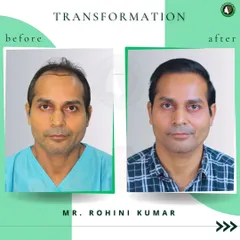

Real FUE Hair Transplant Results and Before-After Transformations
More from Hair Transplant Surgery by Malay Mehta
More services by Malay Mehta