The Sketching Foundation
Every great design starts with a pencil and paper. Whether you are aiming for design school or simply want to capture the world around you, I will help you master the fundamentals from scratch.
A detailed pencil portrait sketch completed in our studio. We focus on teaching students how to capture likeness and emotion through careful observation and advanced shading techniques, which are critical skills for portraiture assignments.
This pencil portrait demonstrates the use of soft shading and delicate line work to create a gentle and contemplative mood. I guide students in exploring different pencil grades and blending methods to achieve a variety of textures and tones.
A male portrait sketch focusing on capturing facial structure and hair texture. Learning to draw realistic portraits is a core part of our curriculum, building observational skills that are valuable for any aspiring artist or designer.
Art is a powerful way to express emotion. This heartfelt pencil sketch of a mother and child was created by a student, combining portraiture skills with personal expression.
This portrait sketch showcases a lighter, more subtle approach to shading. We work on controlling pencil pressure and understanding light sources to create three-dimensional form on a two-dimensional surface.
Sketching isn't limited to pencils. This expressive portrait was created using a red pen, a great exercise for building confidence and making decisive marks, as there is no room for erasing.
A close-up look at the sketching process. Here, a student is working on shading and detail, learning to hold the pencil correctly to achieve different effects. This foundational technique is something we practice consistently.
A look inside one of my online sketching workshops. I demonstrate the fundamentals of portrait sketching, breaking down the process of constructing the human face step-by-step for participants of all skill levels.
About The Sketching Foundation
The trick to sketching isn't just steady hands—it is learning how to 'see' light, shadow, and proportion before your pencil even touches the page. In my studio, we don't just copy pictures; we break down faces and structures into simple shapes so you understand exactly why a line goes where it does.
How We Approach Sketching
Sketching is the skeleton of all art. If you can sketch, you can design, paint, and sculpt. My approach isn't about rigid perfection; it’s about observation. We start with the basics: line quality, weight, and how to hold your pencil to control the stroke.
What we cover:
- Form & Perspective: We move from 2D shapes to 3D structures. If you are preparing for UCEED or NID, we specifically focus on 1, 2, and 3-point perspective to build spatial awareness.
- Anatomy & Portraits: Faces can be intimidating, but we simplify them. We look at skull structure, facial proportions, and muscle mapping so you can draw expressive portraits without guessing where the eyes or nose should go.
- The 'No-Eraser' Challenge: Sometimes I have students sketch with red pens. It forces you to make decisions. When you can’t erase, you stop overthinking and start trusting your hand. It’s an exercise in building confidence that changes how you approach every drawing afterward.
For Exam Aspirants vs. Hobbyists
I treat both groups with equal seriousness. If you are a student prepping for NIFT or B.Des entrance exams, our sessions are intense and focused on speed and accuracy. You need to clear the CAT and GAT, so we work on timed sketching drills and visual storytelling.
If you are here as a hobbyist, we go at a pace that keeps the 'gudgudahat'—that tickle of excitement—alive. You’ll learn at my studios in Civil Lines or Sector 65, Gurgaon, in small batches where I can personally look at your work and guide your grip, stroke, and style.
Similar work from other experts
Browse through Curated picks from other experts on mytribe
 5
5
Sketching & Foundational Art Skills
 6
6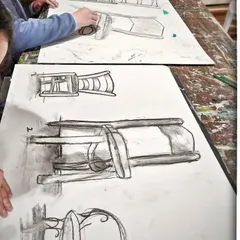
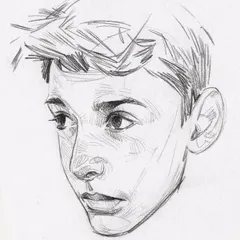
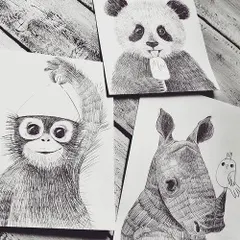
Drawing & Sketching Fundamentals in Koramangala
Drawing & Sketching Fundamentals: Build Your Artistic Foundation
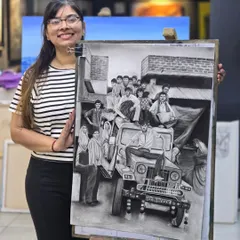
Expressive Charcoal & Pencil Drawing Classes
Sketching and Shading Classes in Bengaluru
Master Drawing and Sketching Techniques in Mumbai
More from Art & Design Entrance Coaching by Artshaala
More services by Artshaala