Montessori in Action: Hands-On Learning
See how children develop independence through sensory exploration. Our classrooms are designed for self-directed work where tactile materials turn complex concepts into daily discoveries.
A child deeply engaged with the trinomial cube, a classic Montessori sensorial material. This activity is more than just a puzzle; it's an early, hands-on introduction to algebraic concepts, developing problem solving skills and concentration.
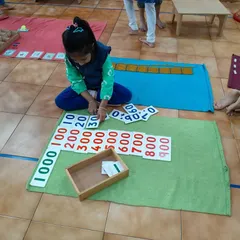
Language development is a cornerstone of our curriculum. Using the movable alphabet, this child is forming words and exploring phonetics, transforming the abstract concept of letters into a tangible, engaging activity that builds a strong foundation for reading and writing.
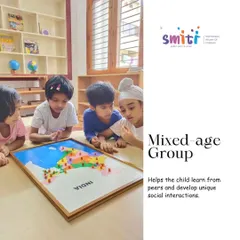
Geography comes alive with our puzzle maps. Children learn the shapes and names of continents and countries by physically placing them, creating a mental map of the world that is both lasting and meaningful.
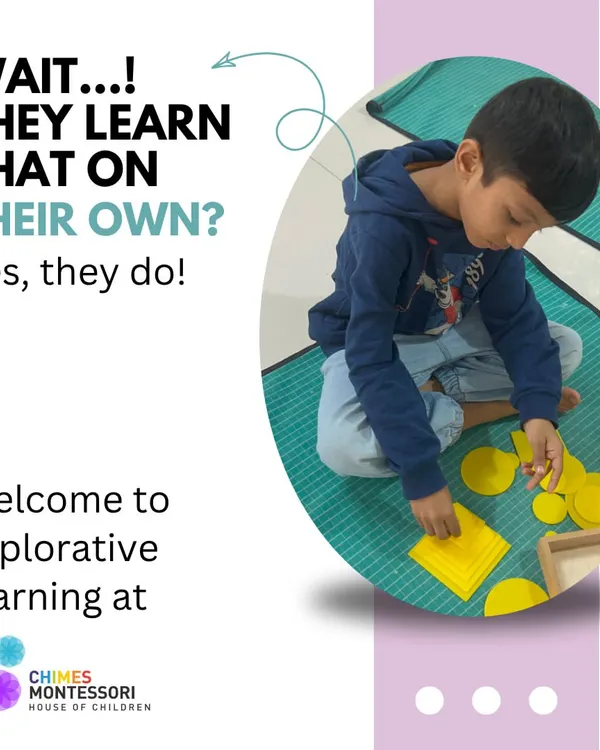
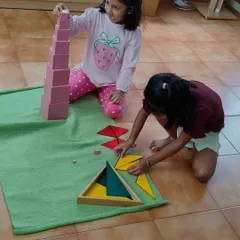
Exploring geometric solids helps children understand three dimensional shapes in their environment. This sensorial work allows them to distinguish different forms like cubes, spheres, and cones by touch and sight, building a vocabulary for the world around them.
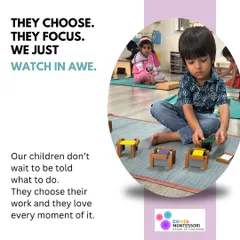
The ring stacker is a fundamental tool for developing hand eye coordination and size discrimination. As this child carefully places each ring, he is learning about order, sequence, and problem solving in a self-correcting way.
This fine motor skill activity, involving locking and unlocking, is crucial for developing hand strength and coordination. These practical life skills prepare children for tasks like writing, buttoning, and tying shoelaces, fostering a great sense of independence.
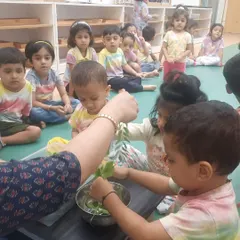
Practical life skills can be fun and imaginative. This 'milking the cow' activity teaches children about where food comes from while developing their fine motor skills and hand strength through a playful, hands-on experience.
Transferring objects with a large spoon is a classic practical life activity that builds fine motor control and concentration. This child is learning precision and coordination, skills that are essential for writing and other detailed tasks.
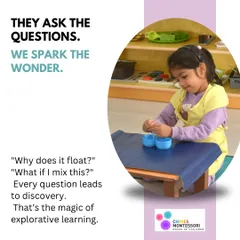
Water play is a favorite for sensory exploration. This child is discovering concepts like floating and sinking while developing his fine motor skills, all in a joyful and engaging setting.
Using tongs to move objects in water is an excellent activity for strengthening hand muscles and refining pincer grasp. It requires focus and precision, preparing little hands for holding a pencil correctly.
About Montessori in Action: Hands-On Learning
It is easy to miss that these activities are actually rigorous, scientific processes. When you see a child stacking rings, sorting shapes, or pouring water, they are not just playing; they are building the pincer grasp required for handwriting, the sequencing skills needed for logical thinking, and the concentration that defines the Montessori method. We use these specific exercises to remove the pressure from early education, allowing children to build their own academic and emotional foundations at their own pace.
In a traditional classroom, learning often happens via rote memorization. At Ace Montessori, we believe the path to academic readiness is built through the hands. When a child works with the Pink Tower, the Movable Alphabet, or our puzzle maps, they are engaging in what Dr. Maria Montessori called 'mathematical and linguistic absorption.'
The Science of Our Method
Every material in our Jayanagar and Padmanabhanagar centres is purposeful:
- Sensorial Work: Geometric solids and tactile materials allow children to classify and internalize their environment through touch and sight.
- Practical Life: Activities like 'milking the cow,' tray cleaning, or spooning exercises foster executive function. They teach the child to complete a cycle of work, take responsibility for their space, and build the physical stamina needed for focused classroom learning.
Why This Approach Works
Our teacher-child ratio of 1:10 allows us to guide this process without rushing it. We watch for the 'sensitive periods'—those windows where a child is naturally drawn to a specific skill—and provide the tools to match that interest. Whether your child is 2 or 6, our curriculum adapts to their developmental stage. We do not use worksheets to force learning; we use prepared environments that spark the desire to learn. If you are looking for a preschool or daycare in Bangalore where your child feels respected, autonomous, and excited to participate, these materials are the foundation of that experience.
Similar work from other experts
Browse through Curated picks from other experts on mytribe
 84
84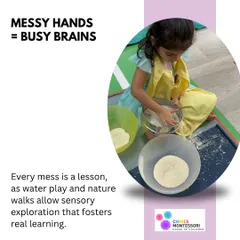
The Montessori Way: Learning in Action
The Montessori Method in Action
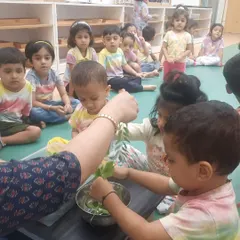
Hands-on Montessori Activities for Preschoolers
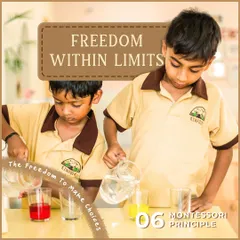
Hands-On Montessori Activities for Holistic Development
The Montessori Method in Action
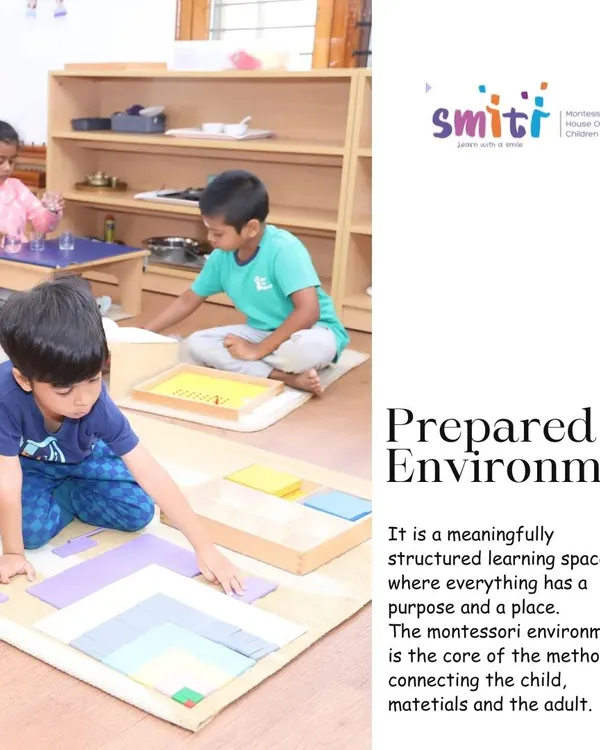 54
54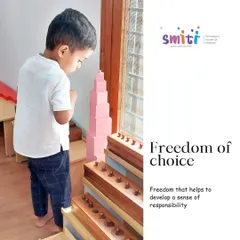
The Montessori Method in Action
More from Full-Day Childcare by Ace Montessori
More services by Ace Montessori