Abacus and Mental Maths: Build Brain Power through Play
Think of this as a gym for your child’s brain. My classes mix physical abacus tools, memory puzzles, and quick math races to turn number fear into genuine confidence.
Watch one of my students demonstrate his mental calculation skills. He processes a long string of numbers, including addition and subtraction, and gets the answer in seconds. This is a great example of advanced abacus training.
This young student is practicing single-digit mental arithmetic. His focus and finger movements show how he visualizes the abacus in his mind to calculate the answer, a key skill we develop.
Here's another student, Adhik, tackling a rapid-fire calculation. The speed at which he processes the numbers is a direct result of our regular practice sessions and brain-training exercises.
A typical classroom scene where students are deeply engaged with their abacus worksheets. The structured environment helps them focus and build the discipline needed for complex calculations.
This young girl is carefully moving the beads on her abacus. This tactile learning process is the first step towards mastering mental math and is perfect for young learners.
Students from our Bangalore center are hard at work, practicing for the upcoming Mathopedia competition. Their concentration shows their dedication to mastering the abacus.
This student is solving a two-digit calculation problem mentally. It showcases a higher level of abacus skill, where students can handle larger numbers without the physical tool.
Here, a young student uses a large demonstration abacus to solve a problem. Using this tool helps solidify the fundamentals of bead movement before transitioning to mental math.
Watch this student's confidence as she calls out the answer. Our classes are not just about getting the right answer but also about building the self-assurance to speak up.
This student is practicing two-digit sums. Notice how he closes his eyes to better visualize the abacus. This is a common technique my students use to improve their focus.
About Our Brain Gym: Abacus & Mental Maths
The real magic happens when a student stops using their fingers and starts using their mind. You will see them close their eyes during a problem—that is when they are visualizing the abacus beads to calculate. It is a moment of pure focus that completely changes how they tackle school exams later.
How My Classes Work
I do not believe in boring lectures or rote memorization. Whether we are in Jaipur, Bharuch, or Bengaluru, my goal is the same: to help kids start loving numbers.
We start with physical beads. Every student learns the abacus method, which is a tactile, hands-on way to understand arithmetic. Once the foundation is set, we shift to mental math. This is where the 'Brain Gym' happens. Your child will learn to visualize the abacus in their head, allowing them to solve complex additions, subtractions, and multiplications at lightning speed.
Why It Works
- Friendly Competition: We turn sums into races. When kids compete against each other, their speed and accuracy improve without them feeling like they are studying.
- Small Batches: I keep groups small (12-20 students) so no one gets left behind or feels confused. If a student is stuck, they get direct attention.
- Beyond Numbers: We also integrate creative breaks like art, craft, and cup stacking to keep their minds sharp and energized.
Levels and Progression
My program is structured in levels from 0 to 8. Every student gets a monthly assessment, so you can track their progress from simple bead movement to advanced mental calculation. Whether your child is 5 or 15, we start them at the right level to build confidence.
For students in Grade 6 and above, I also run dedicated Vedic Maths sessions. These use ancient 16 Sutras to help with squaring, cubing, and rapid division for competitive exams. It is not just about math; it is about giving your child the mental agility to handle any challenge in school.
Similar work from other experts
Browse through Curated picks from other experts on mytribe
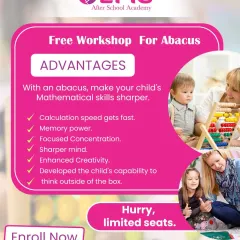
Abacus and Mental Math Classes for Kids
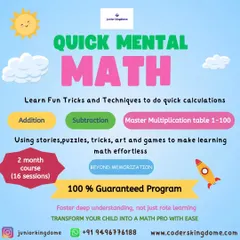
Mastering Math: Fun and Fast Learning
Mental Math: Turning Calculations into Confidence
Hands-On Abacus Learning to Master Math Skills
Mastering Mental Maths with Abacus: Fast, Fun & Certified
 4
4
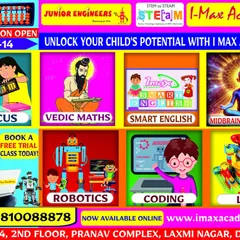
Mathematical Mastery: Abacus and Vedic Maths Programs
More from After-School Enrichment Programs for Kids by Abacus D Maths Academy
More services by Abacus D Maths Academy