Faster Dispute Resolution: Mediation & Arbitration
Court isn't always the only way. If you are looking for a faster, more controlled way to resolve legal conflicts, mediation, arbitration, and direct negotiation can save you years of litigation. Here is how I can help you move forward without the stress and indefinite wait of the traditional court system.
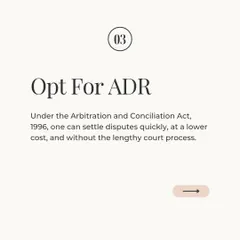
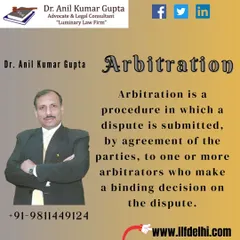
Arbitration is a time-saving alternative to court litigation. I explain how it originates from an arbitration clause in an agreement and how the process works, from appointing an arbitrator to presenting evidence and receiving a legally binding judgment.
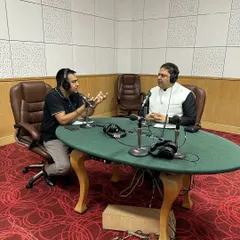
Mediation is another form of ADR where parties can resolve disputes without going to court. I explain how a neutral third-party mediator facilitates a conversation, helping both sides discuss their issues and work towards a mutually agreeable resolution.
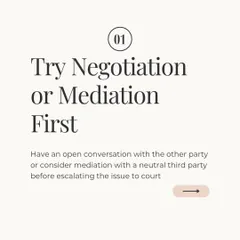
Negotiation is a form of dispute resolution where the parties involved communicate directly to find a solution. I explain that unlike mediation, it does not require a neutral third party, though lawyers can be appointed to negotiate on behalf of their clients.
An arbitration clause is only valid if it meets certain criteria. This graphic lists the five essential elements, including an explicit referral to arbitration, the governing law, and the method for selecting arbitrators, that must be present for the clause to be enforceable.
About Faster Dispute Resolution: Mediation & Arbitration
If you are stuck in a dispute, the first thing to calculate is not just the legal fee, but the cost of your time. Traditional court litigation can drag on for years, keeping you in a state of constant uncertainty and financial drain. My approach to Alternative Dispute Resolution (ADR) focuses on finding a middle ground through mediation or binding arbitration, so you can stop worrying about the next hearing date and start looking for a practical resolution that actually respects your timeline.
Why Consider Alternative Dispute Resolution (ADR)?
Not every fight needs a judge in a courtroom. In fact, many of the best resolutions happen at a table, not a bench. When you choose arbitration or mediation, you gain control over the process, the timeline, and the privacy of the outcome.
How I Help You Resolve Disputes
- Arbitration: Think of this as a private, binding process. We appoint an arbitrator who acts like a judge, reviews the evidence, and makes a decision. It is faster than court because the focus is solely on your case, not a backlog of hundreds of others. I help you draft the initial agreement, navigate the hearings, and ensure the process is legally sound.
- Mediation: This is about restoring balance. If you and the other party are willing to talk, I act as a facilitator to help you reach a mutually agreeable settlement. It is voluntary, confidential, and specifically designed to protect business or personal relationships that you might want to maintain after the dispute is settled.
- Negotiation: Sometimes, you just need a professional to talk on your behalf. My firm handles direct negotiations, where we lay out the facts and legal risks clearly to the other side to push for a settlement that protects your interests without ever stepping foot inside a courtroom.
My Process
My role is to cut through the confusion. Whether it is reviewing an existing arbitration clause in your contract or setting up a mediation session to resolve a payment dispute, I ensure you have a clear strategy. We begin with a file review to understand the feasibility of a settlement versus litigation. If we proceed with ADR, I draft the necessary agreements and guide you through the sessions, focusing on getting you a result that sticks.
Similar work from other experts
Browse through Curated picks from other experts on mytribe
Smarter Dispute Resolution: Beyond the Courtroom
 4
4


Alternative Dispute Resolution & Arbitration Services
 8
8

Strategic Commercial Dispute Resolution
 5
5

Legal Solutions, Mediation & Arbitration in Delhi
Arbitration and Alternative Dispute Resolution
 7
7
Landlord & Tenant Dispute Resolution
More from Dispute Resolution & Litigation by Vibhu Verma
More services by Vibhu Verma