Community & Social Infrastructure Design
We believe social infrastructure should be more than just functional space. It must be a vibrant, safe, and welcoming environment that supports the communities it serves.
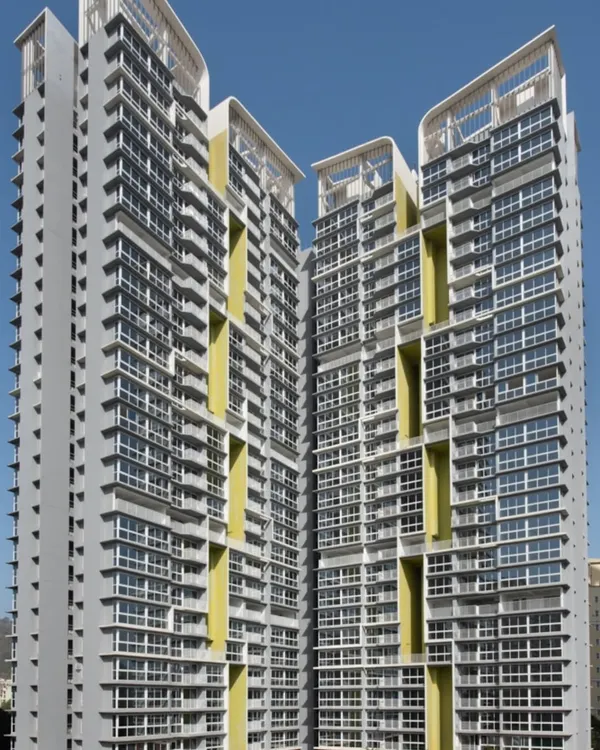
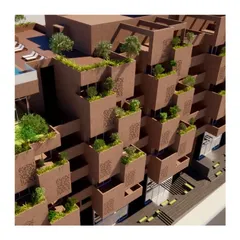
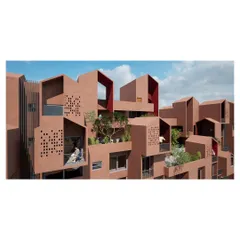
The facade of the Multipurpose Working Women’s Housing, a project developed through our Gender Advisory Committee with the MCGM. The vertical fins and staggered balconies are designed to ensure privacy while maximizing natural light and ventilation for the residents.
The facade of the Multipurpose Working Women’s Housing, a project developed through our Gender Advisory Committee with the MCGM. The vertical fins and staggered balconies are designed to ensure privacy while maximizing natural light and ventilation for the residents.
The facade of the Multipurpose Working Women’s Housing, a project developed through our Gender Advisory Committee with the MCGM. The vertical fins and staggered balconies are designed to ensure privacy while maximizing natural light and ventilation for the residents.
The facade of the Multipurpose Working Women’s Housing, a project developed through our Gender Advisory Committee with the MCGM. The vertical fins and staggered balconies are designed to ensure privacy while maximizing natural light and ventilation for the residents.
Our partners at the inauguration of the Working Women's Housing. This project was the culmination of years of policy work and advocacy to create dedicated, safe, and well-designed amenities for women in the city.
Our partners at the inauguration of the Working Women's Housing. This project was the culmination of years of policy work and advocacy to create dedicated, safe, and well-designed amenities for women in the city.
About Community & Social Infrastructure
Designing on a tight, triangular plot in Mumbai required us to push the limits of standard residential layout. For the Multipurpose Working Women’s Housing, we employed a system of vertical fins and staggered balconies to draw in cross-ventilation and natural light, transforming a dense footprint into a safe, airy, and welcoming home for 180 women.
Social infrastructure is about more than just square footage. It is about policy, advocacy, and the built environment working in tandem to support citizens. Our work on this project began long before ground was broken. Through our involvement with the Gender Advisory Committee, we helped shape the policy guidelines that led to this development.
We approached this building as an urban intervention. Because the site was limited in size, we avoided internal corridors that feel dark or isolating. Instead, we focused on three core principles:
- Light & Ventilation: The facade design uses vertical fins to provide sun-shading while allowing the sea breeze to circulate freely through the living quarters.
- Privacy & Safety: Staggered balconies ensure visual privacy for residents without creating a fortress-like exterior, maintaining a sense of openness.
- Community Flow: We incorporated common interaction zones to ensure that the women living here have spaces to meet, share meals, and build a community, rather than just occupying isolated units.
This project demonstrates our belief that institutional design should be human-centric. By combining technical site analysis with an understanding of the end-users' daily lives, we created a building that stands as an example of how public amenities can be bright, dignified, and joyous places.
Similar work from other experts
Browse through Curated picks from other experts on mytribe
 10
10
Community & Urban Space Design: Transforming Shared Environments
 58
58
Public & Community Architecture for Social Impact
Architectural Design for Community and Shared Spaces
 4
4
High-Rise Residential Communities
 21
21
Public, Institutional & Heritage Urban Design
 16
16
Community & Housing Master Planning
More from Institutional & Campus Design by SJK Architects
More services by SJK Architects