Traditional Mehndi Motifs and Figurative Art
Classic motifs like peacocks, elephants, and lotuses bring a timeless beauty to henna. I love weaving these traditional symbols into my designs to create something meaningful for your special occasion.
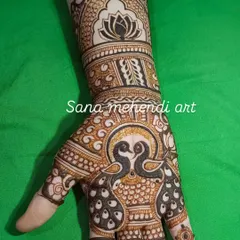
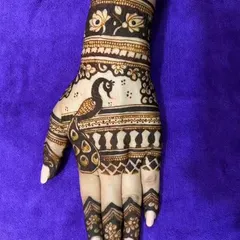
This video shows a full hand design centered around a beautiful peacock. I used different shading techniques to give the peacock's feathers a two-toned effect, making it the highlight of the piece.
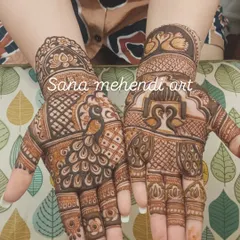
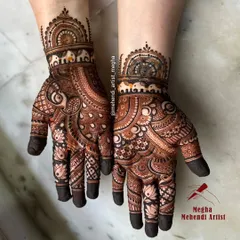
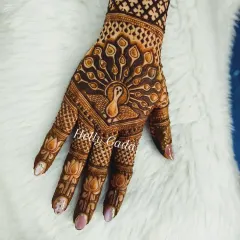
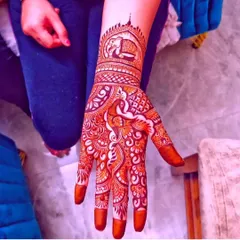
A heavy peacock design where the bird's form and feathers cover the entire back of the hand. This is a great example of how a single motif can be used to create a full, intricate look.
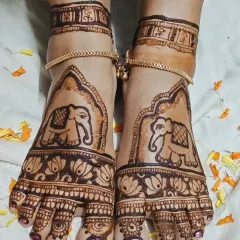
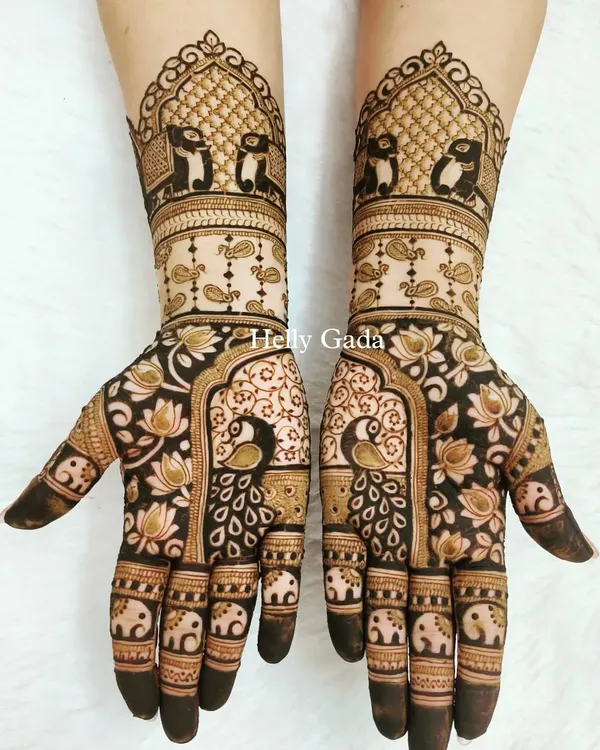
A close up of an elephant motif on an armband. This design shows a royal elephant with a decorative covering, set against a backdrop of a palace structure.
This arm band combines two auspicious motifs: a peacock and a kalash (a ceremonial pot). The use of bold lines and shading makes the design stand out clearly.
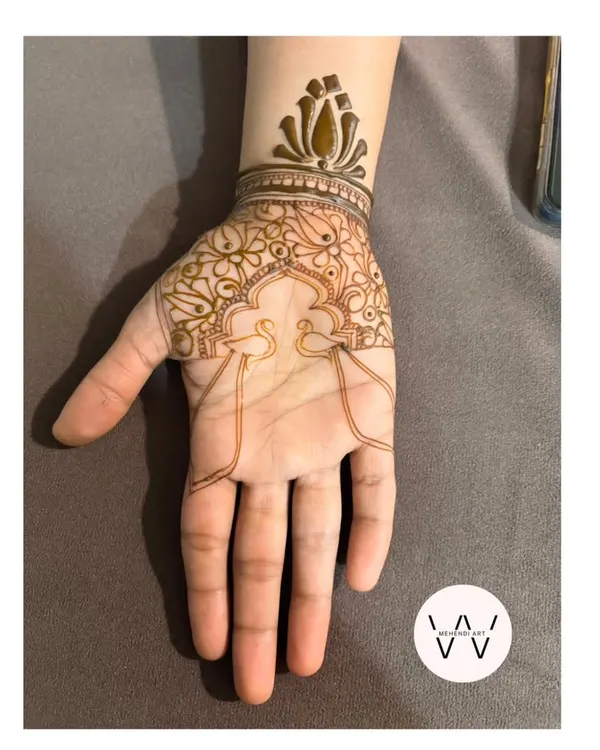
This video shows the process of creating a peacock and palace arm band. It starts with the simple outlines and shows how I build up layers of detail to create the final, shaded piece.
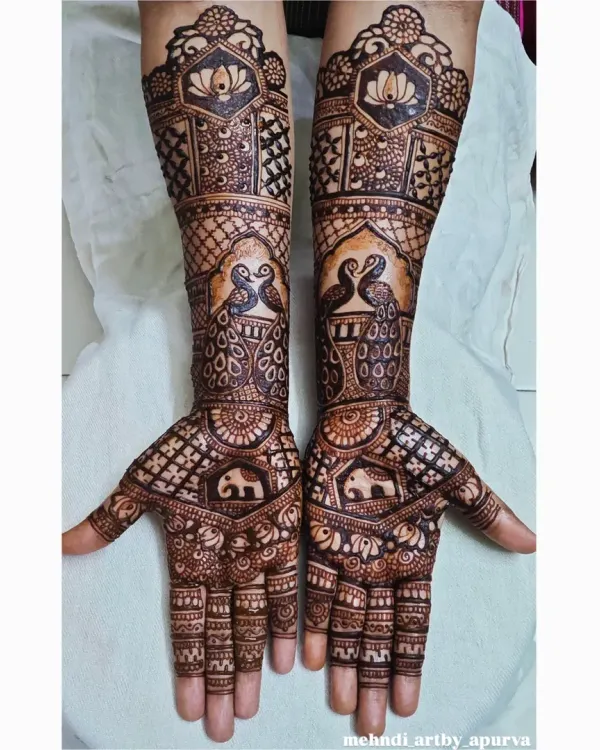
A beautiful arm band design featuring two peacocks facing each other. The body of the peacocks is filled with a fine checkerboard pattern, adding texture and detail.
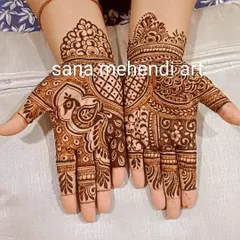
A lovely back of hand design featuring two peacocks surrounded by a frame of roses. This is a great example of combining traditional bird motifs with floral patterns.
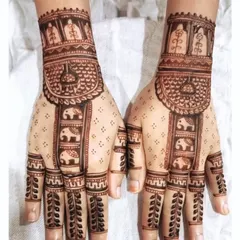
Another view of the twin peacock design. The details on the fingers, with tiny turtles and floral bands, complement the main design on the back of the hand perfectly.
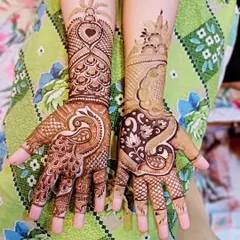
A festive design for Lohri, featuring peacocks and kalash motifs. The patterns are not mirrored, giving each hand a unique look while still feeling connected.
About Traditional Motifs & Figures
When I draw a peacock or elephant motif, I do not just focus on the outline. I use fine checkerboard patterns inside the feathers and elements to create depth and texture. This shading technique makes the design stand out and gives it a professional, polished look once the natural henna stain develops.
These traditional motifs are more than just pretty shapes. In my 10 years of work, I have found that they carry personal meaning for many of my clients. The peacock is often requested for its beauty and grace, while the elephant is a symbol of luck and strength. I enjoy incorporating these figures into different styles of mehndi, from smaller armband startup designs to full-coverage bridal palms.
My approach to figurative art relies on precision and flow. Whether I am drawing a Taj Mahal architectural element or a delicate lotus, I ensure the layout respects the natural contours of your hand or arm. This is especially important for the 'startup' designs, where the placement needs to be clean and impactful since it is not covering the entire hand.
I use my own organic henna paste, which is crucial for these detailed patterns. Traditional motifs require a deep, dark stain to truly shine, especially with complex shading and filling work. If you have a specific theme in mind, like a royal wedding aesthetic or a festival celebration, I can mix these classic figures with modern elements to create a look that feels just right for you. I am based in both Mumbai and Varanasi, so if you are planning an event in either city, feel free to reach out to discuss your design ideas.
Similar work from other experts
Browse through Curated picks from other experts on mytribe
Traditional Mehndi Motifs: Peacocks, Elephants & Lotuses
 14
14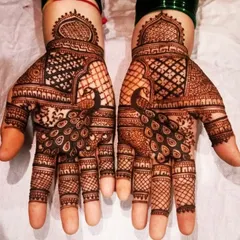
Traditional Elephant & Peacock Mehendi Designs
 7
7Signature Mehendi Motifs: Peacocks, Elephants & Lotuses
Traditional Indian Mehendi Motifs
 31
31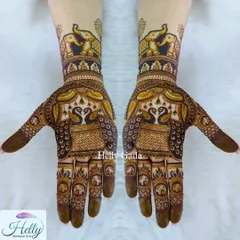
Traditional Peacock & Elephant Mehndi Designs
Classic Mehendi Motifs with Peacocks, Elephants & Lotuses
More from Mehndi Classes by Shubhangee Gupta
More services by Shubhangee Gupta