Mastering Everyday Commands
Real obedience isn't about teaching tricks in a quiet room. It is about having a dog who listens to you whether you are at the park or dealing with street traffic.
This is Rover's amazing progress with the 'come when called' command. He went from not moving when called to performing a fabulous recall from a distance. This is the result of patience and consistent, positive training.
Here I am practicing a long-distance recall with Jani, a German Shepherd, at a new dog park and boarding center. A reliable recall is one of the most important safety commands a dog can learn.
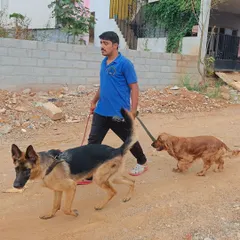
A common question is, "Which side should I walk my dog on?" Honestly, there's no strict rule. The most important thing is teaching your dog to walk nicely on a loose leash without pulling, on whichever side is most comfortable for you.
The journey with Rover has been incredible. This before and after shows the transformation that comes with persistent, positive reinforcement training. We built a relationship based on trust, not force.
A tired dog is a happy dog, and mental stimulation is just as important as physical exercise. Using a dog puzzle like this one challenges your dog's mind, builds confidence, and is a great activity for a rainy day.
About Mastering Everyday Commands
The biggest mistake most of us make is trying to teach a 'stay' or 'come' command in the middle of a chaotic situation. We work differently at SAGA. We start inside your home where your dog feels safe, then systematically introduce real-world distractions like other dogs or traffic noise only when they are ready. It is not about rushing them, it is about setting them up for success so you both stop feeling stressed during walks.
Obedience is not about control, it is about communication. My goal is to help you and your dog understand each other, whether you are dealing with a distracted puppy or an adult dog who has developed a habit of pulling on the leash.
Why Our Approach Works
We focus on 'proofing' commands. This means teaching your dog to respond to you not just in your living room, but in the places where it actually counts.
- Step-by-Step Transition: We start indoors, then move to controlled outdoor environments to slowly increase the level of distraction. This helps your dog learn to focus on you even when the world gets busy.
- Real-World Skills: We prioritize the commands that actually keep your dog safe and make your life easier. This includes a rock-solid recall (come when called), the 'place' command for settling down, and loose leash walking techniques that make walks enjoyable for both of you.
- The Human Element: Training is a team effort. You are not just dropping your dog off for a fix. We work with you on your body language and leash handling because often, the dog is just reacting to the cues we are accidentally giving them.
Where We Train
Most of our group obedience work happens at The Run, Yelahanka. It provides a structured outdoor setting that mimics the real world, allowing us to practice neutrality and focus around other dogs in a safe, managed space. With two certified trainers on-site for every session, we ensure that every dog gets the attention they need to succeed.
Similar work from other experts
Browse through Curated picks from other experts on mytribe
Essential Obedience Skills That Actually Work

Essential Skills for Everyday Life: Dog Training in Pune
Leash & Obedience Training in Bengaluru
Mastering Essential Dog Obedience and Recall
Obedience and Focus Training for Your Dog
Foundation Commands for a Well-Behaved Dog
More from Dog Obedience Training by Gourav Vartalur
More services by Gourav Vartalur