Laser Hair Reduction: Understand the Science and Results
Forget what you see in social media reels—laser hair reduction isn't a quick fix or magic. Here is the actual science behind how we target follicles, why multiple sessions matter, and what to expect during your journey to smoother skin.
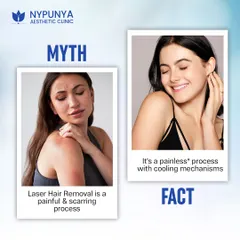
A common myth is that one laser session is enough. The fact is, hair grows in cycles, and multiple sessions are necessary to target each follicle in its active growth phase for optimal, long-lasting hair reduction.
This is the start of a series explaining some key facts about Laser Hair Reduction (LHR). Understanding the treatment is the first step towards making an informed decision for your skin.
Fact: Laser hair reduction is most effective on dark hair. The laser's energy is absorbed by the melanin (pigment) in the hair, so darker hair absorbs more energy, leading to a more effective treatment of the follicle.
Fact: Lasers are excellent for preventing ingrown hairs. Unlike waxing or shaving which can cause hair to grow back under the skin, LHR damages the follicle itself, significantly reducing the chance of ingrowns.
Fact: This treatment is not just for women. Many of my male clients get laser hair reduction for their chest, back, and for precise beard line shaping to reduce the hassle of regular grooming.
Fact: After completing the full course of treatments, most of my clients find they no longer need to shave. A yearly touch-up session is usually all that is needed to maintain the smooth results.
It is important to have realistic expectations. This series explains why LHR is considered permanent hair *reduction*, not removal, and what that means for your long-term results.
The laser is only effective on hair in its active growth phase. Since not all hairs are in this phase at the same time, multiple sessions are required to treat all follicles as they cycle through.
Over time, due to hormonal changes or other factors, some dormant hair follicles can become active again. This is why maintenance sessions are important for long-term smoothness.
Hormonal shifts, such as those during pregnancy or from conditions like PCOS, can trigger new hair growth. I always discuss your medical history to create a realistic and effective treatment plan.
About The Science of Smooth Skin: How Laser Reduction Works
The most important part of your preparation happens at home: you must stop waxing, plucking, or threading for at least 3-4 weeks before your session. Since the laser relies on the root of the hair to do its job, these methods pull the root out, leaving nothing for the laser to target. Shave 24 hours before you come in, and you will get much better results.
How It Really Works
Think of your hair like a crop cycle. At any given time, your hair is in different phases—active growth, regression, or rest. The laser only works on hair in the active growth phase because that is when the follicle is physically attached to the hair shaft. Because not all your hair is in the active phase at the same time, you need multiple sessions spaced out to catch every follicle as it cycles through.
Why 'Permanent' Means Reduction
Let's be clear: we are aiming for permanent hair reduction, not total removal. You will see hair grow back thinner, softer, and slower with each session. After a full course of 6 to 10 treatments, most clients find they barely need to shave. Maintenance is part of the reality—hormonal changes, PCOS, or even pregnancy can trigger dormant follicles to reactivate. A yearly touch-up is usually all it takes to keep things smooth.
The Process at Ojas
We don't do 'one size fits all.'
- Mapping: For facial treatments, I use grid mapping to ensure we don't miss a single spot.
- Safety: We use cooling tips and medical-grade machines. If you have sensitive skin or are nervous, ask for a patch test. It’s free, and it shows you exactly how your skin reacts.
- Comfort: Some say it feels like a rubber band snap. We use cooling gels and post-treatment soothing creams to make sure you are comfortable, not in pain.
Who Is This For?
The laser loves contrast—dark, coarse hair on lighter skin is the easiest to treat. If your hair is very fine or light, the laser won't have enough pigment to target. During your consultation, I will be honest about whether this will work for you. If it won't, I will tell you. No fads, no wasted money.
Similar work from other experts
Browse through Curated picks from other experts on mytribe
Laser Hair Removal for Lasting Smooth Skin
Safe & Precise Laser Hair Reduction

Laser Hair Reduction: Science-Backed Treatments in Bengaluru
Laser Hair Reduction: Expert Facts and Myth-Busting
Permanent Laser Hair Reduction for Smooth, Safe Results
 7
7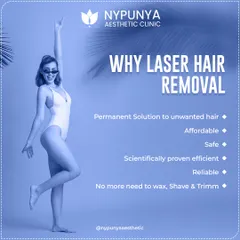
Permanent Laser Hair Removal in J.P. Nagar
More from Laser Hair Removal by Soni Nanda