Smart English: Vocabulary, Idioms & Phrases for Kids
We turn basic English into expressive communication through games and fun drills, not boring memorization.
Learning new ways to express ourselves shouldn't feel like a lesson; it should feel like a game. Here, you can see a group of my students working together to learn alternatives to common phrases.
From "you are funny" to "you have an incredible sense of humor." I guide a student to upgrade her basic English into more polished, descriptive sentences, helping her sound smarter in seconds.
Here, we practice turning simple sentences into advanced expressions. A student learns to say "I'm exceptionally intelligent" instead of "I'm very smart," instantly elevating his communication.
Instead of just saying "congratulations," my student teaches six creative alternatives like "way to go" and "kudos." Expanding vocabulary is a key part of our program.
Are you still using simple words? My students demonstrate how to replace words like "sad" with "devastated" and "pretty" with "gorgeous" to make their language more expressive.
A student shares fun idioms to replace common phrases, such as "get a grip on yourself" for "control your emotions." Idioms make speaking more natural and engaging.
Stop saying "cut" for everything. Here, my students show the right words to use for different contexts, like "clip your nails," "slice the bread," and "chop the vegetables."
Learning animal idioms is a fun way to boost vocabulary. Students act out phrases like "hold your horses" and "I smell a rat" to understand their meaning in a playful way.
My little stars teach "feeling words," upgrading from "happy" to "glad" and "surprised" to "astonished." This helps them express their emotions with more precision.
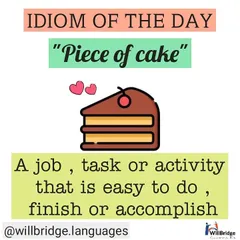
Two students team up to teach idioms like "a piece of cake" and "over the moon." Learning together makes the experience more enjoyable and effective.
About Smart English: Vocabulary, Idioms & Phrases
Instead of teaching children to just memorise definitions, we focus on word swaps. If a student says I am happy, we teach them to say I am over the moon or I am thrilled. This creates immediate confidence because they see how different words change the way people react to them. We treat language as a tool for connection, not a subject to be graded.
At NLI, we believe in the philosophy of Wabi-Sabi, which means finding beauty in imperfection. When a child learns a new idiom or a smarter way to phrase a sentence, they are not just expanding their vocabulary. They are learning to think with precision.
We move away from rote learning and standard grammar drills. Instead, we use role-play, video recording for self-analysis, and interactive games. Whether it is learning 'animal idioms' like 'hold your horses' or replacing generic words like 'cut' with 'chop' and 'slice,' we make language feel like a game rather than a lesson.
Our sessions in Rajouri Garden are designed for small groups of 6-10 students, ensuring every child gets the space to practice without the fear of judgment. We work on:
- Vocabulary Upgrades: Replacing basic words with descriptive alternatives.
- Idioms & Phrases: Using natural, colloquial English that sounds sophisticated.
- Polite Phrasing: Learning how to be firm yet kind, turning rude phrases into respectful ones.
- Practical Context: Understanding which words to use in specific real-life situations.
By focusing on 'presence over perfection,' we help children find their own voice. We want them to walk into a room and speak with the kind of clarity that makes people listen.
Similar work from other experts
Browse through Curated picks from other experts on mytribe
Speak Smart: English Tips & Fun Idioms
 9
9

Brain Gym Vocabulary: Speak English with Confidence
Fun French and Spanish Vocabulary for Kids
 7
7
Fun & Engaging Learning Methods in Dwarka
Fun with Phonics & Stories Classes
 15
15
Learn English Vocabulary & Idioms for Daily Fluency
More from Public Speaking & Personality Development by Nidhi Longani
More services by Nidhi Longani