Essential Water Safety Skills for Infants
Build your child's water confidence through gentle, baby-paced survival techniques. We turn vital safety skills like breath control and turning to the wall into a playful, bond-building experience.
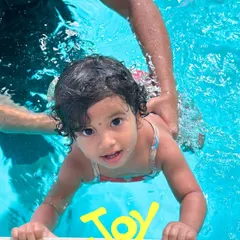
We practice a baby-seated dive from the edge of the pool, using a toy as an incentive. This is always done under expert supervision after many practice runs to build confidence for entering the water safely.
This video shows a controlled and safe practice of what to do if a child falls in. They learn to use their breath control and turn back to the wall, a vital survival skill.
Here, a 4-year-old practices survival swimming with pop-up breathing. This technique helps conserve energy and reduce panic in an emergency.
A crucial reminder for parents: never turn your back when your kids are in the pool. Constant supervision is the most important safety rule.
This 7-month-old is practicing an underwater submersion. With just a few practices, babies can learn to control their breathing and build trust in the water.
Learning a seated jump using the "Humpty Dumpty" rhyme as a fun, verbal cue. This makes learning to enter the water a predictable and enjoyable game.
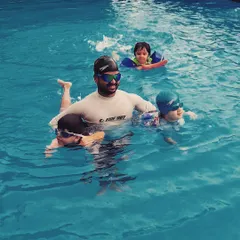
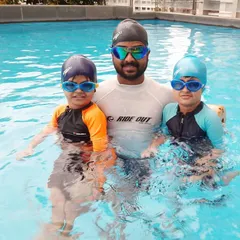
Wearing a t-shirt over your swimsuit provides an easy-to-grab surface for a baby, adding an extra layer of security and safety in the pool.
You can teach a baby to submerge as early as 4 months. We follow a baby-paced program, never forcing, and always waiting for the baby to show they are ready.
Kids respond to your reaction. If you stay calm and cheer them on after they swallow a little water, they learn that it's okay and won't panic.
A 4-month-old on their survival swim journey. We start with foundational skills like back floating and gentle movement through the water.
About Essential Water Safety Skills
One of the simplest ways to help your child feel secure is by wearing a cotton t-shirt over your swimsuit. It provides a tactile, easy-to-grab surface for them, giving them extra stability while they build the strength to hold onto you on their own.
Many parents ask me when they should start, and my answer is always the same: as soon as they can hold their head up. Water safety is about more than just swimming strokes, it is about developing survival instincts that last a lifetime.
We start with the monkey walk, where your child learns to hold the edge of the pool and move along the wall. This is a crucial first step toward self-rescue, teaching them that the wall is their friend and their safety zone.
Breath control is another pillar of my teaching. We introduce gentle water pouring over the face, which helps desensitize eyes and ears. This is not about dunking, it is about building trust so that if water splashes their face, they do not panic. When a child understands how to hold their breath, they stay calm, and a calm child is a safe child.
Finally, we tackle the reality of accidental falls. We practice controlled submersions to simulate an unexpected slip. It sounds counterintuitive, but by experiencing a controlled fall under my watchful eye, your child learns to naturally close their eyes, hold their breath, and orient themselves to the nearest safety point. We do this at their pace, with games and songs, ensuring that every session is defined by connection rather than fear.
Similar work from other experts
Browse through Curated picks from other experts on mytribe
Our Proven Swimming Method for Babies and Toddlers
Kids & Infant Swimming Lessons in Mumbai
Swimming Classes for Kids and Toddlers
Swimming Classes for Kids and Toddlers
 8
8
Tiny Turtles: Infant and Toddler Swimming Classes
From Toddler Splashes to Independent Swimming
More from Parent & Child Swim Lessons by Nappy Nemo
More services by Nappy Nemo