STEM and Robotics Classes for Every Age
From toddlers exploring basic mechanics to teens mastering Python, our curriculum evolves with your child. We turn curiosity into real tech skills through hands-on practice, not lectures.
For ages 2.5 to 4, our 'Build to Learn' program lets young minds explore shapes, patterns, and balance. It's a playful way to build focus and confidence.
In my 'Build-to-Learn' program for 2-4 year olds, I guarantee improvement in motor skills, vocabulary, and the ability to work independently through guided play.
My 'Mini Makers' program for 4-5 year olds is all about big thinking for little minds. Children turn their imagination into models while building fine motor skills and STEM awareness.
In 'Early Simple Machines' for 5-6 year olds, curiosity meets physics. Kids get a hands-on introduction to real-world mechanics like levers, pulleys, and wheels.
My 'Little Engineers' program for 4-6 year olds is designed to boost confidence and independence. Kids learn to express themselves and accomplish tasks on their own.
'Junior Engineering' for 6-7 year olds introduces foundational engineering principles. Kids engage in creative problem-solving and collaborative building challenges.
'Movable Machines' for 7-8 year olds is where things get moving. This program introduces concepts of gears, motion, and energy in exciting, functional ways.
From bricks to code, my program for 7-8 year olds combines creativity with real coding skills. Using Scratch and programmable kits, kids turn their ideas into interactive projects.
For ages 9-12, my Robotics program guarantees improvement in confidence, logical thinking, and technology skills. Kids learn to solve problems and communicate their ideas effectively.
My 'Smart Technology, AI' course for ages 12-15 ensures growth in confidence and critical thinking. Students tackle the latest technologies and learn advanced problem-solving skills.
About A Learning Path for Every Age
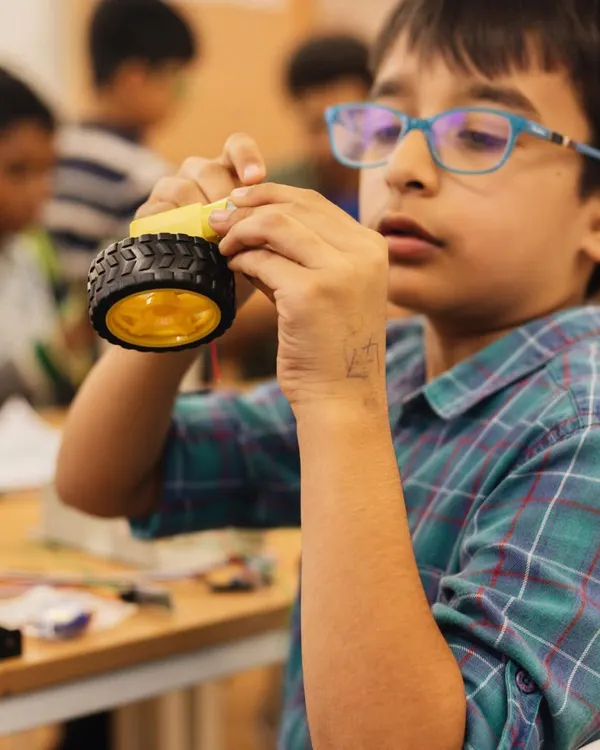
Every batch is strictly limited to 5 students to ensure your child gets dedicated time with our Lego Education kits and coding tools. This small size allows us to focus on the individual, making sure they aren't just following instructions, but actually understanding the mechanics and logic behind what they build.
We don't believe in passive learning. Our learning path begins with 'Build to Learn' for ages 2.5 to 4, where the focus is on developing fine motor skills and spatial awareness through basic block construction. As children grow, the curriculum shifts toward complex problem-solving and engineering principles. By the time they reach age 7, students are already transitioning from physical LEGO structures to digital logic using Scratch.
For teens aged 12 and above, the focus intensifies as we dive into Python, Arduino, and AI. This is not theoretical; students work with soldering irons, multimeters, and electronics kits to build tangible prototypes like line-following robots. Whether you join us at our centers in Bengaluru or Kolkata, the goal is consistent: we want to provide the environment where your child learns to turn their ideas into working models.
We prioritize accessibility in our learning setup. You do not need to purchase extra kits for our foundation levels, as all LEGO Education sets and tablets are provided at the center. For advanced tracks that involve personal hardware kits, we guide you on what is necessary, ensuring you only invest in the equipment your child needs to master their specific project. Each level concludes with rubric-based feedback, so you can see exactly how your child's confidence, logic, and technical abilities have grown over the 16 sessions.
Similar work from other experts
Browse through Curated picks from other experts on mytribe
 35
35
Coding & Robotics Courses for Kids
 12
12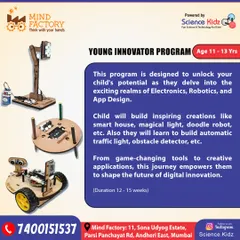
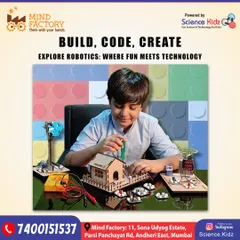
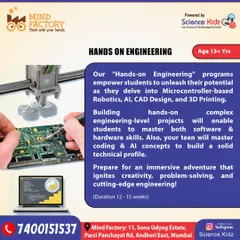
Robotics and Coding Courses for Kids
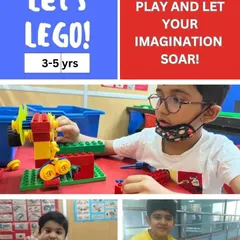
LEGO Robotics and STEM Play for Ages 3-6
Inside Our STEM Robotics Classroom
 4
4
STEM, Robotics, and Coding Classes for Kids
 33
33
Robotics & STEM Enrichment: Hands-on Engineering for Kids
More from STEM, Coding & Robotics for Kids by MakersLoft
More services by MakersLoft