Learning in Action: Play-Based Education Methods
See our 'I play, I learn' philosophy in practice. These aren't just activities; they are intentional, hands-on tools designed to build cognitive, motor, and problem-solving skills in young learners.
A toddler explores shapes and numbers with a wooden puzzle. My training emphasizes using natural, tactile materials to introduce foundational concepts like numeracy and geometry.
This child is fully engaged in a counting activity, matching pegs to holes. This is a perfect example of a hands-on task that develops fine motor skills alongside early math understanding.
A young learner carefully places a shape into a puzzle. This simple act is building problem-solving skills, spatial awareness, and concentration, all through the power of play.
This child is using sand tracing to learn the number nine. This multi-sensory technique, which I teach in my workshops, helps make number recognition a memorable and physical experience.
Learning to associate a numeral with a quantity. Here, a child counts out six rings to match the number 6, a foundational one-to-one correspondence skill we focus on.
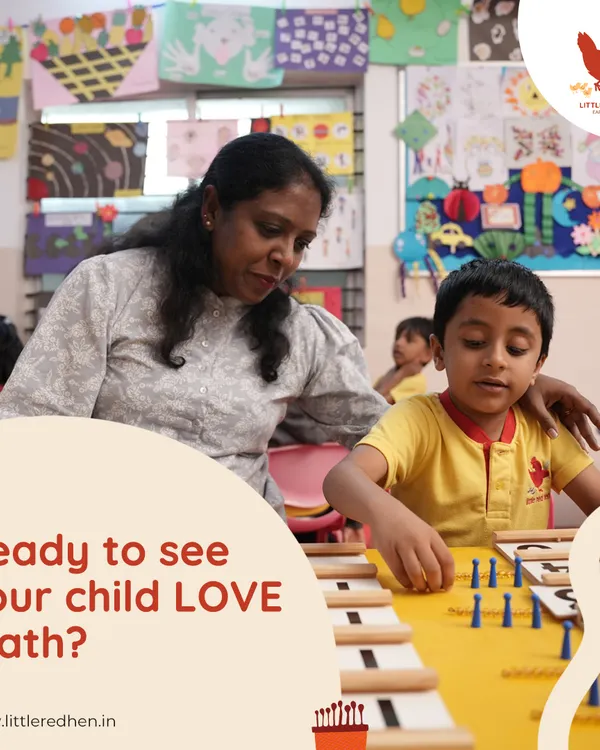
An educator gently guides a child in tracing the number nine. This shows the nurturing, supportive role of the teacher in a play-based setting, a key focus of my training.
I build, I learn! A child uses large wooden planks to construct a triangle, learning about shapes and basic engineering principles through large-scale block play.
Children sit in a circle for a group activity about community. My training also covers how to facilitate social-emotional learning and build a sense of belonging in the classroom.
An educator's hand guides a child's finger to trace a number. This gentle support helps build confidence and ensures the child feels successful in their learning journey.
A young girl concentrates as she traces the number nine with her finger. This focused engagement is a direct result of providing children with meaningful, hands-on learning tasks.
About The 'Why': Learning in Action
When you see a child tracing a number in sand, it looks like play. But we use this specific multi-sensory technique—called sand tracing—to bypass rote memorization. It forces the brain to connect the physical feeling of the shape with the visual number, which is exactly how we help children grasp abstract concepts like quantity or simple arithmetic before they ever pick up a pencil. This is the core of our approach: making learning a physical, tangible experience.
Beyond The Worksheets
Many early childhood programs rely on repetitive worksheets, but children learn best when they can touch, build, and experiment. In our Yelahanka center, you will notice that we prioritize manipulatives like wooden puzzles, rings, and large-scale blocks over passive learning materials.
Why This Approach Matters
- Cognitive Development: When a child matches a specific number of rings to a numeral, they are practicing one-to-one correspondence, a building block for future numeracy skills.
- Fine Motor Skills: Activities like sand tracing or precise peg placement develop the hand-eye coordination required for later writing.
- Problem Solving: Block play and shape puzzles encourage children to test hypotheses. If a tower falls, they learn to adjust the base or balance, building resilience alongside spatial awareness.
For Educators
If you are a teacher looking to implement these strategies, this is what I focus on in my professional workshops. We strip away the theory to show you how to set up these stations in your own classroom. Whether it is the 'Six Bricks' method for cognitive engagement or synthetic phonics for literacy, my goal is to give you tools you can use the very next day. We focus on low-cost, high-impact materials that make classroom management easier and learning more intuitive for the students. Whether you are leading a group of twenty or working one-on-one, these techniques are adaptable to any environment.
Similar work from other experts
Browse through Curated picks from other experts on mytribe
Our Learning Philosophy in Action: Hands-On Preschool Activities
Our Play-Based Preschool Approach
Hands-on Montessori Activities for Preschoolers
Learning Through Play Programs
 84
84
The Montessori Way: Learning in Action
 20
20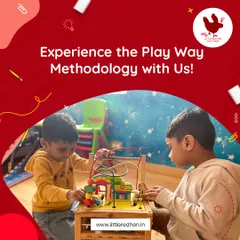
Learning Through Play: Beyond ABCs
More from Educator Training & Professional Development by Knowledge Origin
More services by Knowledge Origin