Running Drills and Form Training in Bengaluru
Running is not just about putting in miles. I focus on the mechanics of movement to help you run safer, stay injury-free, and keep going for years.
Consistency is everything. These running drills are fundamental to improving form and efficiency, and we practice them until they become second nature.
Every stride counts. We work together on drills to ensure our running form is as efficient as possible, helping us move better and faster.
As I always say, the goal is to run safe so you can run for a long time. Our sessions include drills and exercises that reinforce safe running mechanics.
A typical running drill session includes a mix of dynamic stretches and form-focused exercises like high knees to prepare the body for the run ahead.
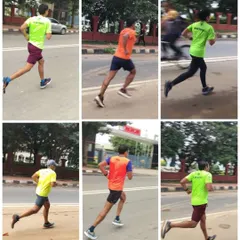
The whole group participates in running drills together. This creates a powerful sense of unity and shared purpose before we hit our stride.
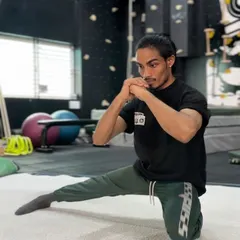
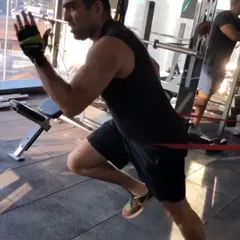
Even experienced runners benefit from revisiting the basics. Here, we're working on drills and core exercises during a high-intensity session.
Running drills like high knees and A-skips are non-negotiable in our training. They activate the right muscles and reinforce good running posture.
We use agility ladders and other tools to make our running drills more challenging and effective, improving coordination and foot speed.
About Running Drills & Form
A lot of runners think more mileage equals more speed, but without the right mechanics, you are just inviting injury. We start every session with specific drills like high knees, A-skips, and band work to fire up the muscles you have been ignoring. It is not about how fast you start, it is about having the technique to finish the race without pain.
Running isn’t just about putting one foot in front of the other. If your gait is off or your cadence is low, you are hitting the pavement with unnecessary force, and that catches up to you quickly. My approach is to strip running back to its basics. We look at your foot strike, posture, and core engagement during our sessions at HSR Layout or Agara Lake.
Why Drills Matter
High knees and A-skips are not just warm-ups; they are neuromuscular training. They teach your body how to land softly and spring forward efficiently. Whether you are training for a 10K or your first marathon, these movements create the muscle memory that takes over when you are tired at the 30km mark.
Activation and Safety
Before we hit the track, we use resistance bands to wake up your glutes and hips. If these muscles are inactive, your lower back and knees take the load, which is how most running injuries start. By fixing your form, you are not just running better; you are running safer.
If you are struggling with recurring shin splints or just feel like you have plateaued, we need to look at your form. Join us for a session at the stadium, and let’s reset your mechanics together.
Similar work from other experts
Browse through Curated picks from other experts on mytribe
Running and Marathon Coaching in Bengaluru
The Science of Running: Strength, Technique & Injury Prevention
Strength Training for Runners in Bengaluru
 14
14
Run Faster and Safer with Smart Training

Running Mechanics and Injury-Free Running
Sport-Specific Running & Cycling Coaching in Bengaluru
More from Strength & Conditioning for Runners by Vikas Srinivasan
More services by Vikas Srinivasan