Handling Police Harassment and Your Legal Rights
Facing police misconduct or difficulty with FIR registration? Know your legal rights in simple terms to protect yourself and ensure the law works for you, not against you.
The concept of a 'Zero FIR' is a powerful tool for citizens. Under the new Bharatiya Nagarik Suraksha Sanhita, the police cannot refuse to register your FIR based on jurisdiction. I explain how you can file a Zero FIR at any police station for a cognizable offence, ensuring immediate action is taken.
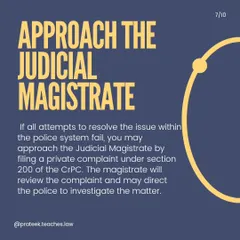
What if the police don't register your complaint and demand money instead? Do not argue. I explain the correct legal procedure: send a written complaint via speed post and keep the receipt as evidence. If there is still no action, you can approach the court under Section 175 of the BNSS.
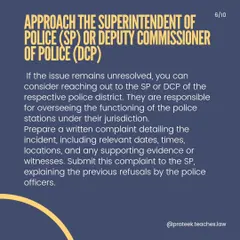
If the police are not acting on your complaint, you have higher authorities to turn to. This video provides a simple, actionable path: escalate the matter by sending a written complaint to the Superintendent of Police (SP). If that fails, the court is your next and most powerful option.
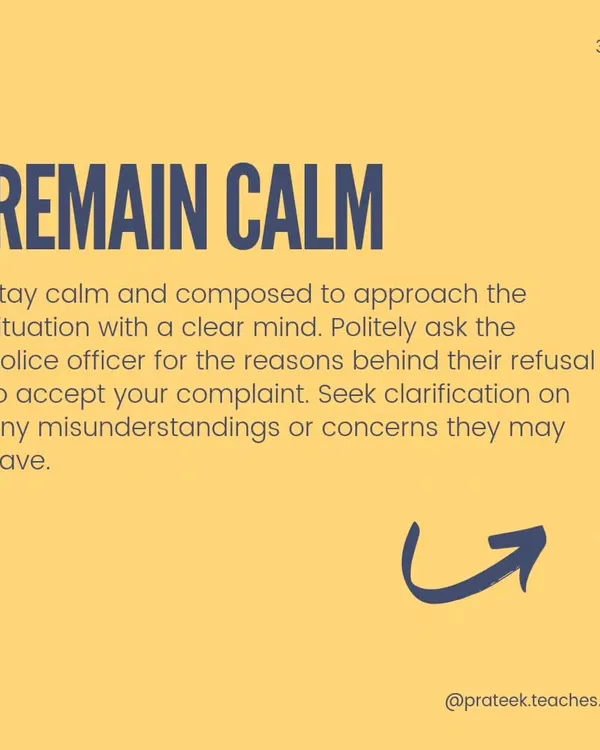
When a duty officer refuses to accept your written complaint, your first step is to note their name and immediately call 112 to report the refusal. This call is recorded and serves as crucial evidence. I also explain how you can file a formal complaint against the officer with the Police Complaint Authority.
Police cannot refuse to register a complaint by saying a medical report is needed first. Their duty is to register the complaint and then facilitate the medical examination. I explain how to handle this situation and remind the officer of Section 166 of the IPC, which penalizes public servants for disobeying the law.
In which situations can the police legally use force against you? I clarify the specific conditions, such as when you resist a legal arrest, attack an officer, or cause a public nuisance during a protest. Understanding this helps you know when their actions are justified and when they cross the line into assault.
The new laws are clear. If a police officer slaps or misbehaves with you, it is a punishable offence. I detail the specific sections of the Bharatiya Nyaya Sanhita, like Section 115 for assault and Section 356 for public insult, and how to file a case in court if the police won't register an FIR against their own.
No police officer has the right to abuse or humiliate you in public. I explain the legal consequences they can face under IPC Section 294 for obscenity and Section 323 for assault. You can also file a defamation suit for the damage to your reputation.
If a police officer slaps you, should you hit them back? Absolutely not. Retaliating will only put you in legal trouble, as it's easier for them to prove you assaulted an officer on duty. The right approach is to record the incident and file a formal complaint with the Police Complaint Authority or the court.
If a police officer misbehaves with you, evidence is your strongest weapon. I explain how to use video recordings, especially by going live on social media, as evidence. You can then file a complaint in court under Section 175 of the BNSS and seek punishment for the officer under relevant sections of the BNS.
About Police Se Pareshaan? Apne Adhikar Jaanein (Harassed by Police? Know Your Rights)
If a police officer refuses to file your complaint or attempts to coerce you, do not engage in an argument at the station. Instead, document everything. Use your phone to record the interaction—live streaming on social media is your most effective protection against evidence tampering. Immediately after leaving, send your written complaint via speed post to the station and keep the receipt, as this creates an official paper trail that serves as the foundation for future escalation to the DCP or a court application under Section 175 of the BNSS.
Understanding Your Rights in Delhi NCR
Many people in Delhi NCR struggle because they assume the police are the final authority. This is a misconception. The law provides clear procedures for situations where the police are inactive or aggressive.
When the Police Refuse to File an FIR
Under the Bharatiya Nagarik Suraksha Sanhita (BNSS), police are mandated to register an FIR for cognizable offences. If they refuse, do not plead.
- The Paper Trail: Send your complaint via Registered Speed Post. The postal receipt is a legal document proving you approached the police.
- Senior Escalation: If the local SHO ignores your complaint, the next step is a formal representation to the DCP or SP.
- Court Intervention: If administrative channels fail, Section 175 of the BNSS allows you to approach the court directly to mandate an investigation. I frequently handle these applications at Saket and Tis Hazari courts.
Handling Police Misconduct and Harassment
It is a common myth that recording police is illegal. You have the right to record officers on duty in public places, provided you are not obstructing their work.
- If you are threatened: Remember that filing a false case against you is a serious crime under Section 193 of the IPC. You can hold officers accountable for abuse of power.
- Physical Misconduct: Under Section 115 and 356 of the Bharatiya Nyaya Sanhita (BNS), specific penalties exist for assault or public insult by a public servant. If an officer misbehaves, your recorded video becomes your strongest weapon in court.
Why You Should Not Retaliate
Never hit back or physically resist an officer, even if they provoke you. Doing so allows them to flip the narrative and charge you with assaulting an officer on duty, which is much harder to defend in court. Always keep your response legal, documented, and evidence-based.
Similar work from other experts
Browse through Curated picks from other experts on mytribe
Police FIR Rights and Legal Protection Guide
Dealing with the Police: Know Your Legal Rights
 7
7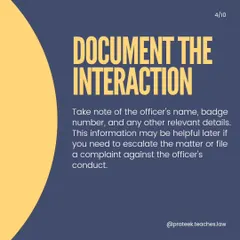
Navigating Police Interactions and Legal Rights
Police Station se Darte Ho? Know Your FIR Rights
Your Rights When Dealing with the Police
Know Your Legal Rights During Police Interaction
More from Criminal Law Representation by Shah Rukh
More services by Shah Rukh