Expert Answers to Your Hair Health Questions
Hair loss myths are everywhere. Let's look at the science behind your scalp health and find real, medical solutions for your hair fall.
Minoxidil is a wonderful drug for hair regrowth, but it's important to understand its potential side effects. In this video, I discuss common issues like scalp irritation and initial shedding, and explain how to manage them safely with your dermatologist's guidance.
Here are some quick, no-nonsense recommendations for common concerns. For a dry, flaky scalp, a ketoconazole-based shampoo is essential to treat dandruff. For frizzy hair, always use a gentle shampoo followed by a conditioner.
What you eat directly impacts your hair and nail health. This guide shows how key nutrients work: Biotin and Silica strengthen hair and add thickness, Iron prevents deficiency-related hair fall, and Omega-3 fatty acids keep skin supple.
About Your Hair Health Questions, Answered
If you are using Minoxidil and seeing increased shedding, don't panic. It is often a sign that the drug is shifting follicles into a growing phase, but it needs to be managed carefully to avoid scalp irritation. If your hair fall persists, we need to look beyond the bottle and find the root cause—whether it is nutritional, hormonal, or scalp-related—before we plan your treatment.
Decoding Your Hair Concerns
There is a lot of noise online about hair care, and most of it leads to confusion or wasted money on products that don't address your specific problem. Whether you are dealing with chronic hair fall, patchy hair loss, or a dry and flaky scalp, understanding the 'why' is the first step.
My Approach to Diagnosis
I don't believe in guessing games. Hair health is a medical issue, not just a cosmetic one.
- Detailed History: We start with your health, habits, and family history. This helps us rule out common triggers.
- Digital Trichoscopy: I use a magnified camera to look at your scalp on screen. We can clearly see follicle density, shaft thickness, and signs of inflammation that aren't visible to the naked eye.
- Root Cause Analysis: We check for factors like PCOS, nutritional deficiencies (Iron, Biotin, Zinc), and stress levels. If necessary, we will look at blood tests before deciding if you need a procedure or a change in your prescription.
Common Hair Health Questions
Is it dandruff or dryness? Many patients mistake a dry scalp for dandruff. If you have itching and flakes, it might be Seborrheic Dermatitis, which requires a medical-grade ketoconazole-based shampoo, not just a regular anti-dandruff wash.
Does nutrition really matter? Absolutely. Biotin and silica help with thickness, but Iron is critical. If you are deficient, no amount of serums will stop the hair fall. We treat the inside first.
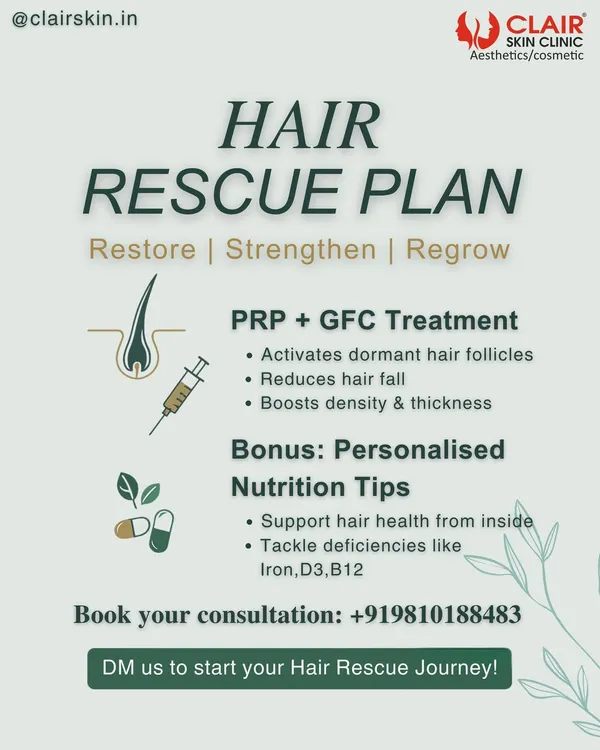
When should I consider procedures like PRP or GFC? Once we stabilize the scalp and address deficiencies, we use treatments like GFC (Growth Factor Concentrate) or Exosomes to wake up sleepy follicles. These are evidence-based, safe procedures that use your body's potential to boost density.
Similar work from other experts
Browse through Curated picks from other experts on mytribe
Hair Care Myths & Realities: Expert Answers
Hair Care Questions Answered: Science-Backed Truths
Understanding and Treating Hair Fall
 5
5
Understanding Your Hair Loss and Treatment Options
Expert Hair Advice: Answers to Your Hair Loss Concerns
Understanding Hair & Scalp Health in Delhi and Gurugram
More from Hair Restoration & Scalp Health by Lipy Gupta