Real Hair Restoration Results and Patient Stories
Dekhiye, results take time and patience. These are real outcomes from patients who trusted a diagnosis-first approach to hair restoration.
A common question is whether to go to Turkey for a hair transplant. While it's popular for Europeans, for my Indian patients, I believe staying in India offers the crucial benefit of continuous follow-up care with your doctor, which is essential for a successful long-term outcome.
Two common myths I often hear. First, running your hands through your hair does not cause hair loss. Second, while medication for male pattern baldness is long-term, it's not "lifelong" unless you want to maintain the hair. It's a choice, much like managing any chronic condition.
Should you choose a hair patch or a hair transplant? A patch offers maximum fullness for severe baldness but can feel artificial. A transplant provides a natural look and feel but has limitations based on your donor hair. I help you understand this choice based on your specific grade of baldness and expectations.
This is a common scenario I discuss with patients. If you have lost more than 50-60% of your hair, the scalp becomes visible and non-surgical treatments alone may not be enough. This is the stage where a hair transplant becomes a viable option to restore coverage.
Is hair loss from Alopecia Areata permanent? No, it is a temporary condition where hair falls out in patches. Unlike male pattern baldness, the follicles are not gone forever, and with the right treatment, there is a very high chance of complete regrowth.
The word "injection" can be scary for some people considering PRP therapy. I want to reassure you that we have many options. We can use tools like a derma roller or a derma pen, which are much less intimidating and still deliver the growth factors effectively to the scalp.
What are the signs that you need a hair transplant? The most important sign is when medical treatments fail and hair loss exceeds 50%. However, I advise against this for very young patients, as it's crucial to first stabilize the hair loss with medication.
Patients often ask if they can use special oils like virgin coconut oil after a hair transplant. My advice is always to stick to the prescribed medications. Your focus should be on your medicines and keeping the scalp clean, not on experimenting with oils that offer no proven benefit for hair growth.
Is it necessary to use medication after a hair transplant? Yes, it is compulsory. The medicines support the growth of your newly planted hair and, just as importantly, protect your existing hair from further loss. Without medication, the long-term result will be compromised.
About Patient Results & Testimonials
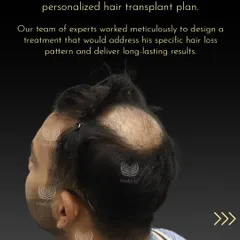
These photos reflect a journey, not a magic switch. Every result you see here is the outcome of a specific plan tailored to that patient's hair grade, donor area, and scalp health. My approach is simple: follow the 3D rule of Design, Density, and Direction to ensure the final look is natural. A truly successful transplant is one where people notice you look better, but cannot pinpoint the exact work done. Before you focus on the 'after' image, understand that your starting point—your current hair loss stage—is what dictates the realistic outcome we can achieve.
Understanding Realistic Results
There is a lot of misinformation about hair transplants online. You might see dramatic images from Turkey or celebrity transformations and expect the same. Dekhiye, I always tell my patients to be realistic. Hair transplant is an excellent tool, but it is not a 'cure' that gives you 18-year-old hair density. It is about camouflage. If you have lost more than 50% of your hair, the scalp becomes visible, and that is where a transplant becomes a viable option to restore coverage.
The Importance of Diagnosis First
I never jump straight to surgery. Hair loss is a symptom, not the disease. Whether it is Alopecia Areata, stress-induced shedding, or male pattern baldness, we need to address the root cause. Sometimes, a blood test and a few supplements are all you need. I often see patients who come to me wanting a transplant, but after a digital trichoscopy, we find that medical therapy can stabilize and regrow their hair without any surgery.
Why Post-Procedure Care Matters
Many patients ask if medications are mandatory after a transplant. The answer is yes. Medicines support the growth of the newly planted hair and protect your existing follicles from further miniaturization. If you skip medication, you are essentially protecting the front while losing the back.
We also focus on corrective hair transplants for those who had a bad experience elsewhere. Fixing an unnatural hairline or addressing donor area scarring requires precise, expert handling. Whether you are dealing with male pattern baldness or need help with beard and eyebrow restoration, we focus on safety and long-term results over quick, temporary fixes. My goal is to empower you with the facts so you can make an informed choice about your hair health.
Similar work from other experts
Browse through Curated picks from other experts on mytribe
Real Hair Transplant Transformations and Patient Results
Patient Success Stories: Hair Restoration Journeys
Real Hair Transplant Results: Before & After
Real Patient Stories: Hair Restoration Transformations
 17
17

Real Patient Stories & Hair Restoration Results
 34
34
Hair Transplant Results & Success Stories
More from Non-Surgical Hair Loss Treatments by Dr. Jangid
More services by Dr. Jangid