Traditional Hatha & Abhyasa Yoga Practice
My teaching is built on my daily abhyasa—the discipline of returning to the mat. Here, I share the technical refinement and traditional practice that ground my own journey.
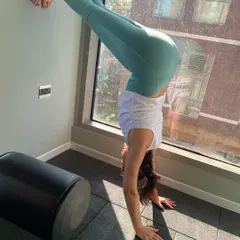
A moment of focused balance in Adho Mukha Vrksasana (Handstand). The journey to this point is one of daily practice and unwavering dedication.
Demonstrating Nauli Kriya, an internal cleansing practice. Abhyasa is not just about external shapes, but also about mastering the internal, subtle body.
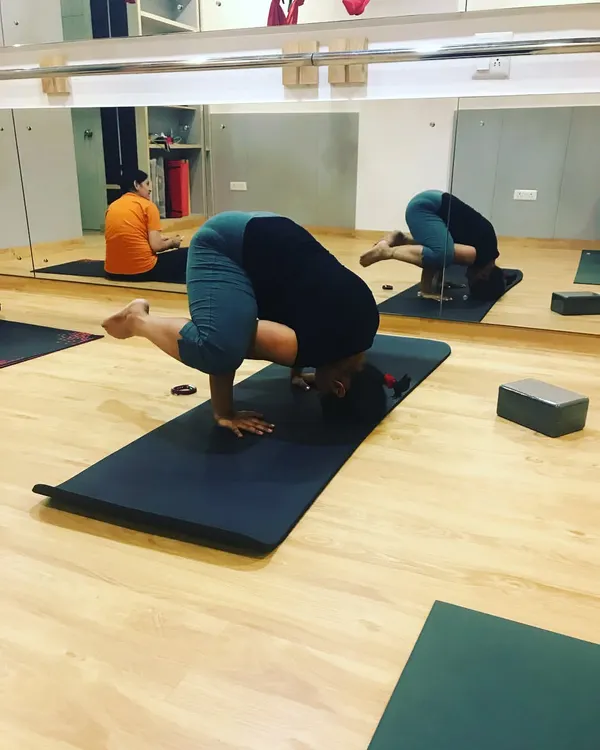
Working on a difficult transition from a seated pose to handstand. This is the kind of challenge that fuels my personal practice and informs my teaching.
Using the wall to refine my Chakrasana (Wheel Pose). Self-practice is a time for honest assessment and working on the finer details of alignment.
My practice of Paschimottanasana, focusing on the principle of extending the spine forward using the bandhas, not just collapsing over the legs.
Exploring Pincha Mayurasana with props. Even in self-practice, I use tools to deepen my understanding of the asana's mechanics.
Drilling the entry into forearm stand. Repetition and discipline are the cornerstones of a strong personal practice.
Flowing through a simple sequence of Adho Mukha Svanasana. Even the most basic poses are an opportunity for refinement.
Taking time to break down the mechanics of a handstand. Understanding the 'why' is as important as doing the 'how'.
Working on a deep pigeon pose variation. This requires patience and consistent effort to open the hips and spine.
About My Personal Practice (Abhyasa)
My personal practice isn't just about the final shape; it's about the discipline to show up every day. If you struggle with specific transitions or alignment, do not just force your body into the pose. We use wall ropes, bolsters, and blocks to deconstruct the mechanics, which is exactly how I refine my own practice before I teach it to my students.
Abhyasa, or consistent self-practice, is the foundation of any real progress in yoga. In my studio in DLF Phase 5, Gurgaon, my personal routine informs every workshop I lead. It is never about reaching a peak pose simply to say you did it. It is about understanding the structural integrity, the placement of your bandhas, and the direction of your drishti to safely advance your practice.
Why Props Are Essential
Many students view props as a sign of weakness or a shortcut. My methodology is the opposite. I use backless metal chairs, wall ropes, and wooden blocks as intelligent tools to isolate muscle groups and align the spine. Whether we are working on the pelvic diaphragm or the mechanics of a complex inversion like Sirsasana, these tools allow you to access the asana without compromising your skeletal safety.
The Focus of My Sessions
- Anatomical Alignment: I focus on hands-on adjustments. We do not ignore pain; we analyze it and use specific drills to correct the imbalance.
- Technical Progression: From basic Surya Namaskar to advanced forearm stands, every sequence is designed to build the necessary strength and flexibility in stages.
- Traditional Roots: While we get technical, the spiritual aspect remains. We integrate Sanskrit chanting and traditional Hatha principles, ensuring the practice heals the mind as much as it strengthens the body.
If you are a serious practitioner, a teacher, or someone working through specific limitations, you will find a space here that prioritizes depth over quantity.
Similar work from other experts
Browse through Curated picks from other experts on mytribe
 16
16
Advanced Yoga Asanas and Personal Practice
My Personal Yoga Practice: Traditional Hatha & Alignment
 13
13
The Foundation: My Personal Ashtanga Practice
 6
6
My Personal Yoga Practice and Discipline
Build Your Daily Yoga Practice in HSR Layout
 4
4
Mindful Hatha Yoga and Alignment in Gurugram
More from Specialized Yoga Workshops by Devender Bhardwaj
More services by Devender Bhardwaj