VitthāMāi: Exploring Devotion and Gender Through Dance
I created VitthāMāi to look at divinity not as a distant concept, but through the lived experiences of saints like Janabai and Tukaram. It is a performance that brings 14th-century Marathi poetry into our modern lives through movement.
In *VitthāMāi*, we explore the many facets of maternal love through the eyes of Varkari saint poets. This sequence brings together the motifs of four different characters: Sena the barber, Tukaram who saw God as a ghost, the devotee Chokhamela, and Janabai, the child bathed by God.
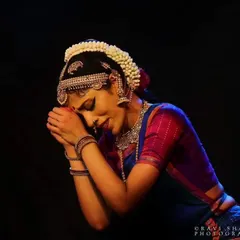
Capturing the fun and affection of *VitthāMāi*, where we explore the deity Vitthala as a mother figure. This piece was commissioned and filmed as a digital work before we began presenting excerpts of it live, and the energy on stage is always incredible.
This abhanga by Janabai, where she imagines God massaging her head and giving her a bath, is a profoundly maternal image. Choreographically, I played with the words 'Chakrapani' (wielder of the discus) and 'Haati gheuniya loni' (taking butter in hand) to bring this tender vision to life.
Meet VitthāMāi, the matriarch of Pandharpur. This production reimagines the deity through the lens of Marathi abhangs, exploring a relationship with the divine that is nurturing, playful, and deeply personal.
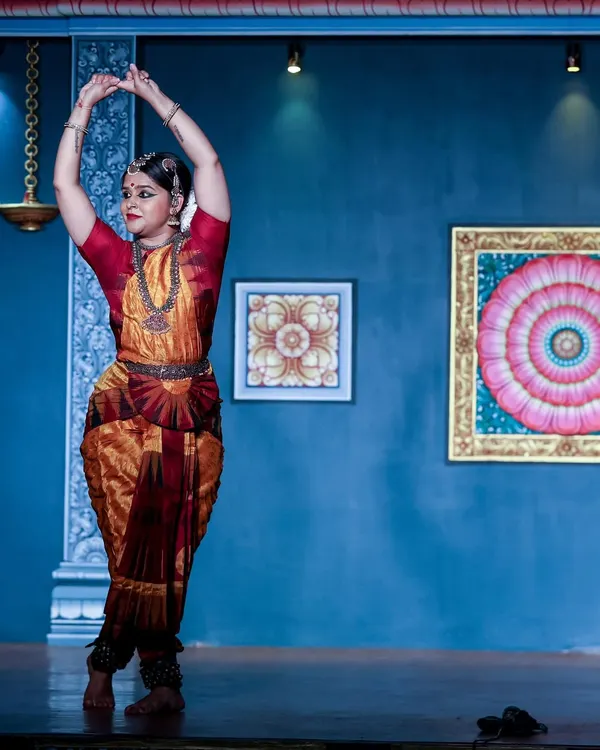
In *VitthāMāi*, each devotee has a unique relationship with the divine, just as siblings do with a mother. This image captures the character of Tukaram, who saw Vitthala as a mischievous ghost who wouldn't let him go, granting liberation instead of mortal pleasures.
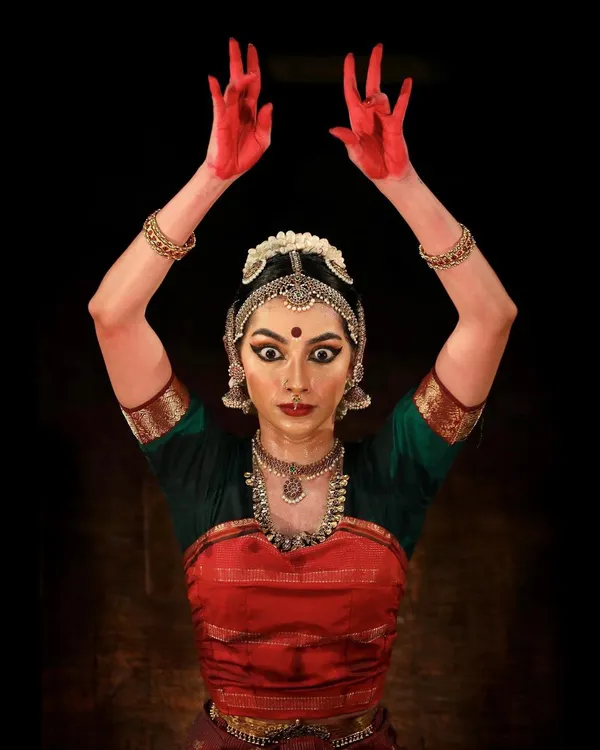
This pose embodies the character of Tukaram's "Mothe Bhoot" or great ghost from *VitthāMāi*. I drew inspiration from Christopher Bruce’s ‘Ghost Dances’ and folk forms like Bhoota Kola and Theyyam to create a character that is both fearsome and liberating.
The Varkari tradition brought God to the streets, and that's what we did here. This impromptu 'Vaari' or procession through Hounslow High Street before a performance was about making the art accessible, turning the street into a 'Naamacha Bazaar' where everyone could join in.
A glimpse of *VitthāMāi* in performance. This piece tells the story of the housemaid Janābāi, who believed that only her Vitthā-bāi, her mother Vitthala, could free her from the cycles of birth and death. The energy of the chanting musicians and the story is always powerful.
A moment from "Janabai-Vitthamai," an excerpt from the full work *VitthāMāi*. This piece explores the tender, maternal relationship between the devotee Janabai and her god, Vitthala, through beautiful Marathi poetry.
Performing in an intimate courtyard space presents unique challenges and opportunities. Here, I adapted the choreography for *VitthāMāi* to a 6-foot deep stage, using the architecture to enhance the storytelling of Varkari literature.
About VitthāMāi: Exploring Devotion & Gender
When I perform VitthāMāi, I am not just reciting traditional lines. I am navigating the complex, often messy relationships between devotees and the divine. Whether I am portraying the playful Janabai or the mischievous Tukaram, my focus is on the human emotion behind the theology. If you are looking to commission this for a festival, a private house concert, or a studio showcase, keep in mind that I work closely with musicians to ensure the music and movement are synchronized, so I typically recommend at least four weeks of lead time for thematic productions.
VitthāMāi: Exploring Devotion & Gender is a research-based project that shifts the perspective of divinity from the distant to the personal. The performance draws from 14th to 16th-century Varkari literature, specifically Marathi abhangs. In this piece, I do not present the deities in their classical, static form. Instead, I explore them through the lens of those who lived their lives in complete surrender—devotees like the housemaid Janabai, the barber Sena, and the poet-saint Tukaram.
Each character requires a distinct movement vocabulary. Portraying Janabai, who saw God as her mother, requires a shift in Abhinaya that is intimate and domestic, moving away from the grandiose poses often seen in traditional temple dance. When we work on this for a performance, the process is collaborative. We analyze the Sahitya, decode the philosophical meaning, and work with the musicians to ensure the Raga and Tala reflect the emotional arc of the poetry.
Technical execution is vital for this production. Whether we are presenting in an intimate courtyard or a formal proscenium stage, I emphasize lighting as a storytelling tool. A professional lighting script is part of my commission, focusing on specific cues that highlight the nuance of facial expression and body mechanics. If you are interested in staging this or inviting me for a performance, we can discuss whether you prefer a 15-minute excerpt or the full-length 60-minute production. I ensure that audiences, regardless of their familiarity with Marathi or Bharatanatyam, can connect with the raw human emotions inherent in these stories.
Similar work from other experts
Browse through Curated picks from other experts on mytribe
 16
16
Thematic & Mythological Bharatanatyam Performances
 11
11
Devotional Storytelling Bharatanatyam Performances
Devotional Classical Dance & Storytelling Performances
 7
7
Bharatanatyam Choreography and Performances
 7
7
Bharatanatyam Performances & Custom Choreography
Thematic Bharatanatyam Solo Productions
More from Bharatanatyam Choreography by Divya Ravi
More services by Divya Ravi