Mastering the Abacus Tool: Building Your Mental Math Foundation
Every fast mental calculator started with these physical beads. We teach children how to handle the tool, build muscle memory, and eventually visualize the math entirely in their heads.
A student demonstrates her speed and accuracy using the physical abacus tool to solve multiplication and addition problems.
Students in my offline class are focused on their workbooks and abacus tools. This hands-on practice is essential for building muscle memory for calculations.
A young student, Rishabh, practices on a large wall-mounted abacus, helping him visualize the bead movements for mental calculations.
A student is deeply focused on her abacus tool during a practice session. This is where the magic of maths begins.
A close-up of a student's hands skillfully moving the abacus beads. This dexterity is key to developing calculation speed.
Another student engrossed in his abacus practice. This fundamental training builds the concentration needed for advanced levels.
Students in an offline class use their abacus tools for a decimal dictation exercise, showing the tool's versatility for complex maths.
About The Foundation: Abacus Tool Practice
We start every student on a 17-rod physical abacus. While it might look like a simple toy, it is a precision instrument for brain training. By physically sliding the beads, your child develops the exact muscle memory needed to transition from the tool to mental visualization. We keep our batches small because I need to personally correct their finger movements early on—if they learn a shortcut now, it hinders their speed later.
From Tangible Beads to Mental Speed
This is where the magic begins. Many parents ask if we can skip the tool and go straight to mental math. My answer is always no. The abacus tool acts as a bridge. When a child moves a bead, they aren't just doing a sum; they are mapping the number to a physical space. Over time, they stop needing the physical tool and begin to "see" the beads moving in their mind's eye.
The CIP Abacus Methodology
Our approach in Shamli combines discipline with engagement:
- Precision Training: We focus on correct bead manipulation techniques. Proper grip and movement are non-negotiable for achieving high speeds.
- Visual Logic: Once we build physical dexterity, we introduce visualization exercises. This is when students start solving equations faster than a calculator.
- Small Group Monitoring: Whether online or at our Jain Vihar center, I personally ensure every child is using their fingers correctly.
Why This Foundation Matters
Abacus is more than just arithmetic. It is a complete brain gym. By practicing these foundational tool movements, children naturally improve their concentration, listening skills, and memory retention. This is why our students don't just get better at maths—they get better at focusing in all their school subjects.
If you want your child to stop fearing numbers and start enjoying them, we are ready to guide them. Padhai bhi, masti bhi is not just our motto; it is how we ensure your child actually wants to come back for the next class.
Similar work from other experts
Browse through Curated picks from other experts on mytribe
Hands-On Abacus Learning to Master Math Skills
Holistic Abacus: Transforming Numbers into Fun
Mastering Mental Maths with Abacus: Fast, Fun & Certified
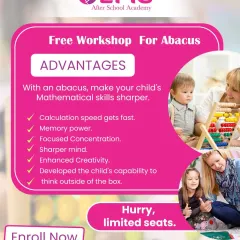
Abacus and Mental Math Classes for Kids
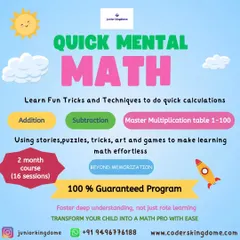
Mastering Math: Fun and Fast Learning
Mental Math Superstars: Faster Math Skills for Your Child
More from Abacus and Mental Maths Program by CIP Abacus by Mridula Jain
More services by CIP Abacus by Mridula Jain