The Iyengar Method: Using Props for Deep Alignment
I use chairs, blocks, and rope walls to help you understand your body’s geometry and safely deepen your practice.
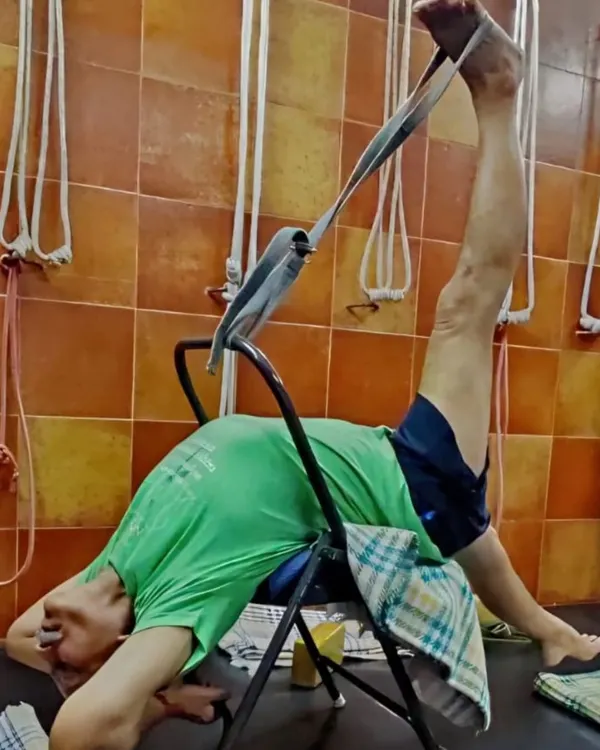
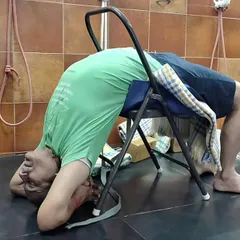
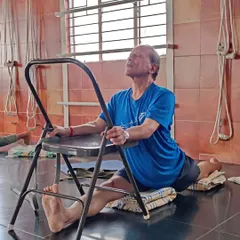
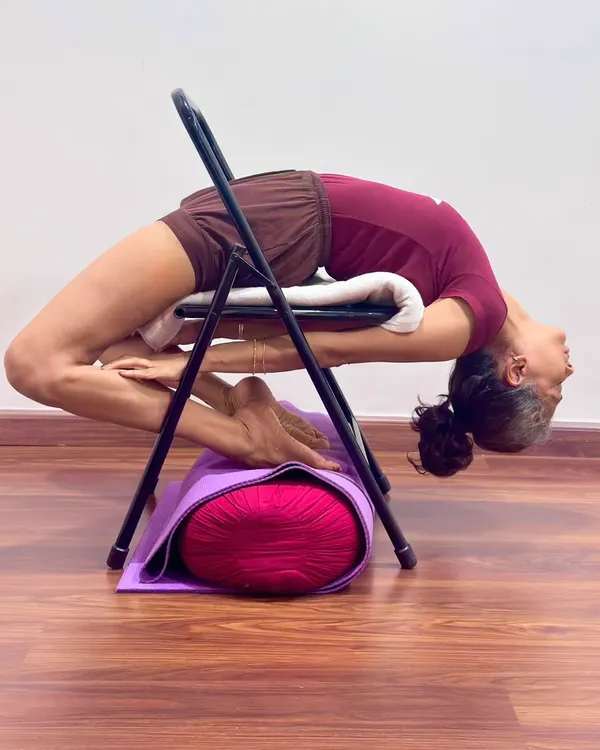
Here I demonstrate how to use a chair to safely enter a deep backbend. The chair provides support for the back, allowing the practitioner to relax into the pose and open the chest without fear of falling.
Providing a hands-on assist in Ekapada Rajakapotasana (One-Legged King Pigeon Pose). Gentle guidance helps the student find the correct alignment and deepen the stretch in the hip flexors and quadriceps safely.
Another example of an assisted Ekapada Rajakapotasana. With a teacher's help, students can better understand the mechanics of the pose, release tension, and improve flexibility with proper form.
Assisting a student in Bakasana (Crow Pose). A partner's support can provide the confidence needed to lift off, helping to build the strength and balance required for the full expression of the arm balance.
A group of students in a supported inversion using a rope wall. This Iyengar yoga technique, known as "yoga kurunta," allows for spinal decompression and relaxation without any pressure on the neck.
A collage showing students using the rope wall for inversions and blocks for standing poses. This highlights the versatility of props in a single class to support different types of asanas.
A student practicing Samakonasana (Center Splits) with the support of a rope wall. The ropes help to hold the body's weight, allowing for a gradual and safe opening of the hips and groin.
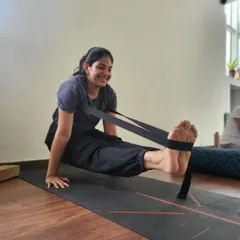
This video shows how a strap can be used to prepare for deep backbends. The strap helps to bind the feet, allowing the practitioner to work on opening the shoulders and upper back.
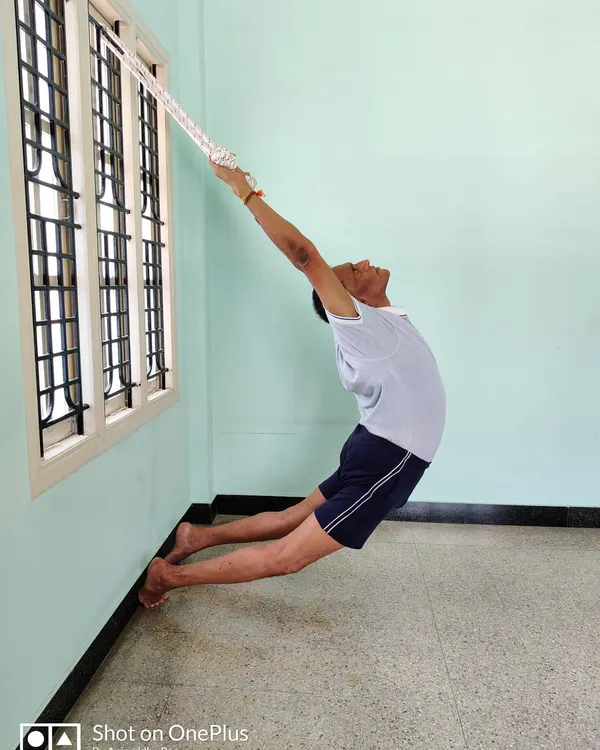
Another demonstration of using a strap and the wall for a back-bending asana. Props are invaluable tools for exploring advanced postures by providing stability and targeted support.
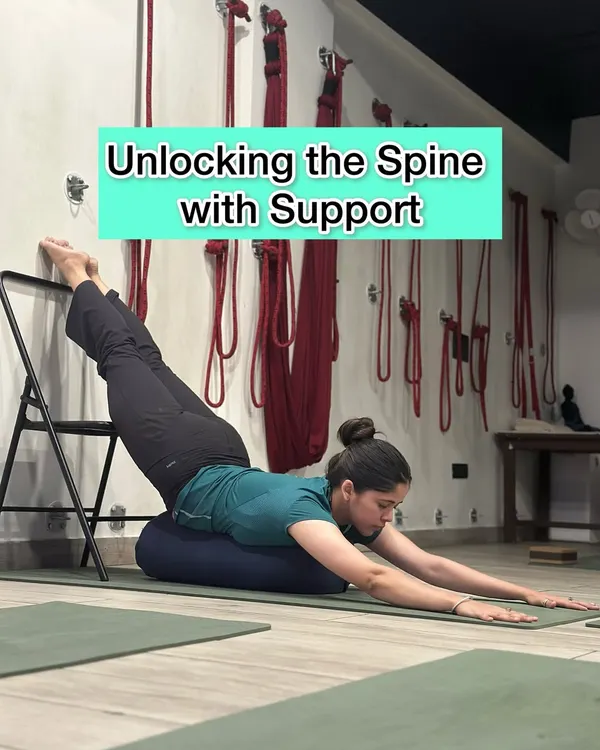
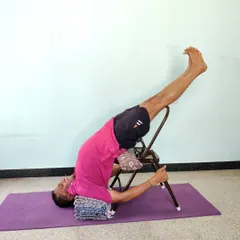
Using a chair to practice Shalabhasana (Locust Pose). The chair supports the torso, allowing the practitioner to focus on strengthening the back muscles and lifting the legs with control.
About The Iyengar Method: Props & Hands-On Adjustments
When you use a chair for backbends or ropes for spinal decompression, you stop fighting gravity and start understanding your internal geometry. It is not about making a pose easier; it is about making it accessible so your muscles can release tension properly. In my workshops, I provide direct, hands-on adjustments to correct your form, helping you find that elusive deep stretch without the risk of strain.
Beyond the Basics: Why Props Matter
Many students think that using props is for beginners, but in the Iyengar-influenced approach, they are sophisticated tools for advanced exploration. Whether you are struggling to reach your toes or trying to safely enter a deep backbend, props like belts, wooden bricks, and wall ropes allow you to stay in an asana longer. This sustained hold is where the real change happens—it builds muscular endurance and releases deep-seated tension in the fascia.
How I Structure Our Sessions
- Technical Breakdown: We do not just flow through poses. We spend time analyzing the physics of each movement. If you are stuck in a handstand or struggling with a deep twist, we break it down into preparatory stages.
- The Power of Adjustments: My role is to observe and correct. You might feel a stretch in one place, but with a slight manual adjustment, we can shift the intensity to the correct muscle group, preventing injury and ensuring you get the full benefit of the pose.
- Supported Inversions: The rope wall is a gamechanger for anyone who finds traditional inversions intimidating. It allows you to hang, decompress your spine, and experience the calmness of being upside down without the fear of falling.
This method is for anyone who wants to move beyond the superficial workout phase and understand how their body moves. Whether you are coming to my Koramangala studio or joining online, expect a focus on precision and breath. Show up, practice, and the results will follow.
Similar work from other experts
Browse through Curated picks from other experts on mytribe
Iyengar Yoga Props for Alignment and Support
 33
33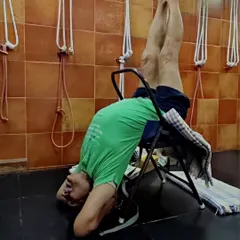
Master Your Alignment with Iyengar Yoga Props
 26
26
The Iyengar Method: Precision with Props
The Art of Alignment: Precision Yoga with Props
 22
22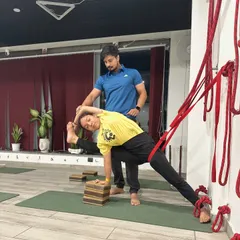
Iyengar Yoga with Props: Precision and Alignment
 4
4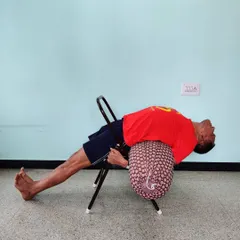
Iyengar Yoga Props for Precision
More from Advanced Yoga & Meditation Workshops by Nirakula Yoga
More services by Nirakula Yoga