Understanding Maintenance and Alimony Laws
Maintenance isn't always automatic. Whether you are claiming support or defending a claim, understanding the legal nuances and exceptions under Section 125 CrPC is essential for your case.
Many believe a husband must always provide maintenance, but the law has exceptions. I outline several situations where a wife is not entitled to maintenance, such as if she is earning well, is living in adultery, or if the separation was by mutual consent. This provides a balanced view of spousal support laws in India.
This video addresses a complex maintenance scenario. I discuss a recent Supreme Court ruling where a woman was granted the right to claim maintenance from her second husband, even if her first marriage was not legally dissolved. This highlights the evolving nature of family law under Section 125 of the CrPC.
About Understanding Maintenance (Alimony)
Many believe maintenance is a guaranteed payout, but that is often half-knowledge at work. Courts look at specific variables—such as whether a spouse is professionally qualified, living in adultery, or if the separation was by mutual consent—before passing an order. Understanding these legal exceptions is just as important as knowing your right to file a claim, and it helps in setting realistic expectations for your legal strategy.
Navigating Maintenance Claims
When family disputes reach the court, maintenance—or alimony—becomes a central point of contention. Under Section 125 of the Code of Criminal Procedure (CrPC), the law imposes a legal and moral duty on a person to provide for their spouse, children, or parents if they are neglected. However, this is not a blanket rule.
Why Courts Look Beyond the Basics
Courts do not just sign off on maintenance amounts. They examine the "full picture." If a wife is gainfully employed and earning well, or if the couple has separated by mutual consent without a maintenance clause, these facts significantly impact the court’s decision. My goal is to help you map these facts against your current situation so you know where you stand before you enter a courtroom.
Legal Precedents and Reality Checks
The law evolves with time. For instance, in the case of N Usha Rani and Another v. M. Srinivasan, the Supreme Court held that a woman is entitled to claim maintenance from her second husband under Section 125 CrPC, even if the first marriage was not legally dissolved, provided the second husband was aware of her marital history. This highlights why reading the bare law isn't enough; you need to understand how judges are applying it today.
Key Areas We Can Review
- Section 125 CrPC Applications: Filing for support or defending against an inflated claim.
- Exception Analysis: Reviewing if your spouse is disqualified from claiming maintenance due to employment or adultery.
- Strategy Sessions: We can sit down for a 60-minute session to analyze the merits of your case, review your documents, and draft a clear roadmap.
Legal matters are stressful, but having a clear, fact-based plan reduces the noise and helps you make informed decisions.
Similar work from other experts
Browse through Curated picks from other experts on mytribe
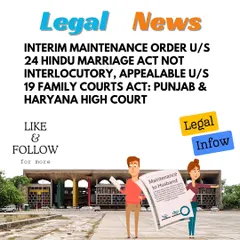
Maintenance and Alimony Laws: Expert Legal Advice in Delhi
Understanding Maintenance and Alimony Laws
Understanding Maintenance & Alimony Laws
Maintenance and Alimony: Understanding Your Financial Rights
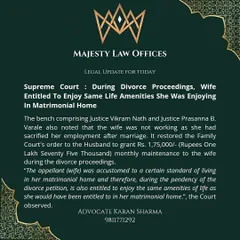
Maintenance Claims and Defenses in India
Understanding Maintenance, Alimony, and Property Rights
More from Family Law by Yash Yadav
More services by Yash Yadav