The Architect's Craft: From Sketch to Scale Model
Architecture is not just about screens and digital renders. We build, touch, and test at every scale to ensure our designs breathe before construction begins.
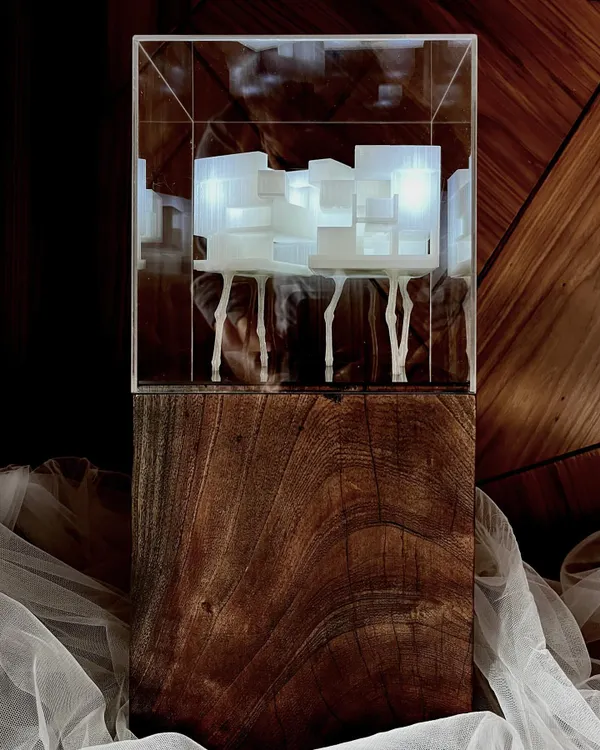
A conceptual model for a residence in New Delhi, using acrylic and wood to study the interplay of solid and void. The green terraces and pool are integrated early in the design process to create a dialogue between the structure and nature.
A view of our studio's model table, a landscape of past and present projects. Each model represents a deep exploration into form, space, and materiality, serving as a physical library of our design thinking.
A study model showing the ground floor of a house embedded in a hillside. The model's base represents the site's topography, allowing us to precisely integrate the building's footprint with the natural contours of the land.
A conceptual study model of a curved metal exoskeleton. This red-painted model was an early exploration of a structural idea for a facade, testing its geometric complexity and visual impact.
Our team collaborating on a detailed architectural model. These sessions are crucial for problem-solving and refining the design, ensuring every element works in harmony.
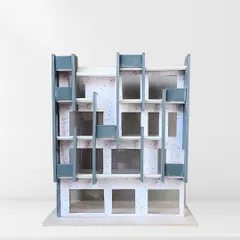
The completed acrylic model for a New Delhi residence, showing the intricate arrangement of floors, balconies, and open spaces. This level of detail helps us visualize the human experience within the building.
Focused work during a model-making session. The precision required to build these models reflects the care we bring to the full-scale construction of our projects.
A moment of guidance and collaboration over a project model. We believe in a studio culture where ideas are shared and developed together through hands-on work.
An overhead view of a sectional model, revealing the internal volumes and vertical relationships within a multi-story residential concept.
A physical massing model used to study the building's overall form and its relationship to the site. The toy car helps establish a sense of scale.
About The Architect's Craft: From Sketch to Scale Model
A model is never just a visual aid; it is our primary testing ground. When we build a sectional study model, we are not just showing you what a house looks like. We are confirming how light falls across your living room and ensuring your stairwell feels open rather than cramped. It is how we eliminate guesswork before we even break ground on your site.
Digital software gives us precision, but physical models give us intuition. By building with foam, wood, and acrylic, we force ourselves to grapple with gravity, scale, and the actual volume of a room. This is particularly critical for complex terrain projects, such as our hillside work in Himachal Pradesh, where site topography dictates every decision.
Why We Model
- Spatial Understanding: A screen flattens space. A model allows us to view the interaction between floors and ceilings from every angle, helping us identify circulation issues that are invisible in a 2D drawing.
- Light and Shadow Studies: We use massing models to track sun paths. This tells us exactly when a facade will cast harsh shadows or where a green roof needs shading to keep interiors cool.
- Structural Validation: For projects involving complex elements like cantilevers or metal exoskeletons, a scale model acts as a physical proof of concept. It helps us communicate the structural intent clearly to contractors who might be unfamiliar with modern, experimental assemblies.
Our process is iterative. We populate these models with scale figures to test how a person actually inhabits the space. If the scale feels off in the model, it will feel off in the built home. By the time we arrive at the working drawing stage, we have already 'lived' in the building through these studies, ensuring that the final construction is as efficient as it is beautiful.
Similar work from other experts
Browse through Curated picks from other experts on mytribe
 5
5
Our Design Process: From Sketch to Structure
The Architect's Hand: From Sketch to Structure
 6
6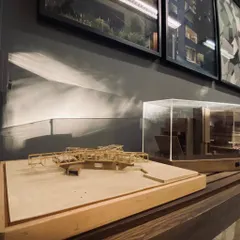
Architectural Design and Spatial Visualization
How We Design: From Concept to Construction
The Design Journey: From Sketch to Structure
 13
13
Our Architectural Design Process
More from Architectural Design by Studio HKAD
More services by Studio HKAD