Featured Robotics & STEM Projects
A look at what our students create when they trade theory for real tools, sensors, and code.
Watch our students demonstrate the smart dustbin they built from scratch. Using an ultrasonic sensor to detect a hand and a servo motor to automatically open the lid, this project is a perfect example of how we teach practical, real-world problem-solving.
We are incredibly proud of our internship students from CMR and Ekya schools who designed and built this humanoid robot, Astro R2. This advanced project showcases the potential for growth within our programs, covering everything from design thinking and sensor integration to programming complex movements.
This teacher's review perfectly captures the excitement in our workshops. He highlights a student-made clap-on, clap-off light, a fun project that introduces kids to sound sensors and basic circuitry in a memorable way.
A classic for a reason. This student confidently explains and demonstrates her obstacle-avoiding car, a project that teaches core robotics concepts like sensor input with an ultrasonic sensor and motor control using an Arduino board.
It's never too early to start innovating. Here, one of our bright Grade 1 students demonstrates a light-dependent resistor (LDR) circuit, showing how our hands-on approach makes electronics accessible and fun for even the youngest learners.
See how our students combine technology with sustainability by building an automatic plant watering system. This project uses a soil moisture sensor to detect when a plant is dry and activates a pump, teaching both electronics and environmental responsibility.
This is what learning by doing looks like. This clip captures the essence of our workshops: students deeply engaged, collaborating, and experiencing that "aha" moment as they connect wires and see their ideas come to life.
This parent's impressed reaction says it all. He speaks about the confidence and clarity with which students of all ages explained their inventions, highlighting how our program nurtures not just technical skills but also communication and self-assurance.
About Featured
What you see here aren't just toys; they are working proof of what students from Grade 1 to 10 can build in a single month. Every project, from the smart dustbin to the line-following robot, uses the same microcontrollers and sensors students get in our kits. There is no magic behind the scenes, just logic, wiring, and the trial-and-error process we teach to help students move from wondering how it works to building it themselves.
We move past the textbook theory. Instead of listening to lectures, our students at our HRBR Layout center in Bangalore spend their sessions with breadboards, ultrasonic sensors, and microcontrollers like Arduino Uno. It starts with simple circuits, like light-dependent resistors or clap-on switches, and quickly moves to autonomous robotics. We believe that when a child understands the hardware, the coding becomes a tool they control rather than a set of rules they have to memorize.
Our curriculum is built for progression. A student might start by learning basic motor logic in our Junior Electronics module and eventually move to coding autonomous robots that navigate obstacles. We focus on physical outputs—smart dustbins, automatic hand washers, and plant watering systems—because seeing code turn into physical movement is the best way to keep a child engaged in STEM education.
Everything you see here was built by students during our regular workshops or internship programs. We provide the kits, the guidance, and the space for them to fail, fix, and finally launch their own inventions. Whether you are looking for introductory robotics classes or advanced Arduino workshops, our focus remains the same: giving children the confidence to treat technology as a creative outlet.
Similar work from other experts
Browse through Curated picks from other experts on mytribe
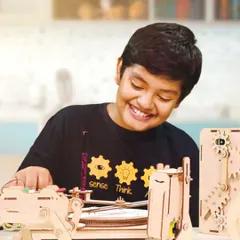
Our Best Robotics Projects and STEM Workshops
Hands-On STEM Projects and Workshop Highlights in Bengaluru
Our Featured Robotics & Coding Projects
Robotics Projects and STEM Builds for Kids in Delhi
Student Innovations and Robotics Projects
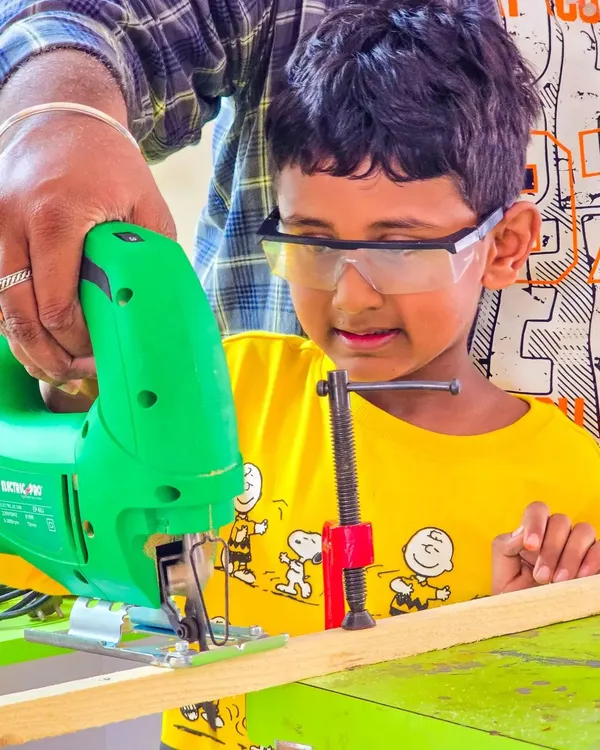 10
10Featured STEM Projects and Robotics Workshops
More from Robotics and Electronics Workshops for Kids by Robomations
More services by Robomations