Art History and Movements: Exploring Visual Narratives
Art history is more than dates and definitions. It is a living dialogue. Join us as we explore the movements that shaped Indian and global art, from the Bengal School’s quiet defiance to the vibrant energy of Fauvism.
At the turn of the 20th century, the Bengal School of Art emerged to redefine Indian modernism. It was a movement about reclaiming a cultural voice, choosing roots over imitation and identity over influence.
The pioneers of the Bengal School of Art, led by Abanindranath Tagore, included artists like Nandalal Bose and K. Venkatappa. Their legacy still ripples through contemporary practice.
The style of the Bengal School was defined by soft washes, lyrical lines, and themes from Indian mythology and history. It was inspired by Mughal miniatures, Ajanta frescoes, and Japanese wash techniques.
What is Fauvism? It was a radical art movement from early 20th-century France where color ruled over realism. The artists were wildly expressive, and the critics were shocked.
Fauvism was short-lived, but its impact on modern art was seismic. It was a wild cry for emotional liberation, exploding with color and raw instinct far ahead of its time.
The Fauves, or "the wild beasts," included artists like Henri Matisse and André Derain. They dared to paint outside the lines.
The moment it all began: Salon d'Automne, Paris, 1905. Viewers were outraged by Matisse’s 'Woman with a Hat,' leading a critic to scoff, "Donatello among the wild beasts!"
Fauvists abandoned natural colors for emotional truth. Trees could be orange, skies green, and shadows pink. It was about painting feeling, not reality.
Sunflowers that speak across centuries. Here, we explore the connection between Van Gogh's emotional landscapes and Manu Parekh's sunflowers, which echo the devotional chaos of Benares. Two artists, one motif, infinite expression.
Though separated by time and culture, Van Gogh and Manu Parekh are united by a Post-Impressionist impulse: to paint emotion, not reality.
About The Curator's Eye: Art History & Movements
When we analyze an art movement, we look for the heartbeat beneath the technique. Whether it is the soft wash lines of the Bengal School or the rebellious color palettes of Fauvism, every style reveals how artists were reacting to their own time. We invite you to visit our Lavelle Road space to see these narratives in person, or to discuss how specific movements might align with your personal collection.
Understanding the Art Behind the Canvas
Art history is not a static subject confined to textbooks. At Gallery G, we treat it as an evolving story. When we examine movements like the Bengal School of Art, we are looking at a pivotal moment where Indian artists reclaimed their cultural identity, choosing soft washes and lyrical lines over colonial mimicry. This approach changed how we view modern Indian art today.
Why Movements Matter
Every great shift in art, such as the Fauvist explosion in France, was a reaction to the rigid conventions of its era. By understanding why artists decided to use green skies or pink shadows, we gain a deeper appreciation for their emotional intent. It transforms the viewing experience from simple observation into a conversation.
Our Philosophy on Study and Exhibition
We assemble our exhibitions to foster this exact kind of dialogue. Whether we are drawing connections between the sunflowers of Van Gogh and the devotional chaos of Manu Parekh, or explaining the evolution of abstract forms, our goal is to make these concepts accessible. We believe that when you understand the context of an artwork—the history, the struggle, and the joy behind it—the piece becomes a permanent part of your own narrative.
We welcome you to join our gallery walks, where we move beyond the frames to discuss the provenance and the soul of the work. If you are building a collection, we offer guidance on selecting pieces that do more than decorate a wall; they tell a story that resonates with your personal journey.
Similar work from other experts
Browse through Curated picks from other experts on mytribe
 7
7
A showcase of contemporary Indian art in Bangalore
 8
8
Featured Art Collections and Immersive Exhibitions
Expert Art Advisory & Gallery Insights
 56
56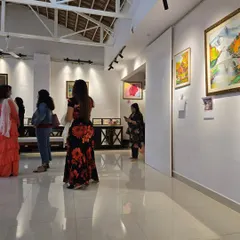
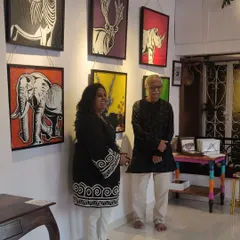
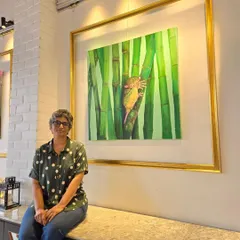
Step Inside Our Koramangala Art Gallery
 43
43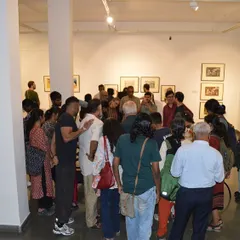
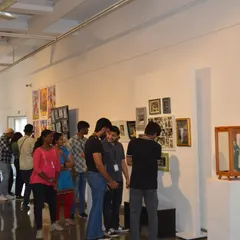
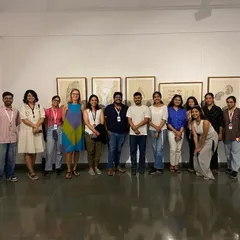
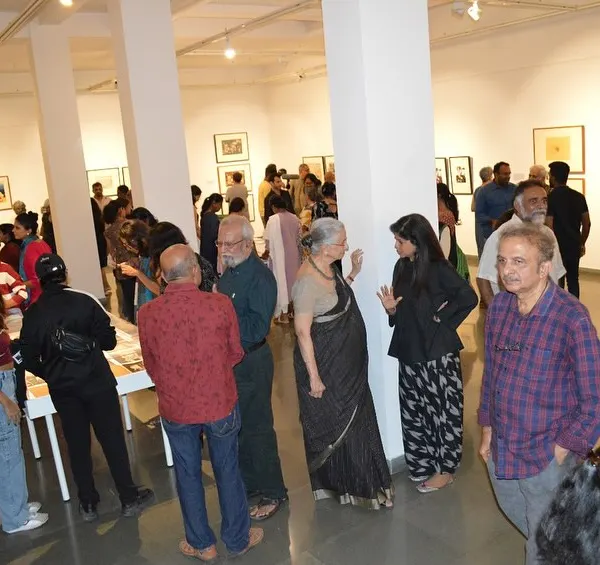
Gallery Life: Art Exhibitions & Events in Bengaluru
Art Trips and Gallery Walks: Learning Beyond the Studio
More from Art Curation & Exhibitions by Gallery G
More services by Gallery G