From Clay to Kiln: The Final Masterpieces
See how raw clay transforms into finished art in my Pitampura studio. Explore the results of student work and the unique Obvara firing process.
The big reveal. A top-down view inside my kiln, filled with an array of beautifully painted and glazed pieces ready to be taken home by their creators.
Trimming is a crucial step that transforms a rough pot into a refined piece. This video shows how I remove excess clay to create a clean base and a professional finish.
This video shows the Obvara firing process, an Eastern European technique where hot pottery is dipped into a fermented liquid to create stunning, unpredictable patterns.
Another look at the dramatic Obvara firing. The steam and sizzle are part of the magic as the piece is plunged into the yeast mixture, creating its final, unique surface.
A small vase, fresh out of the kiln. The carved lines and the way the glaze has broken over them create a beautiful, textured effect.
A close-up of a finished, hand-painted bowl. After firing, the underglaze colors become permanent and vibrant, and the clear glaze gives it a lovely, smooth finish.
A collection of finished student work, including colorful plates, a cheese board, and whimsical cat sculptures, ready to be booked for a weekend workshop.
This handmade platter showcases the beautiful, earthy patterns created by the Obvara firing technique. Each piece is truly one-of-a-kind.
The intricate stamped patterns on this platter are highlighted by the dark, rustic finish from the firing process, resulting in a piece with incredible depth and texture.
This video shows both the creation process of slab work and the final, dramatic Obvara firing, connecting the making to the finishing.
About From Clay to Kiln: The Final Masterpieces
The biggest question I get is: will my pot actually hold water? In my studio, we don't just shape clay; we focus on the structural integrity that makes a piece functional, not just decorative. Whether you are aiming for a daily-use coffee mug or a wall-hanging platter, understanding the transformation from wet clay to kiln-fired ceramic is where the real learning happens.
Beyond the Wheel: The Firing Journey
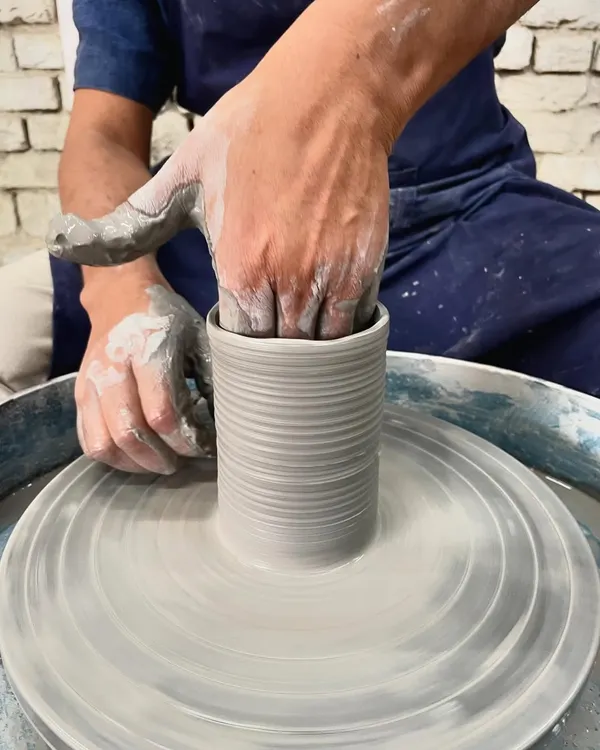
Many beginners think the process ends when the pot comes off the wheel, but that is just the beginning. The clay needs to dry, get trimmed to the right thickness, and then survive the kiln. This gallery shows that final stage—what we call the 'big reveal.'
The Obvara Technique
If you see those unique, rustic, and weathered patterns in my collection, that is Obvara firing. Also known as Baltic Raku, it is an Eastern European technique I love sharing with students. We take the red-hot piece (around 650-700 degrees) directly from the kiln and plunge it into a fermented brew of water, flour, yeast, and sugar. The sizzle and steam you see in the videos create those one-of-a-kind markings. It is unpredictable, chaotic, and completely magical.
Why Trimming Matters
Trimming is the secret to a professional finish. It is the step where we remove excess clay from the base of a leather-hard pot. It adds stability and makes a heavy lump of clay feel balanced in your hand. When you join my workshops in Pitampura, you will learn to use trimming tools to refine your cylinders and bowls, turning a rough shape into a piece you are proud to keep in your kitchen cabinet.
Can I Learn This?
Whether you are curious about the chemistry of glazes or just want to make a bowl that survives the kiln, there is a place for you. We work with stoneware clay that is durable and food-safe. If you are nervous about your first attempt, do not worry—everyone starts with a messy, lopsided pot. That is exactly how it is supposed to begin.
Similar work from other experts
Browse through Curated picks from other experts on mytribe
 14
14From Clay to Kiln: The Art of Slow Pottery
The Magic and Mess of Finishing Your Pottery
 46
46
Student Ceramic Art & Pottery Creations in Koramangala
Step Inside Our Pottery Studio
Hand-Building Pottery and Ceramics Workshops in Gurugram
 6
6
Hands-On Pottery and Clay Workshops
More from Pottery Classes & Workshops by Dipti Gupta
More services by Dipti Gupta