Understanding the Hair Transplant Recovery & Healing Process
Transparency is key. See the reality of the post-operative healing phase, from the initial graft placement to the first few days of recovery after a DHI procedure at my Mumbai clinic.
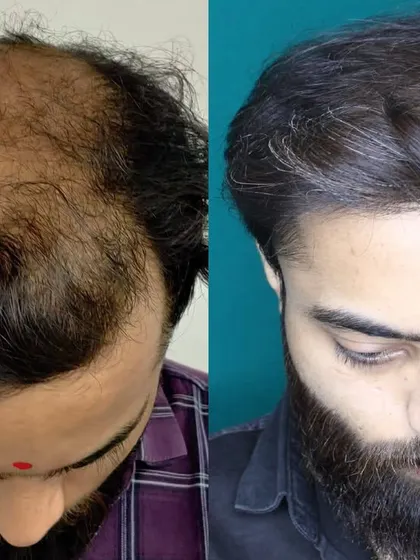
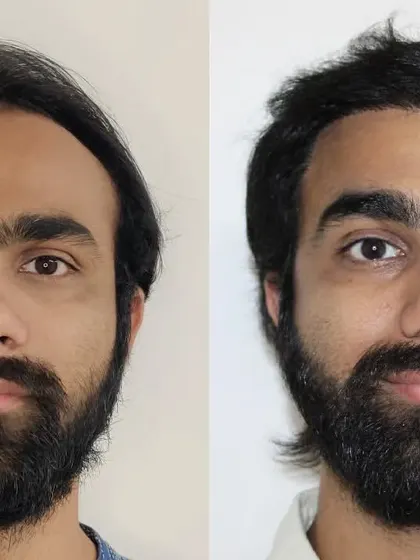
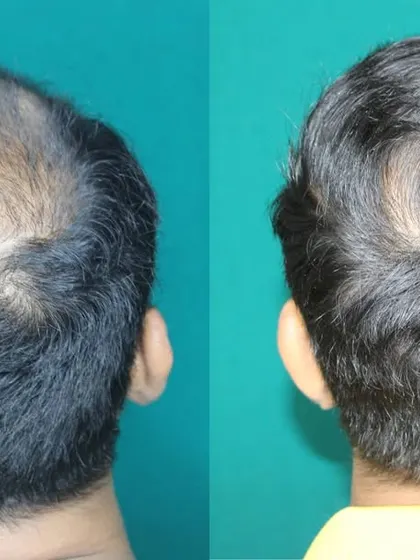
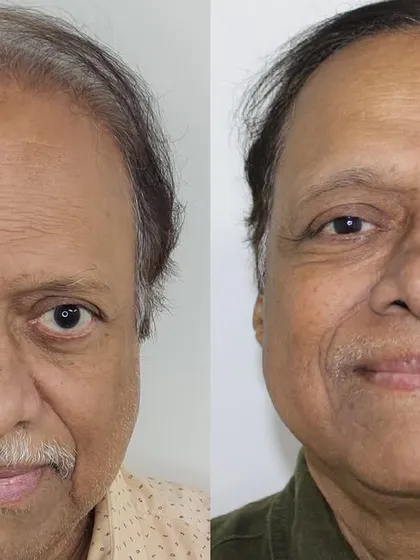
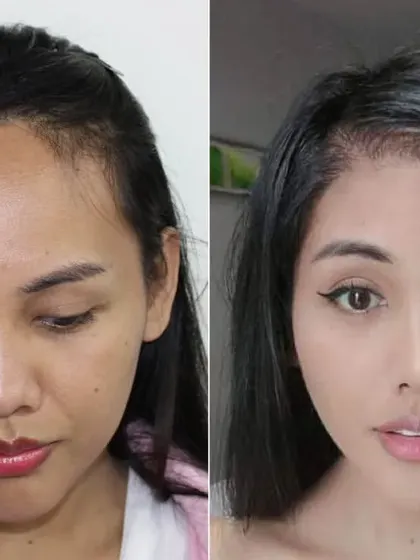
This series shows the complete journey for a patient with advanced baldness: from the initial state, to the scalp immediately after graft implantation, and finally the grown-out result.
This collage provides a clear look at the different stages. The middle photo shows the precision of the graft placement during the DHI procedure.
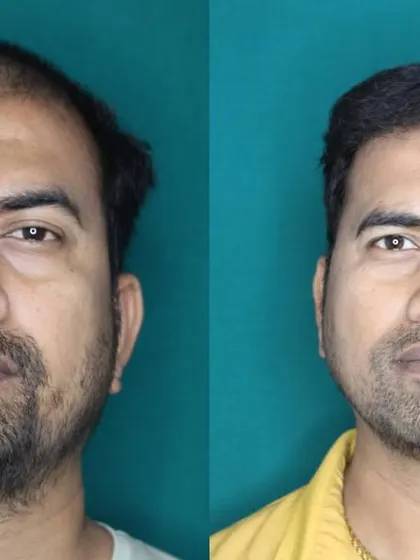
A frontal view of the same patient's journey. Seeing the intermediate step helps set realistic expectations for the recovery and growth timeline.
This video provides a dynamic look at the process, showing the 'before' state and the 'post-surgery' scalp with the newly implanted grafts.
About The Transplant Journey: Process & Healing
You will notice small scabs in the immediate post-op photos; this is a standard part of the healing process and not a cause for concern. These tiny scabs secure the newly implanted grafts while your scalp begins the recovery phase. Within 7 to 10 days, these naturally shed. I provide every patient with a specific post-op care kit, including saline spray and medical-grade cleansers, to ensure your scalp stays clean, hydrated, and protected during this critical first week.
What Happens After the Surgery
Many patients worry about the 'shock' their scalp goes through after a transplant. In my 12 years of practice at my Borivali clinic, I have found that clear expectations lead to better healing. Here is what happens in the days following your procedure:
- Days 1-3: You may experience mild swelling, which is completely normal. I advise keeping your head elevated while sleeping. You will start using the saline spray provided in your kit to keep the grafts hydrated.
- Days 4-10: This is the phase where scabs begin to form and subsequently fall off during the first hair wash. Do not pick at them; let them shed naturally to ensure the grafts remain undisturbed.
- Months 0-3: You might see some shedding of the transplanted hair. This is the 'resting phase' before the actual new growth begins. Don't panic; the follicle is healthy and remains beneath the skin.
Why the Healing Phase Matters
My focus with the Direct Hair Implantation (DHI) technique is to make the process as minimally invasive as possible. Because we use implanter pens, we control the depth and angle, which minimizes trauma to the donor and recipient areas.
However, a successful transplant is a partnership. While I perform the precision work during surgery, your adherence to the post-op guidelines—like avoiding strenuous activity and using the prescribed medications—is what dictates the density and quality of your final result. Whether you are coming to me from within Mumbai or travelling from overseas, my team is available via WhatsApp to guide you through these initial months, ensuring you feel supported until your new hair begins to grow.
Vaibhav Shah
I've spent over 12 years performing hair transplants, and I know that the hardest part isn't the procedure itself, but the recovery. My role doesn't end when you leave the OT; I'm here to ensure you understand how to manage the healing phase so you get the best density and growth. You can reach out directly if you have any questions or concerns during your recovery journey.
Find the hair restoration info you need
Search for specific treatments, procedure costs, or clinic locations near you.
More from Hair Transplant Surgery by Vaibhav Shah