Community & Urban Space Design: Transforming Shared Environments
We believe architecture should serve the public life of a city. From restoring heritage structures into cultural hubs to converting neglected lots into accessible urban plazas, we design spaces that connect people, memory, and nature.
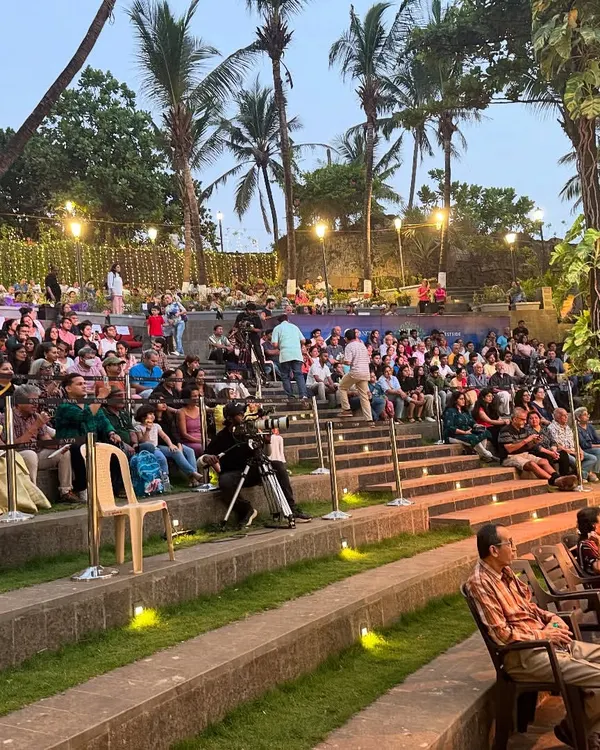
Nepean Greens in Mumbai is a versatile public plaza we designed to be accessible for all, with sloping lawns, terraces, and a continuous ramp for the elderly and disabled.
Our Nepean Greens project was featured in LA Journal, recognizing its contribution to creating a democratic and sustainable urban haven in a dense Mumbai neighborhood.
The inauguration of our tourist interpretation center and cafe in Champaner, Gujarat, where local students were the first to explore the new public space.
We are restoring a 100-year-old dharamshala on the banks of the Kosi River in Suyal Bari, turning it into an angling camp to boost local tourism and create economic opportunities.
The heritage structures are nestled in the Himalayan wilderness, and our design aims to celebrate the unexplored history of the Indo-Tibet trade route.
The stone structure with its distinct arches is being carefully restored to preserve its historical significance while adapting it for a new, community-oriented purpose.
An under-construction view of a market plaza in Champawat, Uttarakhand, showcasing the use of traditional wood and stone architecture to create a new public space.
We are currently reimagining North India's first iron foundry in Kaladhungi, Uttarakhand, preserving its industrial trace while creating a new public life for the site.
In Jawai, Rajasthan, known as leopard-land, we are creating an oasis in the wild, working with local stone to build structures that feel born of the landscape.
A detail of the cyclopean stone masonry at our Jawai project site, where we are using traditional techniques to create a raw and powerful architectural form.
About Community & Urban Spaces
When we approach community spaces, we prioritize accessibility and human connection over mere aesthetics. For our Nepean Greens project in Mumbai, we transformed a neglected, steep site into a vibrant plaza by integrating continuous ramps and stepped seating. This allows elderly residents and those with disabilities to navigate the space alongside everyone else, turning an abandoned path into a democratic, shared environment. Before you move forward, ask us how we adapt standard site layouts to meet your specific community needs while working within existing municipal grids.
Our approach to urban and community architecture is rooted in adaptive reuse and context-sensitive design. We do not believe in clearing sites to start from scratch. Instead, we listen to the history of the land and the existing structure to inform our intervention.
Our Process
- Historical & Site Context: Before a single line is drawn, we research the site's lineage. Whether it is an iron foundry in Kaladhungi or a dharamshala in the Himalayan wilderness, we identify the narrative threads that make the location unique.
- Material Integrity: We lean on local craft, such as Uttarakhand wood and stone, to ensure the new structures age gracefully with the landscape. This is evident in our work in Jawai, where we utilize raw stone masonry to create structures that feel born from the terrain.
- Community Integration: We design for the people who will actually inhabit the space. This means creating multipurpose zones—like cafes, museum spaces, or angling camps—that sustain local economies while providing a haven for visitors.
Why Adaptive Reuse for Public Spaces?
Repurposing an old structure is often the most sustainable path. By keeping existing shells, we reduce waste and retain the building's soul. Whether it is a British-era post office in Mukteshwar or a factory canteen in Ahmedabad, our goal is to layer modern functionality over historical bones without erasing the past. We handle everything from structural health checks to sourcing local artisans, ensuring the final design is both robust and culturally resonant.
Similar work from other experts
Browse through Curated picks from other experts on mytribe
 21
21
Public, Institutional & Heritage Urban Design
 11
11
Redefining Civic & Cultural Spaces in India
 11
11
Urban Renewal and Community Spaces
Cultural and Civic Architecture for Public Spaces
 58
58
Public & Cultural Architecture: Creating Meaningful Landmarks
 26
26
Urban Master Planning & Community Hubs
More from Adaptive Reuse & Heritage Restoration by Compartment S4
More services by Compartment S4