Maths & Fun Activities: Where Learning Becomes a Game
Who said math has to be boring? Join our sessions where speed calculation, brain gym exercises, and celebration days go hand-in-hand.
Celebrating Independence Day and Janmashtami at our center. We believe in celebrating our culture and festivals with as much enthusiasm as we learn math.
A fun brain game in progress. These activities are designed to improve focus and quick thinking while letting the kids have a great time.
Celebrating Friendship Day at the center. My classes are also a place where children make new friends and learn important social skills.
A little 'Dance in the Rain' fun. We always find reasons to celebrate and enjoy, making the learning journey memorable for the kids.
A brain game in action. These games are a great way to warm up before a class or relax after a period of intense concentration.
Relaxation and fun after a focused class. It is important for kids to unwind and just be kids.
Another shot of our 'Dance in the Rain' celebration. The joy on their faces is what makes my work so fulfilling.
A fun game of musical chairs. These activities help in building a friendly and energetic atmosphere in the class.
Practice vs Reality. A fun look at my students practicing their dance for an annual function and the final performance on stage.
A powerful dance performance by one of my students at our annual contest. We encourage children to showcase all their talents.
About More Than Math: Fun, Games & Celebrations
When you see the kids laughing during a game of Musical Chairs or celebrating a festival at our center, it might look like a break from learning. In reality, these activities are essential to our brain-training routine. We integrate games and social interaction between heavy Abacus drills because a relaxed brain absorbs speed-math formulas and mental calculation tricks much faster than one that is stressed or bored.
Why We Mix Study and Play
Many parents ask me why we spend time on pool parties, festival celebrations, and board games like Chess or Ludo. The answer is simple: I want your child to look forward to coming to class. When math becomes a dreaded chore, their focus drops. When math becomes part of an environment where they make friends and have fun, their confidence skyrockets.
Our 'Brain Gym' Approach
Learning speed math using an Abacus or Vedic math shortcuts requires intense concentration. If we keep a child glued to a book for the entire session, they fatigue quickly. Instead, we use:
- Active Brain Breaks: Short, high-energy games that improve coordination.
- Social Development: Collaborative activities that help shy children open up.
- Emotional Rewards: Celebrating Friendship Day or Janmashtami together helps children associate the center with positive memories, not just academic pressure.
The Results
My students in Shamli—and those joining us online from other cities—often tell me they forget they are even doing math. Whether it's rapid-fire multiplication or complex division, they are so engaged in the flow of the class that the 'hard' work feels like a game. This is how we ensure that the mental agility they build with us isn't just for exams, but a skill that stays with them for life. If you want to see your child tackle math without the fear, come visit us for a free demo session.
Similar work from other experts
Browse through Curated picks from other experts on mytribe
 10
10
Fun Brain Boosters: Turning Math Challenges into Play
Learning Through Play: Fun Abacus & Math Classes for Kids
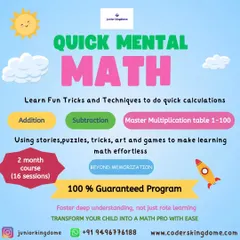
Mastering Math: Fun and Fast Learning
 22
22Building Confidence Through Fun Learning
 9
9

Celebrating Milestones and Community Moments
Mental Math: Turning Calculations into Confidence
More from Math & Fun Summer Camps by CIP Abacus by Mridula Jain
More services by CIP Abacus by Mridula Jain