Managing Aggression and Leash Reactivity
If your daily walks are a constant struggle of pulling, lunging, or barking, let’s stop the chaos. I work with you to fix the root cause, not just the symptoms.
A clear before and after of Olive's leash walking. On the left, you see the uncontrolled pulling. On the right, after training, she is walking calmly by her owner's side. This transformation comes from teaching proper leash handling and communication.
This is a common scenario: your dog reacting to street dogs. Instead of creating conflict, I teach owners how to manage the situation calmly, keeping their dog focused and making walks enjoyable again.
Leash pulling is a major issue that can ruin the bond with your dog. We work on fixing this by establishing clear communication, so there is no conflict with others and walks become a positive experience.
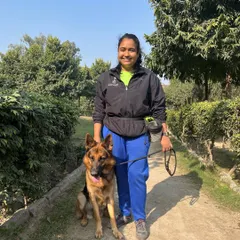
Here, I am showing an owner the practical steps for handling her reactive dog during daily walks. We focus on maintaining distance, blocking eye contact, and creating a physical barrier to prevent a reaction before it starts.
A busy road can be a nightmare if your dog pulls. I teach dogs patience and to wait for a cue, preventing accidents and fights. Here, this dog is learning to sit calmly by the roadside, ignoring traffic.
This is what a peaceful walk should feel like. Olive is walking calmly on a loose leash, ignoring other dogs in the vicinity. This is the result of consistent training and building a relationship based on trust, not force.
This is a progress video of Olive. A few months ago, she was highly reactive on walks. Now, even after a long break from training, the foundation we built remains strong, and she walks calmly.
People often blame the breed for aggression, but it's about understanding their traits. Breeds like Pitbulls are working dogs; without proper handling, they can show unwanted behavior. Here, I am managing an interaction to ensure it stays positive.
This is Nawab, who is reactive to other dogs. We are working in a controlled environment to change his emotional response. The goal is to help him see another dog and remain calm, which we achieve through careful, step-by-step conditioning.
Chote used to be anxious and reactive towards other dogs. Through guided socialization sessions like this, he is learning to be more comfortable. Notice how we keep the leash loose and reward calm behavior.
About Managing Aggression & Leash Reactivity
Most reactivity on walks isn't just about the dog—it is about the tension you are holding on the leash. When you pull back, you are inadvertently signaling 'danger' to your dog, which triggers their fight-or-flight response. We start by fixing your handling mechanics, ensuring you have the confidence to manage triggers without transferring that anxiety down the lead. This is not about force; it is about clear communication.
Aggression is rarely a random act. It is usually a symptom of a deeper issue—fear, poor socialization, or a breakdown in the owner-dog relationship. If your dog is lunging at cars, bikes, or other dogs, they are telling you they feel unsafe or out of control. My job is to find that 'kyun' (why) and address it.
The Process
Training is a partnership. Whether we are working at your home or at my facility at the Dome Sports Cricket Ground in Gurgaon, the goal remains the same: a balanced relationship.
- Initial Assessment: We start by identifying triggers. Is it the doorbell? Another dog? A specific sound? We treat the cause, not the behavior.
- Handling Mechanics: You will learn leash holding, body positioning, and timing. If you are tense, your dog feels it. We fix your energy first.
- Neutral Exposure: We do not just isolate your dog. We practice in real-world environments—parks, busy roads, and near other people—to proof their behavior against actual distractions.
My Approach
I do not train your dog to be a robot. I train you to be a leader. You will learn to read your dog’s body language before a reaction happens. Whether we are working on leash pulling or more severe territorial aggression, we go step-by-step. Remember, it is a process. One day at a time. Theek hai?
Similar work from other experts
Browse through Curated picks from other experts on mytribe
Leash Manners & Reactivity Training for Calm Walks
Tackling Aggression & Reactivity in Dogs
Stress-Free Walks: Leash Training & Reactivity
Mastering the Walk: Calm Leash Training in NCR
Leash Manners & Stress-Free Walks
Leash Manners & Calm Walks for Your Dog
More from Dog Behavior Modification by Carter's Dog Training
More services by Carter's Dog Training