Expert Interior Design Tips for Your Home
Don't just fill your space—design it for the way you live. Our designers share practical, field-tested advice to help you avoid common pitfalls and make every square foot count.
Our expert designer Priya shares important tips for planning your kitchen countertop. Learn about the standard height and depth, why double-thickness edges enhance the look, and the correct placement for your hob and sink to ensure maximum functionality.
Getting the measurements right is the foundation of a great kitchen. This video explains the standard dimensions for base cabinets, overhead units, and the ideal distance between them to create an ergonomic and comfortable workspace.
Confused about choosing a color scheme? Our designer explains the 60-30-10 rule, a simple principle to create a balanced and harmonious color palette for any room in your house, from primary neutral tones to bold accent colors.
Have a small 600 sq ft space? Don't worry. This video explains how we use smart design strategies like partitions, multi-functional furniture, and integrated kitchen counters to divide a compact area into four functional zones without it feeling cramped.
Before you start your home interiors, watch this. We cover five key things to consider, including setting a budget, planning your layout, defining your style, choosing quality over quantity, and the importance of hiring professionals.
About Expert Design Tips
Ever wonder why some kitchens feel effortless while others feel cramped? It usually comes down to the basics. For instance, a standard Indian kitchen countertop is typically set at 34 inches. However, if you are planning for an inbuilt dishwasher, you need to bump that up to 36 inches. Details like this prevent unnecessary back strain and ensure your appliances actually fit, making cooking a breeze instead of a chore.
Master the 60-30-10 Rule
Confused about colour schemes? You are not alone. Our designers use the 60-30-10 rule to create balance in any room. Use your primary neutral shade for 60% of the room (walls, ceilings), a secondary colour for 30% (curtains, larger furniture), and a bold accent colour for the final 10% (cushions, decor). It is a simple way to make a space feel professional without it looking chaotic.
Making Small Spaces Work
If you have a 600 sq ft area, do not worry. Kavalai illai. We often split these compact homes into four distinct zones: kitchen, living, vanity, and bedroom. We utilize partitions to separate the kitchen from the living area and maximize storage with floor-to-ceiling units. The goal is to avoid clutter and ensure that every corner has a purpose.
Why Measurements Matter
Bad measurements are the number one cause of kitchen regret. Before finalizing your layout, verify the depth of your base cabinets and overhead units. Everything from the distance between your hob and the sink to the gap between your cabinets needs to be planned for ergonomics. We often recommend under-mount sinks to prevent water leakage and ensure a seamless look.
Five Things to Know Before You Start
- Set a realistic budget, and always keep an extra amount for unexpected works.
- Plan for traffic flow. Do not place furniture where it blocks your natural movement.
- Be clear on your vision. Whether you prefer minimalist or traditional, consistency makes the renovation process much smoother.
- Prioritize quality materials. A few high-quality items will last far longer than many cheap ones.
- Hire professionals early. Pre-planning electrical points with a designer saves you from breaking walls later.
Similar work from other experts
Browse through Curated picks from other experts on mytribe
Practical Home Interior Design Tips & Expert Guidance
Practical Interior Design & Decorating Tips for Your Home

Home Interior Design Tips & Expert Styling Ideas

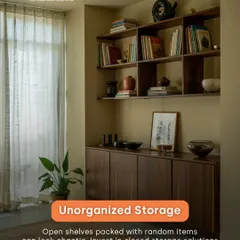
Practical Interior Design Tips for Your Home


Home Interior Inspiration and Design Ideas
Smart Space Planning and Home Layout Tips
More from Modular Kitchen Design by Bizzoppo
More services by Bizzoppo