Accountancy Important Notes
Master Class 11th and 12th Accountancy with quick, exam-focused concepts and practice questions from the desk of Manish Sharma Sir.
An important question for accountancy students: Can "securities premium" be used as working capital? Think about the reasons and let us know.
Do you know the name for the part of a company's capital that is called up only on winding up? This is a key concept in corporate accounting.
A practical problem on calculating profit or loss on realisation. This note gives you the figures for assets, liabilities, and expenses to solve.
A question on the dissolution of a firm. This scenario tests which account should be debited and by how much after debtors become bad.
Fill in the blank: On dissolution, when a partner takes over an asset, which account is debited? A fundamental question for partnership accounts.
When a partner takes over an unrecorded asset during dissolution, which account is credited? Test your understanding of dissolution entries.
Another fill-in-the-blank question. While transferring assets to a realisation account, which item is typically omitted?
An important note on the payment of realisation expenses when they are borne by a partner. Clear indication is crucial.
What is the assumed value of intangible assets if their realized value is not given in a problem? This note clarifies the standard accounting treatment.
This note explains the rule for the realized value of tangible assets when it is not explicitly mentioned. It is considered realized at its book value.
About Accountancy Important Notes
These notes focus on the conceptual sticking points that often cost students marks in board exams—like the treatment of goodwill during partnership admission or the technicalities of dissolution entries. Manish Sharma Sir breaks these down into clear, exam-ready logic, so you move past rote memorization and actually understand the mechanics behind the journal entries before you head into your boards.
Accountancy is one of those subjects where clarity is everything. If you are preparing for Class 11th or 12th boards, you know that missing a single step in a ledger or miscalculating a ratio can lead to a domino effect of errors in your final answer. That is exactly why we created this series of notes.
Why these notes matter
We have been coaching students in Delhi for 25 years. We have seen thousands of answer sheets, and we know that the difference between an average score and a top score often comes down to how you handle tricky chapters like:
- Dissolution of Partnership: Understanding why we debit or credit specific accounts when assets are realized.
- Goodwill Valuation: Knowing exactly which partners to compensate and why.
- Company Accounts: Distinguishing between securities premium usage and other capital reserves.
These notes are designed to act as your cheat sheet for those 'kal exam hai' moments. They aren't meant to replace your textbooks, but to act as a bridge between the theory in your NCERT and the practical problems you face in the examination hall.
How to use them
Treat these not just as definitions, but as a checklist. If you are stuck on a specific journal entry for a dissolution case, look at the logic provided here. We try to simplify the accounting principles so they stick. If you are in Delhi and looking for more intensive support, whether through our offline classes in Model Town or our hybrid Zoom sessions, these notes represent the kind of conceptual depth we bring to every subject we teach, from B.Com to M.Com entrance prep.
Similar work from other experts
Browse through Curated picks from other experts on mytribe
Master CBSE Class 12 Maths with Concept-First Coaching
Exam Resources and Academic Guidance for Class 9-12
Quick Learning Tricks & Exam Hacks
 35
35


Core Academic Tuitions (Classes 1-12)
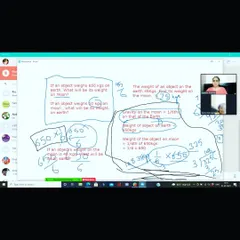
Mastering Concepts in CBSE Maths and Science
 19
19
Free Learning Hub: Software & Accounting Tutorials
More from University Course Tutoring by Ace Classes
More services by Ace Classes