Robotic Vehicles Built by Young Innovators
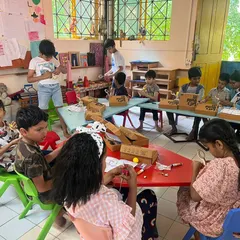
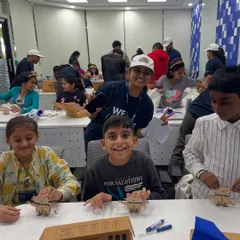
At Robomations, kids do not just learn about robots—they build them. From simple battery-operated DPDT cars to advanced autonomous machines, see the projects our students bring to life in our Bengaluru camps.
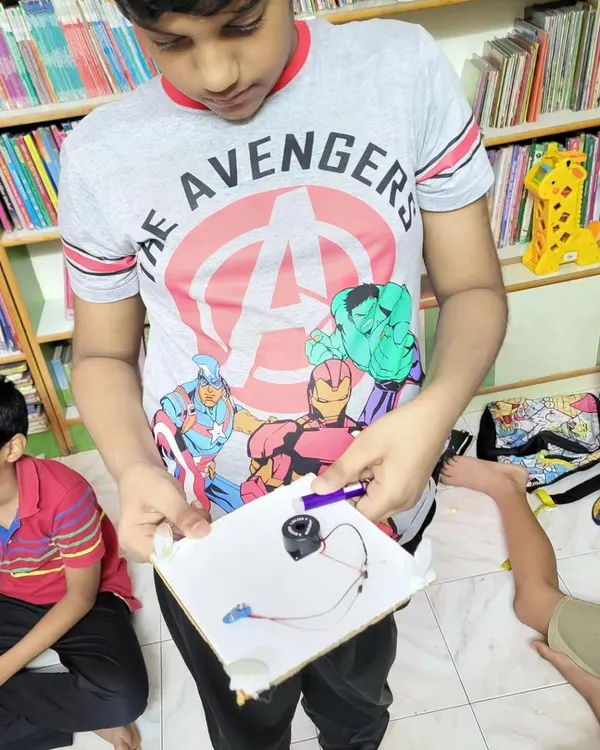
Here, a student demonstrates her DPDT car, explaining how a double pole, double throw switch controls the vehicle's movement. This project is a great introduction to basic motor control and electronic switches.
This team explains their solar-powered obstacle-avoiding car, a project that combines renewable energy with autonomous navigation using an IR sensor. They also discuss its potential real-world applications in surveillance and safety.
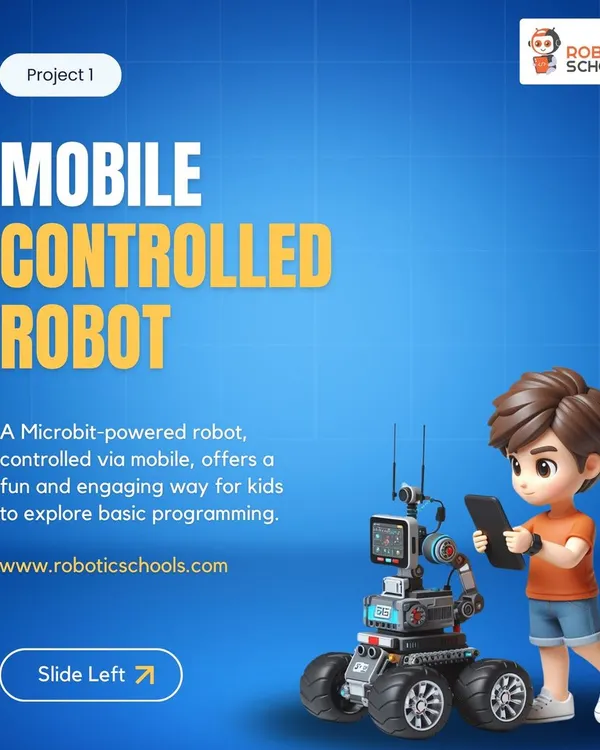
Watch as my students explain the mechanics of their Bluetooth-controlled car. They detail how an HC-05 module, Arduino, and a motor driver work together to translate commands from a smartphone into vehicle movement.
A fifth-grade student proudly presents her obstacle-avoiding car. She walks through all the components she used, from the Arduino board and ultrasonic sensor to the DC motors, demonstrating a solid grasp of robotics engineering.
This student gives a detailed breakdown of his robotic car, explaining the function of each major part, including the ultrasonic sensor, servo motor, and the Arduino Uno which acts as the "motherboard" or brain of the robot.
This camper shares his excitement about building an obstacle-avoiding car. He talks about how the project became more and more interesting, which kept him engaged and eager to learn throughout the summer camp.
A student shares his positive experience at our robotics summer camp, where he learned to build an obstacle-avoiding car using a servo motor and ultrasonic sensor. He highlights the excellent guidance from our teachers.
This camper explains how he learned coding and wiring to build an obstacle-avoiding car with an ultrasonic sensor. He even added his own custom touch with RGB lights, showcasing the creativity we encourage.
This team of 8th graders demonstrates their solar-powered, remote-controlled car. They show how they use a button box to control the motors, combining their knowledge of solar energy, circuits, and remote-control systems.
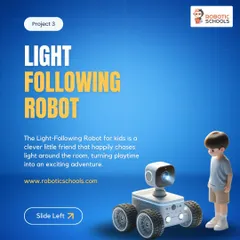
Here, two students present their light-following car. They explain how LDR sensors detect a light source and send signals to the Arduino board, causing the car to move towards the light, demonstrating a key concept in sensor-based robotics.
About Robotic Vehicles in Action
Every robot you see here was built from scratch by our students using real components like Arduino boards, ultrasonic sensors, and DC motors. There are no pre-assembled toys; our campers learn the wiring, logic, and mechanical assembly that makes these machines move. Watching a student troubleshoot a motor connection or debug their first piece of code is why we do this.
Our robotics curriculum is designed as a ladder of confidence. We start our younger students (Grades 1-3) with basic DPDT (Double Pole Double Throw) switch mechanics. They learn how polarity affects motor direction, turning simple wheels and batteries into functional vehicles.
As students move to our Robotics & Coding camp (Grades 4-8), we introduce the 'brain' of the robot: the Arduino Uno. This is where the magic gets technical. Students assemble chassis, wire motor drivers, and mount sensors. They write code to make an obstacle-avoiding car that can navigate a room without human help, or a light-following bot that tracks a flashlight.
For our advanced interns (Grades 8+), we take it even further with Bluetooth integration and IoT. They convert those autonomous bots into phone-controlled vehicles using HC-05 modules, essentially building their own remote-controlled cars from the ground up.
Whether it is a solar-powered project or a complex robotic arm, our focus remains on 'learning by doing.' We provide the tools and the guidance, but the engineering? That is all them.
Similar work from other experts
Browse through Curated picks from other experts on mytribe
 6
6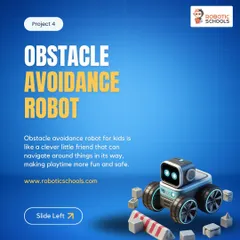
Robotics Project Blueprints for Kids
Robotic Vehicles: Kids Building Real Machines
Hands-on Robotics Workshops and STEM Camps in Bengaluru
 10
10
Electronics & Robotics Projects for Kids
Robotics in Action: Build and Code Your Own Robots
Build Your Own Robots and Gadgets
More from STEM Summer Camps by Robomations
More services by Robomations