Bharatanatyam Performances with Live Orchestra
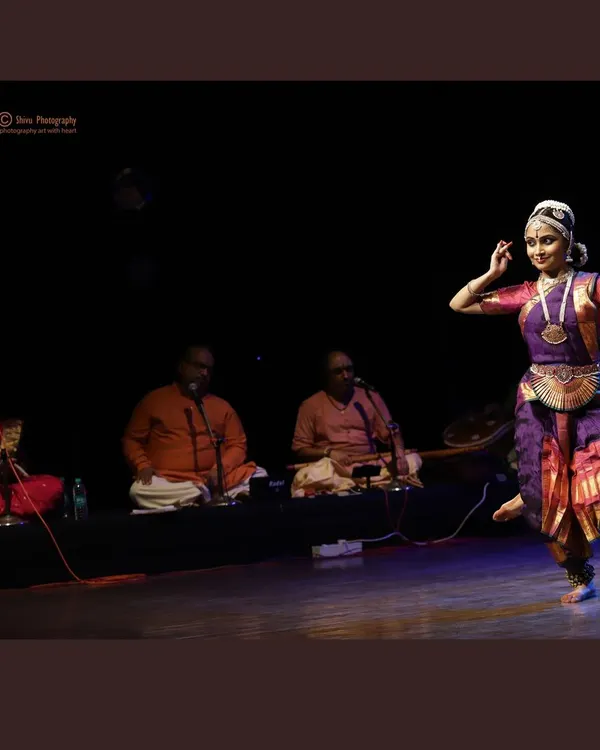
Bharatanatyam without the rhythm of a live ensemble is a quiet storm. For me, the synergy between the dancer and the musicians is what truly brings the performance to life, creating an immersive space for every rasika in the audience.
The rapport between dancers and musicians is vital. This clip is a tribute to the incredible energy and joy that a live orchestra brings, and a memory of my dear mridangam artist, Lingaraju.
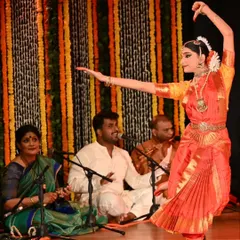
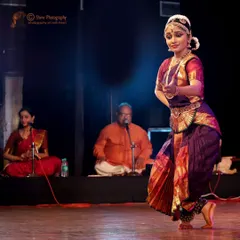
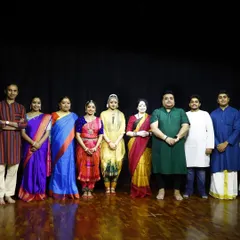
A moment of shared artistry with the musicians during a student's performance. It is a joy to see the next generation of artists collaborating and celebrating art together.
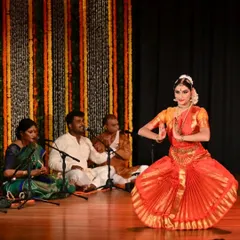
The musicians who accompanied my students for their "Rangaabhivandane." Their contribution is essential, providing the soul and rhythm for the dancers to follow.
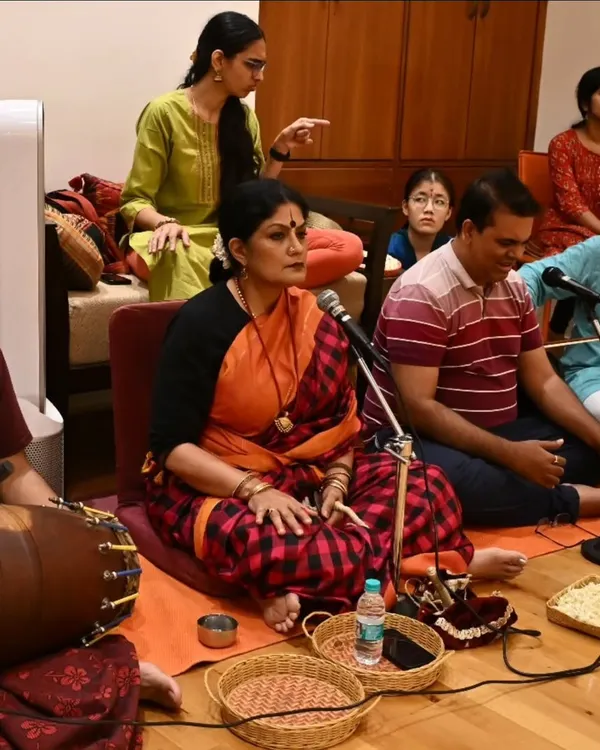
A glimpse of me performing Nattuvangam for one of my students. The rhythmic recitation of syllables is a core component of Bharatanatyam, guiding the dancer's footwork and movements.
About The Soul of the Performance: Live Orchestra
The magic on stage relies heavily on the rapport between me and the ensemble. When we perform, I require a sound check at least 30 minutes before the event to ensure the microphones—typically three for vocals and two for instruments—are balanced perfectly. This setup allows for the live improvisation that makes every recital unique and responsive to the energy in the room.
For me, art is 'Shwasa Vishwasa', or life breath, and this vitality is most apparent when the dancer and musicians are in perfect sync. Whether I am performing a traditional Margam or a thematic piece like 'Sakha', the presence of a live Carnatic ensemble transforms the recital into a conversation.
The Anatomy of Our Ensemble
My performances are supported by a professional four to five-piece orchestra, depending on the scale of the production. This ensemble typically includes:
- Vocalist: The foundation, providing the lyrical depth and emotional range for the Abhinaya.
- Mridangam: The pulse of the performance, anchoring the rhythm.
- Melodic Support: Flute or violin to enhance the mood and raga.
- Nattuvangam: Rhythmic conducting using cymbals, which I often perform myself during student recitals or ensemble pieces to guide the footwork.
Technical Realities
Live music brings a specific energy that pre-recorded tracks cannot replicate, but it demands technical precision. We require a clear space for the musicians to sit, usually with an elevated platform if the venue allows, and adequate sound reinforcement. I work closely with venue technicians to ensure the mix is crisp. Without these elements, the delicate nuances of the flute or the intricate jathis of the mridangam get lost.
Solo vs. Ensemble
While my solo recitals focus on the intimate connection between one dancer and a quartet, my large-scale theatrical productions with the Chithkala Ensemble allow for a broader musical palette. In these group works, we experiment with complex musical arrangements that complement the synchronized choreography, ensuring that the visual and auditory experience remains cohesive for the audience.
Similar work from other experts
Browse through Curated picks from other experts on mytribe
 14
14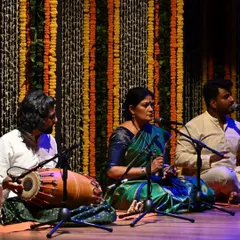
Authentic Bharatanatyam Recitals with Live Orchestra
The Soul of Bharatanatyam: Our Live Musical Ensemble
 9
9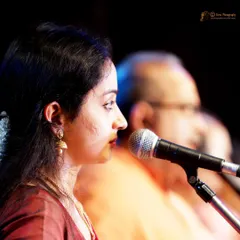
Authentic Live Carnatic Orchestra for Your Bharatanatyam Performance
The Live Musical Ensemble for Bharatanatyam
Traditional Bharatanatyam Margam Recitals
Live Vocal Music for Bharatanatyam Performances
More from Bharatanatyam Performances by Praveen Kumar
More services by Praveen Kumar