Solving Leash Pulling, Barking & Jumping
Stop viewing these as 'bad' behaviors. Often, your dog is just struggling with stress or unmet needs. Let's look at why it happens and how to manage it with kindness.
Is your dog pulling on the leash? It might not be defiance. Often, it's due to a stressful environment, unmet needs for movement, or simply that the leash is too short. Understanding the cause is the first step to solving it.
Why does my dog pull on the leash? There are many reasons, from excitement and pent-up energy to fear or a simple lack of training. In this video, I explore the various causes to help you create an effective loose-leash walking plan.
To stop leash pulling, find your "moments of yes." Reward any offered attention, like your dog looking back at you or walking with a slack leash. Using functional reinforcers, like letting them sniff after a moment of focus, is also key.
The key to loose leash walking has very little to do with the leash itself. Here, I'm teaching Oscar to value being in the "heel" position indoors without a leash first. This builds a strong foundation before we even head outside.
Does your dog pull excitedly towards other dogs? Using Grandma's Law, or the Premack Principle, can help. Ask for a simple behavior like "look at me" before you grant them the reward of greeting their friend.
Passing other dogs on walks can be stressful. A straight, head-on approach is rude in the dog world. I always recommend creating distance, moving in an arc, and keeping the interaction brief and positive to avoid conflict.
Letting your puppy greet every person and dog on walks can create problems later. They may learn to pull towards everyone, leading to frustration for both of you. It's better to teach neutrality and selective, calm greetings from the start.
My indie is a guard dog and barks at the doorbell. In this Q&A, I explain how to manage this. Create a predictable pattern: when the doorbell rings, toss treats on their bed away from the door to teach them a new, desirable behavior.
Here's how I handle my dog Candy's alert barking. I use a "Thank You" protocol to acknowledge her alert, then interrupt the barking and redirect her to a treat scatter in her busy box. This calms her down and reinforces a different behavior.
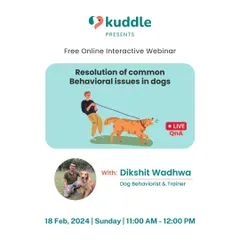
This video promotes my online LIVE class on how to stop leash pulling. It's designed to be highly interactive, with fun games and a step-by-step plan to make your walks enjoyable again.
About Solving Common Challenges: Leash Pulling, Barking & Jumping
If your dog barks at every doorbell ring, stop scolding. Instead, try the 'Thank You' protocol. The next time the bell rings, calmly acknowledge the alert, then toss a handful of treats onto a designated mat or 'busy box' away from the door. You are not just asking them to stop barking. You are giving them a specific, rewarding behavior to perform instead. Over time, the doorbell becomes a cue to go to their bed, not a cue to rush the entry.
When we talk about leash pulling, barking, or jumping, it is easy to assume the dog is being defiant or dominant. My experience, both with my own dogs Candy and Russel and the many families I help, shows the opposite. Most of these behaviors happen because the dog is stressed, confused, or simply not getting what they need.
Why Leash Pulling Happens
Leash pulling is rarely about who is in charge. It is often about a leash that is too short, an environment that is too overwhelming, or a dog that just has pent-up energy. We look at 'moments of yes'—rewarding when your dog chooses to walk near you or keeps the leash slack. We focus on building a connection rather than just policing the walk.
Turning Jumping into Calm
If you find yourself yelling 'No! Sit!' every time guests arrive, you are likely adding to the chaos. Your dog is already excited, and your shouting just increases the energy. We prefer a proactive approach. Set your dog up for success by using a barrier like a gate or a leash before guests even enter. Apply 'Grandma's Law' here: ask for a calm behavior, like going to a mat or holding a toy, before they earn the reward of meeting someone new.
The 'Why' Matters
Everything I teach is about finding the 'why'. When we shift our focus from correcting the behavior to meeting the dog's need for exercise, enrichment, or agency, the stress levels drop for both ends of the leash. My online masterclasses are interactive because I want you to get real-time feedback on your mechanics, ensuring you walk away with a plan that actually works in your home.
Similar work from other experts
Browse through Curated picks from other experts on mytribe
Tackling Tough Dog Behaviour Challenges
Managing Common Dog Behavior Problems
Practical Dog Training & Behavior Solutions
A Peaceful Home: Solving Common Dog Behavior Problems
Solving Problem Behaviors in Dogs
Solving Common Dog Behavior Problems
More from Online Workshops & Masterclasses by Kirti Tripathi
More services by Kirti Tripathi