Practical Dog Training for Calm Everyday Walks
Stop fighting the leash and start walking together. I help you transform chaotic outings into moments of partnership, confidence, and safety for your dog.
The key to loose-leash walking has very little to do with the leash. This video shows an indoor exercise to build value in the heel position without a leash, making walks more cooperative.
Why does my dog pull on the leash? This video explores common reasons, from pent-up energy and a fast natural pace to environmental distractions and past learning history.
If your dog pulls, find your moments of "yes." This video demonstrates how to reward any offered attention, use abrupt direction changes to re-engage your dog, and use sniffing as a functional reward.
This real-world example shows me managing my reactive dog, Candy, on a walk. I demonstrate how to read her body language, create distance, and keep her under threshold when a trigger appears.
Is your dog pulling, or is the environment stressful? This video challenges the expectation that dogs must walk right next to us and advocates for using longer leashes to meet their need to sniff and move freely.
This video promotes my online class on how to stop leash pulling, showing a happy golden retriever enjoying a walk.
Is avoiding your dog's triggers avoiding the problem? This video explains that management, like creating distance, is a crucial part of a training plan, not a failure. It prevents the rehearsal of reactive behavior.
This video shows the reality of a dog walk versus the expectation. It involves untangling the leash, not walking in a straight line, and lots of stopping for sniffs.
Here's a simple leash-handling hack for holding both your leash and treats, allowing you to reward your dog easily on walks without fumbling.
This video demonstrates how to handle a long leash safely, using one hand as an anchor and the other to control the length.
About Practical Skills for Everyday Life
Walking should be a shared experience where your dog feels safe enough to explore rather than stressed enough to pull. Most leash issues are not about disobedience, but communication. I help you identify the subtle body language signals your dog gives before the pulling starts, so you can manage the environment and set them up for success without using force or intimidation.
If your dog is lunging, barking, or dragging you down the street, it is easy to feel frustrated. I used to feel that exact same way with my own dogs. But over time, I learned that 'fixing' a walk is rarely about stricter commands. It is about understanding the environment from your dog's perspective.
The Science of a Better Walk
Most leash pulling happens because a dog's needs are unmet. They might be overstimulated, in pain, or simply confused by a world that moves too fast. Using positive reinforcement, we focus on:
- Threshold Management: Learning to read when your dog is about to go over their limit, so you can create distance before a reaction happens.
- Equipment Audit: Moving away from flat collars that strain the neck and using well-fitted, non-restrictive harnesses that allow your dog to move naturally.
- Functional Reinforcement: Treating the walk as a game where checking in with you is more rewarding than chasing a distraction.
Why Force-Free Training Works
When we rely on leash jerks or scary tools, we only break trust. My approach is different. We work on building a foundation of safety. Whether you are dealing with leash reactivity, separation anxiety, or just a puppy who wants to explore everything at once, we use desensitization and counter-conditioning to change your dog's emotional response. You are not just training a dog; you are building a partnership that lasts a lifetime. If you are in Gurugram or the NCR area and want to move past the chaos, I am here to guide you.
Similar work from other experts
Browse through Curated picks from other experts on mytribe
Stress-Free Walks: Leash Training & Reactivity
Stress-Free Walks: Teaching Your Dog to Enjoy the Journey
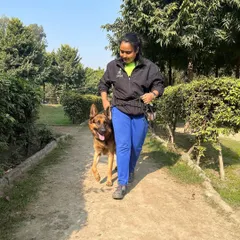
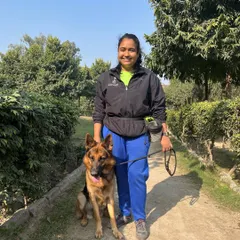
Mastering the Walk: Calm Leash Training in NCR
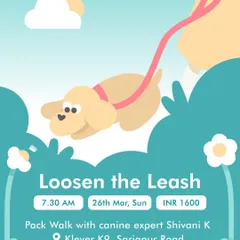
Leash Manners & Reactivity Training for Calm Walks
Mastering the Walk: Expert Tips for Leash Training
Leash Walking Essentials: Transform Your Daily Walks
More from Dog Behavior & Training by Kirti Tripathi
More services by Kirti Tripathi