Sculptural Concrete Residences
Residential architecture conceived as inhabitable sculptures. We explore the structural and aesthetic possibilities of raw concrete, balancing heavy mass with light through precise cantilevers and formwork.
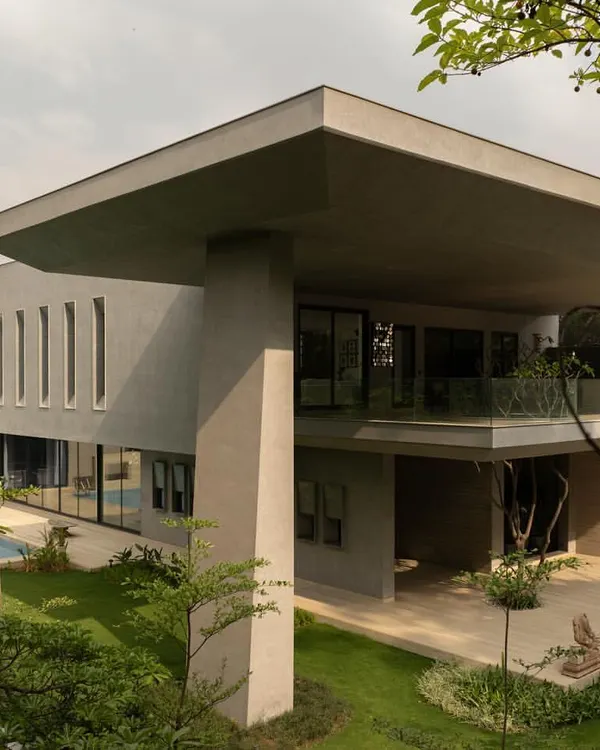
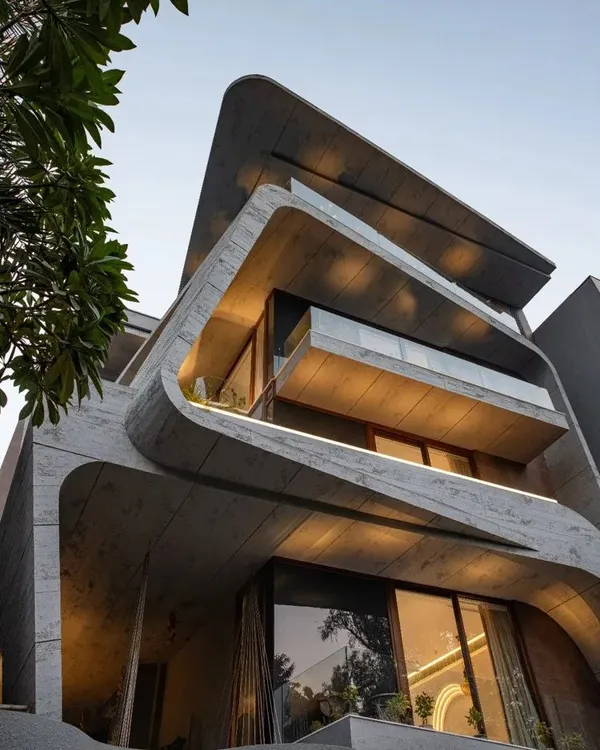
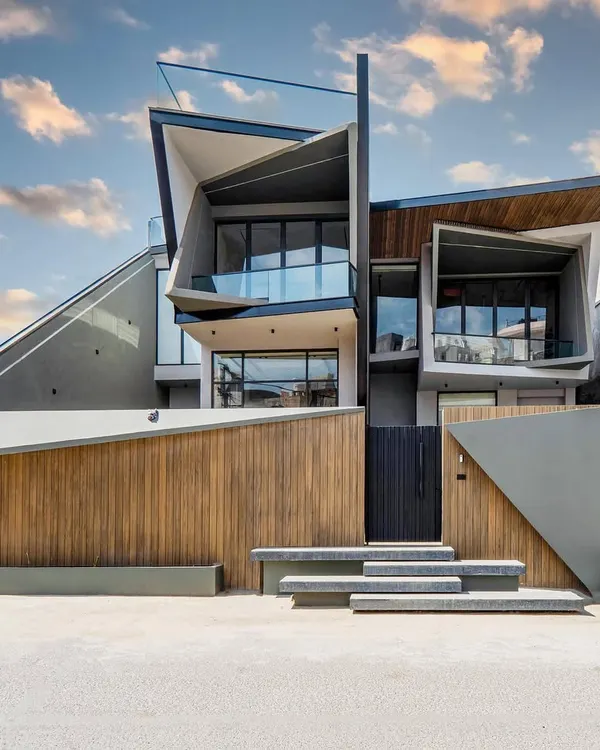
The Jenga House in New Delhi, viewed from the street. The design's name comes from its stacked, cantilevered concrete forms that create a powerful sculptural presence within its urban context.
A daytime view of the Jenga House, showing how the raw concrete facade interacts with the natural light and surrounding foliage. The composition balances heavy mass with carefully placed openings.
An evening view of a terrace at the Jenga House. The space is framed by exposed concrete walls and wooden ceiling beams, creating an intimate outdoor room that connects directly to the interior.
The warm interior light glows from a window of the Jenga House at dusk. This detail highlights the contrast between the solid concrete exterior and the life within the home.
An interior corridor in the Jenga House, where a plank-shuttered concrete wall runs alongside a warm wooden floor. This juxtaposition of materials is a recurring theme in my work.
The living area of a residence, where my team is observing the quality of light through floor-to-ceiling windows. The design aims to dissolve the boundary between the interior and the garden.
The driveway and entrance of the Jenga House at night. Strategic lighting emphasizes the texture of the concrete and the building's geometric forms, creating a dramatic nocturnal presence.
An abstract detail of a staircase, combining wood, brass, and concrete. This composition showcases the careful attention given to material junctions and textural variety in my projects.
A detail of the staircase within the Jenga House. This image shows the precise combination of materials, with thin steel balusters set against a board-formed concrete wall, reflecting my focus on craftsmanship and material texture.
The entrance gate of the Jenga House, where a slatted wooden screen provides privacy while complementing the raw concrete structure above. The design integrates landscape elements at the threshold.
About Sculptural Concrete Residences
Achieving this finish requires more than a drawing. Our process relies on explicit shuttering layouts that dictate the exact pattern of tie-rod holes and plank alignment before a single bag of cement is mixed. You are not just buying a design, you are commissioning a rigorous on-site process where we supervise the casting to ensure the raw concrete texture is absolute.
In our practice, exposed concrete is not merely a facade but the primary architectural narrative. We approach these residences as sculptures that interact with their urban or rural contexts. This methodology stems from a deep interest in brutalist principles, tempered by a desire for domestic warmth.
The sculptural forms often involve complex structural feats, such as long-span cantilevers and floating volumes. These are enabled by careful structural integration, coordinating MEP services within concrete walls and ensuring service routing remains invisible. We prioritize board-formed or plank-shuttered concrete, which imparts a wood-grain texture to the hardened surface. This contrasts with the brass, steel, and timber elements we integrate to soften the space.
Whether working in the dense urban fabric of New Delhi or on a sprawling farmhouse, our goal remains the same, integrating the logic of construction with the site's specific micro-climate. We utilize physical scale models to verify volumetric composition and solar shading, ensuring the play of light and shadow is calculated before construction begins. This is an invitation to engage in a rigorous design dialogue where the building’s footprint, materiality, and orientation are treated as inseparable components of a singular, coherent vision.
Similar work from other experts
Browse through Curated picks from other experts on mytribe
 40
40
Sculptural Architecture: A Study in Concrete
Modern & Sculptural Residences in Delhi NCR
 16
16
Brutalist & Modernist Residences
 22
22
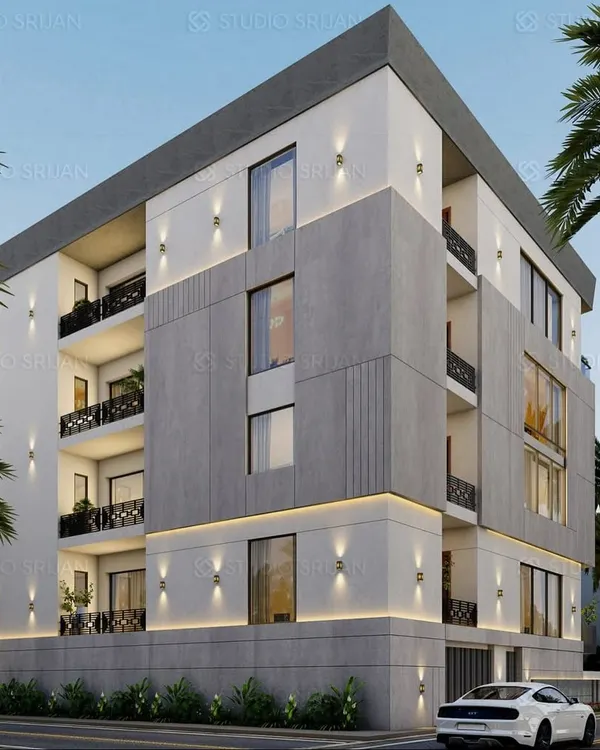
Sculptural Exteriors: Bold Modern Facades in Concrete & Stone
 64
64
Modern Residential Exterior Designs
 25
25
Modern Residential Façades and Exterior Design
More from Bespoke Residential Architecture by Matra Architects
More services by Matra Architects