Farmhouse and Pavilion Architecture
These projects are an inquiry into landscape integration. My practice focuses on raw materiality and structural lightness to ensure the architecture exists in harmony with the site, rather than dominating it.
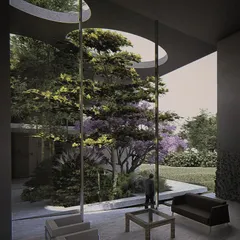
The completed Rhizome House, a farmhouse where the structure is designed to coexist with the mature trees on the site. The building's form is low-slung, allowing it to integrate with the garden.
A detail of the steel and glass pavilion in Delhi. The roof is made of a perforated steel jaali, which casts dappled light onto the patio, mimicking the effect of a tree canopy.
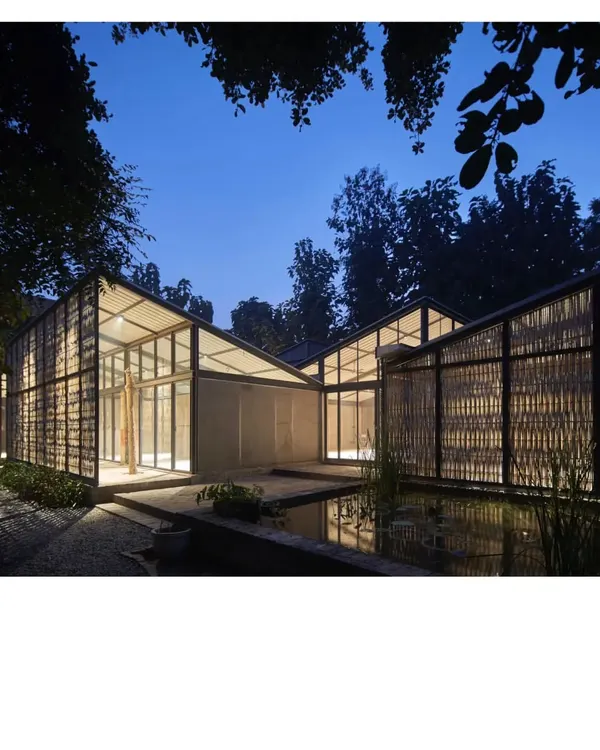
A side view of the glass pavilion, showing its slender steel frame and the seamless transition to the surrounding lawn. The design is an exercise in structural minimalism.
This video presents a 3D visualization for a conceptual pavilion on the banks of the Yamuna river. The design uses a series of concrete arches and a perforated roof to create a modern interpretation of historical Mughal architecture, focusing on reflections and patterned light.
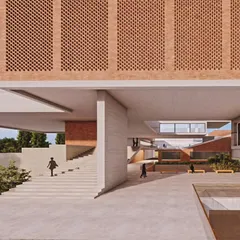
A 3D render of an upcoming farmhouse in Delhi, designed using precast concrete technology. The structure features large openings and is elevated on slender columns, creating a covered space for vehicles and art.
This visualization shows the entrance courtyard of the precast concrete farmhouse. The design incorporates large sculptures and uses retractable awnings to control sunlight and shade.
A view of the farmhouse from the garden, showing how the building is nestled within a field of wildflowers. The architecture is designed to be a backdrop for the natural landscape.
An interior render of the farmhouse, where a large abstract painting is displayed on a precast concrete panel wall. The space opens onto a courtyard, blurring the line between art gallery and home.
A view through the farmhouse's central courtyard, which contains planters and an open staircase. The design uses transparency and open circulation to connect different parts of the home.
About Farmhouses and Pavilions: Architecture in the Landscape
The integration of a building with existing site features is a precise structural exercise. For projects such as the Rhizome House, I analyze root zones and light paths before finalizing foundation layouts, ensuring the structure coexists with mature trees rather than displacing them.
My approach to farmhouse and pavilion design rejects the traditional suburban villa typology in favor of a site-specific architectural language. Each project begins with a reading of the landscape. Whether utilizing exposed concrete volumes that cantilever over the earth or steel structures that frame the horizon, the intent is to create a transition between the interior and the garden.
Material Logic and Construction
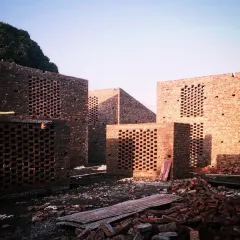
I employ a palette of raw materials that age with grace. Exposed concrete, zinc, and timber-laced stonework are selected not for their aesthetic alone, but for their structural honesty.
- Structural Cantilevers: By using long-span cantilevers and steel trusses, I create column-free spaces that offer unobstructed views of the landscape.
- Precast Technology: For modern estates, I utilize precast concrete and modular wall panels, which allows for precise detailing and reduced on-site material waste.
- Climate Response: Incorporating brise-soleil, perforated steel jaali screens, and deep overhangs allows the building to self-regulate temperature, drawing natural light while shielding against the harsh glare of the Indian summer.
The Pavilion as Typology
I treat the pavilion as an exercise in reduction. These structures, often serving as pool houses or meditation spaces, prioritize transparency and lightness. Through the use of slender steel frames and floor-to-ceiling glass, the barrier between the inhabitant and the natural environment is dissolved. This is a deliberate search for an archetypal form, grounded in the logic of construction and the specificities of the local climate.
Similar work from other experts
Browse through Curated picks from other experts on mytribe
 6
6
Farmhouse Architecture and Master Planning for Scenic Estates
 17
17
Terrain-Responsive & Sustainable Design
 6
6
Modern Farmhouse Architecture & Landscape Design
 19
19Nature-Integrated Homes Rooted in the Land
 7
7
Featured Architectural Projects: Buildings Rooted in Nature
 10
10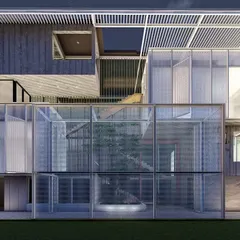
Architectural Design Projects: Material Honesty and Light
More from Bespoke Residential Architecture by Matra Architects
More services by Matra Architects